
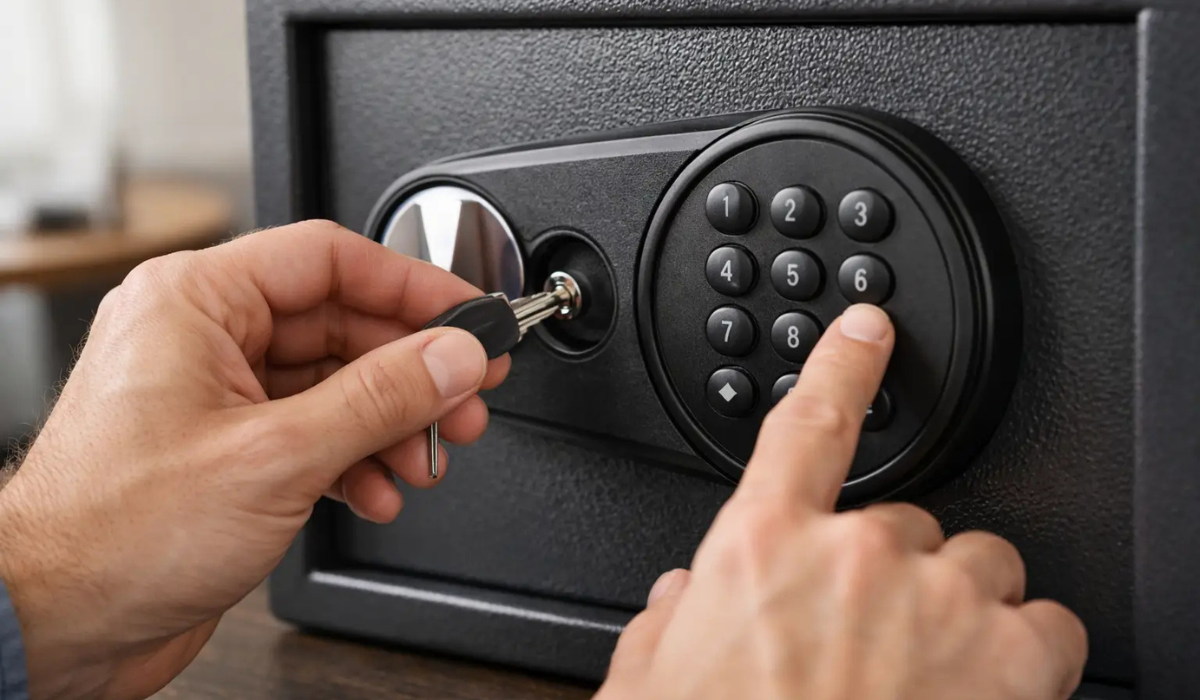
Nothing gets your attention faster than a safe keypad that suddenly stops accepting the code you know is right. If you're trying to figure out how to reset electronic safe lock settings, the first thing to know is that the process depends heavily on the lock brand, the safe model, and whether you still have an authorized code.
That matters because "reset" can mean two very different things. Sometimes it means changing the user code through the keypad. Other times people mean a factory reset after a lockout, dead battery event, or lost code. Those are not handled the same way, and trying the wrong procedure can waste time or leave you locked out longer.
Before you reset an electronic safe lock
Start with the basics before assuming the lock itself needs to be reset. Electronic safe locks are simple in one sense, but they are not forgiving when battery power is low, key presses are rushed, or the door is closed during testing.
If the safe is still open, keep it open while you work. That is the safest way to test any code change. Enter the code several times with the bolts extended and the door open so you know the lock is responding correctly before you shut it.
Next, replace the battery with a fresh brand-name alkaline battery if your lock uses a 9-volt or AA battery compartment. Weak batteries are one of the most common reasons a keypad acts erratic. Skip rechargeable batteries unless the manufacturer specifically allows them. Many electronic locks are designed around standard alkaline voltage, and anything outside that range can cause inconsistent behavior.
Also take a breath and look at the keypad itself. Some locks require a pause between steps, a final confirmation key such as # or *, or an existing master code before a new code can be programmed. If you're working from memory, that's where mistakes usually happen.
How to reset electronic safe lock codes when you still have access
If the safe opens normally and you know the current code, what you likely need is not a factory reset but a code change. On many residential and business safes, this is done from the inside of the door or through a keypad programming sequence.
Some electronic safe locks include a small reset or program button on the back of the door panel, only accessible when the safe is open. In that setup, you press the button, enter a new code on the keypad, and then confirm it a second time. Other locks use a programming sequence entered entirely on the keypad, often beginning with the current manager code.
The exact order varies, which is why the owner's manual matters here more than general advice. A Winchester gun safe, a Hollon office safe, and a Barska biometric or keypad model may all use different programming steps even though they look similar from the outside. UL-listed commercial-grade locks can be even more specific, especially when they support multiple user levels, time delay, or dual control.
If you do have the manual, follow it exactly and test the new code at least three times before closing the door. If you do not have the manual, look for the model number on the inside of the door, near the hinge area, or on the keypad housing. That number usually tells you whether the lock is a standard residential keypad, a SecuRam-style lock, a La Gard-style lock, or a proprietary system used by the safe manufacturer.
When a true reset is not possible
This is the part many owners do not expect. A lot of electronic safe locks are intentionally designed so they cannot be factory reset by just anyone from the outside. That is not a flaw. It is a security feature.
If anyone could press a hidden button, remove a battery, or key in a generic sequence and erase the code, the lock would not offer much protection. On better safes, especially gun safes, burglary safes, and business cash safes, resetting a lost code often requires proof of ownership and support from the manufacturer or a qualified locksmith.
That is especially true if you no longer know the master code, the manager code, or any override credentials. In many cases, there is no customer-facing factory reset at all. The next step may involve identity verification, lock-specific recovery steps, or lock replacement.
What to do if you forgot the code
If the code is lost and the safe will not open, start by checking your records before trying random combinations. Many lockouts happen because a secondary user changed the code, the owner misremembered a sequence, or the keypad requires a final key press that gets forgotten.
Look for the original paperwork, safe packet, or serial number information. Some manufacturers can help, but most will only do so after confirming ownership. That protects you and everyone else who depends on the security of these products.
If your safe has an emergency key override, use it carefully and only according to the manufacturer's instructions. Not every electronic safe includes one, and on higher-security models it is often omitted on purpose because a keyway can introduce another attack point. If there is an override key, it may let you regain access so you can then change the code from inside.
If there is no override and no valid code, your best move is to contact the manufacturer or a safe technician. Drilling or forcing the lock should be the last resort. A professional can often tell from the lock type whether nondestructive entry is realistic or whether the lock needs to be opened, repaired, and replaced.
Common problems that look like a reset issue
A surprising number of "reset" problems are really something else. Low battery power is the biggest one, but not the only one.
If the keypad beeps but the handle will not turn, the code may be accepted while the boltwork is under pressure. This can happen if the safe door is being pulled too tightly against the frame, if something inside is pressing against the door, or if the handle is being turned too soon or too late after code entry.
If there is no response at all, battery contact corrosion or a disconnected keypad cable may be the issue. If the keypad lights up but gives an error tone, you may be dealing with a penalty lockout after too many wrong entries. Many locks disable input for several minutes after repeated failed attempts. During that time, entering more numbers only extends the problem.
Commercial safes can add another layer. Time-delay locks, dual-user requirements, and manager-controlled permissions can make a perfectly healthy lock seem broken if the user is not following the right opening sequence.
Safe reset steps that are usually worth trying
If the safe is open and you simply want to restore reliable operation, there are a few low-risk steps that solve many issues. Replace the battery, inspect the contacts, confirm the exact lock model, and perform the code-change procedure from the manual with the door open.
If the keypad has a reset button inside the door, press it once, enter the new code slowly, and confirm it if prompted. Then wait for the confirmation signal and test the code multiple times before closing the safe. If the lock supports both a master code and user code, make sure you are changing the correct one.
If the safe is closed and locked, limit yourself to battery replacement, careful code entry, and any documented override method. Beyond that, guessing can create longer penalty lockouts or trigger service calls that could have been avoided.
When to call for help
There is no prize for forcing a safe faster. If the safe stores firearms, business cash, legal documents, controlled medication, or irreplaceable family valuables, it makes sense to slow down and protect the contents as much as the container.
Call the manufacturer or a qualified safe locksmith when the code is unknown, the lock is in repeated lockout, the keypad has visible damage, or the safe uses a higher-end commercial lock with manager functions. The more security-focused the lock is, the less likely a generic internet reset trick will apply.
For buyers shopping for a new safe, this is also a good reminder that lock quality matters as much as steel, fire rating, and bolt size. A well-supported UL-listed electronic lock from a reputable brand is usually easier to service properly and less likely to leave you guessing when something goes wrong.
If you're learning how to reset electronic safe lock systems because your current safe keeps acting up, take that as useful information. Sometimes the issue is just a battery. Sometimes it points to a lock that is not a good fit for how you use the safe every day. The right answer is the one that keeps your access reliable without weakening the protection you bought the safe for in the first place.