Questions Regarding Shipping

Secure Zoned currently ships only to the United States.

No, shipping is FREE for all orders placed

  • 2:00 PM (GMT-06:00) Central Standard Time (Chicago).
  • Orders placed after the cutoff or on weekends will be processed the next business day.

Orders are processed within 1-3 business days, Monday to Friday.

After the package is shipped, the transit time is 4-10 business days, Monday to Friday.

Delivery times are estimates and may vary due to unforeseen circumstances.

A tracking number will be emailed after your order is dispatched.

Track your order via: FedEx, USPS, UPS or Our website’s tracking portal.

For modifications or cancellations, contact our customer service team within 1-3 business days before your order has been shipped.

Smaller or Lighter Packages:

  • Smaller or lighter packages are delivered to the front door via UPS, USPS, or FedEx during regular business days (Monday to Friday). 
  • You will NOT receive an appointment call, nor is it needed. If you notice any damage to the packaging or product, do not hesitate to call us, and we will resolve the issue.
  • DO NOT dispose of the packaging if the product is defective or damaged until after the claim has been resolved

Bigger or Heavier Packages:

  • The freight company will call you to arrange a time and day for delivery that works for you. Because of this, it is essential that you give the most relevant contact information during checkout. Please ensure that your contact information is accurate to avoid any delays in delivery.
  • Products that are shipped via freight are delivered on a wood pallet at the end of the driveway.
  • Freight companies typically deliver between Monday to Friday.
  • Someone must be present to inspect and sign for the package, there are no exceptions to this requirement.

IMPORTANT NOTE:

  • Once the delivery staff takes the package out of the truck upon delivery, it is entirely the customer's obligation to carry the item onto the property and assemble it. The delivery staff will NOT take your package any further than the curbside. The freight carrier will only deliver to city or state roads, they will NOT deliver to your driveway on a Cul-De-Sac, dead end road, or congested downtown areas with no parking.

At the time of the delivery, the truck driver will ask you to sign a delivery receipt. BEFORE SIGNING this receipt, you must:

  • Visually inspect the package thoroughly and note any minor scratches or tears on the receipt. Failure to notate on the delivery receipt will relieve the freight company of responsibility for any damage to your product.
  • You should ask the driver if you can remove the packaging to inspect the actual product for damage.
  • YOU SHOULD refuse the package if there is a major damage and note it on the delivery receipt before signing. Please contact us at immediately and send photos to support@securezoned.com
  • If you sign the freight bill, accepting delivery as undamaged, without inspecting the packaging or product, WE CANNOT FILE A FREIGHT CLAIM. Freight carriers WILL NOT honor a freight claim if you do not note any damage(s) on the delivery receipt. If more than one product is delivered, and some of the products are not damaged, you can accept the product(s) that are not damaged or defective and refuse the damaged product. Note on the receipt of which units/products were refused due to damage.
  • Note: If someone other than yourself will be meeting the driver to receive your product, please advise them of this responsibility.

Questions Regarding Returns & Refunds

  1. Contact Us: Email us at support@securezoned.com with your order number.
  2. Return Instructions: Our team will provide detailed instructions. Return shipping costs are the customer's responsibility unless the item is defective or we made an error.
  3. Packaging & Shipping: Ensure the item is returned in its original condition, including packaging. Follow the return shipping instructions provided.
  4. Required Documents: Include a copy of any relevant photos, if applicable.

The Customer is responsible for return shipping costs unless the item is damaged/defective or Secure Zoned made an error

You have 30 days from the delivery date to return an item

  1. Inspection: Inspect the item upon delivery.
  2. Damage Reporting:
  • Contact us immediately.
  • Do not open any sealed damaged products.
  • Provide a description and photos of the damage.

3. Resolution: We will arrange for a return, replacement, or refund based on your preference.

  • Terms: Return the item within 30 days of delivery in its original or slightly used/sellable condition, including tags and packaging.
  • Process: Contact customer support at support@securezoned.com to initiate the return.

Follow the same return process as for a change of mind. Once you returned your product, you can purchase the new item separately.

  • Reporting: Contact us immediately if you receive the wrong product.
  • Resolution: We will arrange for the return and ship the correct product at no additional cost.

Refunds are processed within 10 working days.

If you haven’t received your refund after 10 business days:

  • Check with your bank or payment provider.
  • If there’s no record of the refund, contact us at support@securezoned.com for assistance.

In rare cases, if a refund is lost:

  • Contact us at support@securezoned.com for assistance.
  • We will investigate with our payment processor.
  • We will issue a replacement refund and keep you informed throughout the process.

Questions Regarding Payment Methods

  • Visa
  • Mastercard
  • AMEX
  • Google Pay
  • Discover
  • Elo
  • JCB
  • UnionPay
  • Shop Pay
  • Affirm (Financing/Payment plan)

Questions About Safes

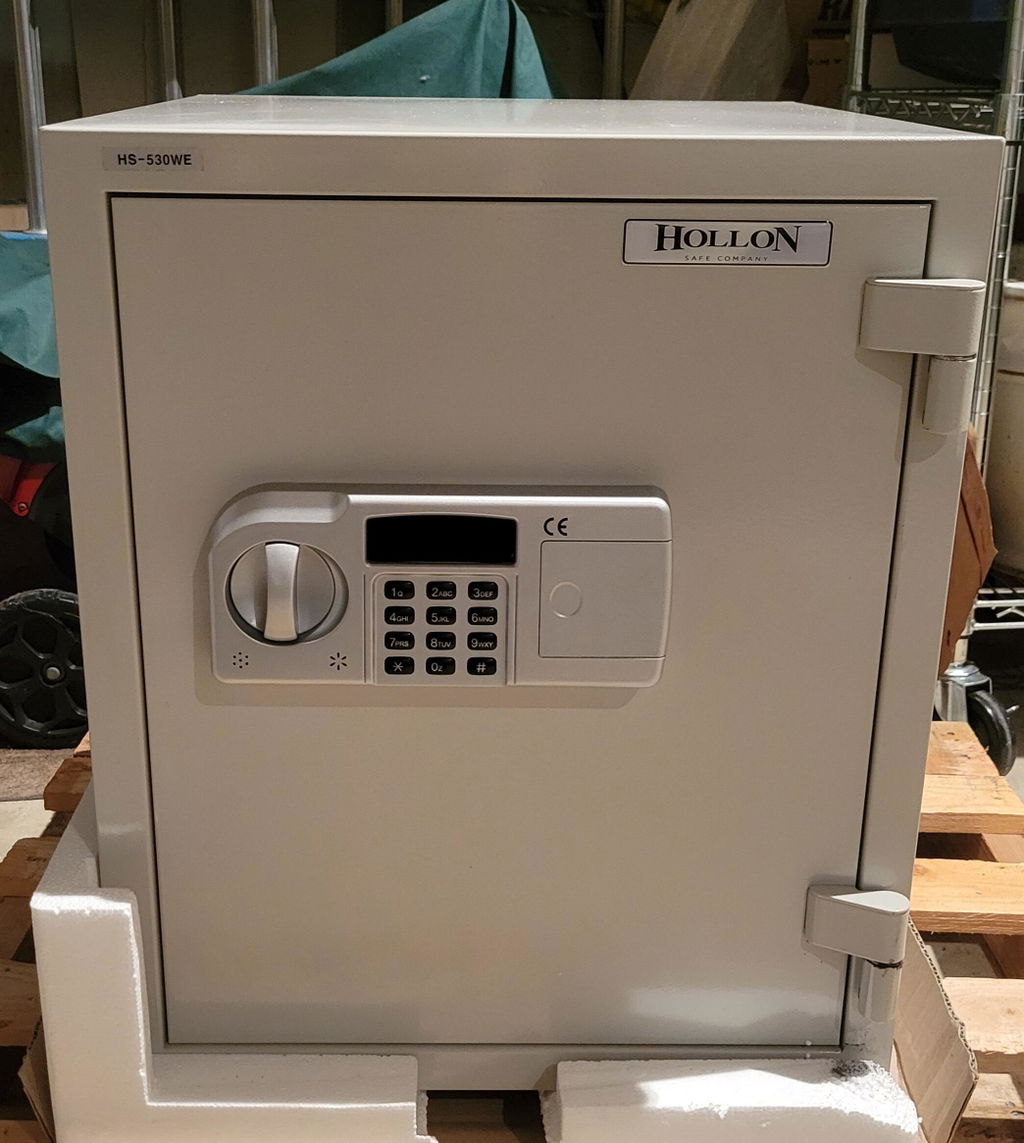
Some of the best gun safe brands we carry are Hollon, Winchester, Remington, and Sports Afield.

Gun safes can be fireproof if designed specifically to withstand fires. The fireproof rating indicates the duration a safe can endure extreme temperatures. Selecting a safe with a fireproof rating that aligns with your needs is crucial for optimal protection

When moving a gun safe, consider placing flooring or padding underneath for easier handling and enlisting a second person to assist. If navigating stairs, using a dolly and additional help is essential. For particularly heavy safes, hiring professional movers is a smart option

The ideal humidity level for your gun safe is between 30% and 50%. High humidity can cause rust and corrosion on firearms, while low humidity may lead to shrinking or cracking of wooden stocks

Buying a Safe

These are two completely separate things. A fire rating tells you how long a safe can protect its contents during a fire and at what internal temperature. A burglary rating tells you how well the safe resists a physical attack using tools. A safe with a strong fire rating may have very little burglary resistance, and vice versa. Most residential buyers benefit from a safe that addresses both, but you should decide which threat is the higher priority for your situation before shopping.

RSC stands for Residential Security Container. It is a classification established by Underwriters Laboratories (UL) that indicates the safe resisted a 5-minute attack by one person using common hand tools. RSC is the entry-level UL standard for residential safes. It is a meaningful baseline for home use but is not the same as a commercially rated TL-15 or TL-30 safe, which are significantly more rigorous.

TL-15 and TL-30 are UL-listed burglary ratings for safes. TL-15 means the safe
resisted a 15-minute attack by a skilled person using hand tools, drills, and
mechanical devices. TL-30 means the safe resisted the same type of attack for 30 minutes. These ratings apply to the entire safe body and door, not just the door. TL-rated safes are commonly required by insurance carriers for commercial applications and are appropriate for high-value residential or business use. For more information, check out our blog about TL safes.

Start by listing everything you plan to store. Measure the larger items and factor in room for growth, most safe owners eventually wish they had bought one size up. For gun safes, keep in mind that the advertised rifle capacity is usually based on unscoped rifles. If you are storing scoped long guns, cut the capacity estimate by about a third. For document and jewelry safes, think about binders, folder thickness, and any boxes or cases that need to fit inside.

In general, yes. Weight in a safe comes from thicker steel and fire-insulating fill material. A safe that feels light was built light. That said, heavier is only better if the safe is also properly anchored, a heavy unbolted safe can still be removed with enough people and time. Weight and anchoring together are what actually make a safe difficult to steal.

Biometric locks are convenient for quick access, particularly for bedside handgun safes. However, they can be affected by humidity, dirty or sweaty fingers, or low batteries, and they sometimes fail to read correctly under stress. The best biometric safes include a backup keypad or key entry for situations when the fingerprint reader does not cooperate. We recommend choosing a safe with redundant entry options rather than a biometric-only lock. For more information about locks, check out our blog about locks.

It depends on how and when you access the safe. Electronic keypads are fast, easy to reprogram, and the most popular choice for residential gun safes. Dial combination locks require no battery and are extremely reliable over time, but they take longer to open. Biometric locks offer the fastest access but should have a keypad backup. For most homeowners, a UL-listed electronic keypad with a key override is the best balance of convenience and reliability.

Yes, an unanchored safe can be carried out regardless of its weight or rating. The whole point of a burglary rating is that it measures how long a safe resists an attack in place, that protection disappears the moment the safe can be relocated. Anchoring is not optional. Most safes come with pre-drilled anchor holes and hardware. If you need help with anchoring, our installation service can coordinate professional bolt-down. For more information, check out our blog on how to bolt down a safe the right way.

It depends on your policy. Some homeowner's and renter's insurance policies have per-item limits on jewelry, firearms, and cash that are lower than their actual value. Storing items in a UL-listed safe may qualify you for higher coverage limits or a discount on your premium. Contact your insurance provider directly to understand your specific policy and what safe specifications they require.

Safe Basics and Ratings

A fire rating means the safe maintained an internal temperature below the damage threshold for a specified period at a given external temperature, typically 1,200 degrees Fahrenheit. A "30-minute fire rating" means the safe protected its contents for 30 minutes under those conditions. After that window, the internal temperature will eventually rise. Always look for a specific duration and testing organization rather than just the word "fireproof."

It depends on what you are storing. Paper documents begin to char at around 451 degrees Fahrenheit, so paper-rated safes maintain an interior below 350 degrees. Photographic film and magnetic media can be damaged at temperatures as low as 125 to 150 degrees, which is why media safes specify a lower interior threshold. Check the interior temperature rating, not just the fire duration.

A B-Rate safe is a manufacturer's self-designation, not an independently verified rating. It typically indicates basic steel construction and a simple lock, but there is no standardized test behind the designation. An RSC (Residential Security Container) rating is issued by Underwriters Laboratories (UL) after independent testing. RSC is a meaningful, verified baseline. B-Rate is a starting point but not a guarantee of any specific protection level.

Look for a minimum of 10 to 12 gauge for the body of a quality residential gun safe. 10 gauge is approximately 1/8 inch thick. Many budget safes use 14 to 16 gauge steel, which is noticeably thinner and easier to cut or pry. Be aware that some manufacturers advertise only the door steel thickness, not the body walls. ask about both if it is not specified.

Steel gauge is a measurement of steel thickness. Counterintuitively, a lower gauge number means thicker steel. 10-gauge steel is thicker than 14-gauge steel. Thicker steel takes more time and effort to cut, pry, or drill through, which is directly relevant to a safe's burglary resistance. It also adds weight, which is one reason a heavier safe often indicates better quality construction.

Delivery and Installation

Inspect the packaging and the safe immediately at delivery before signing the carrier's receipt. If you see any damage, write it on the receipt before signing. Take photographs of the damage right away. Contact us at support@securezoned.com immediately with photos and a description. Freight damage claims not reported within 24 hours may not be eligible for resolution. If damage is severe, you have the right to refuse the delivery entirely and note "REFUSED DUE TO DAMAGE" on the receipt.

Yes. An adult 18 years or older must be present to sign the Proof of Delivery receipt. Freight carriers will not leave a safe unattended. If you miss your scheduled delivery window without notifying the carrier in advance, a re-delivery fee may apply.

Yes. Our White-Glove Inside Delivery service, provided through vetted third-party specialists, includes delivery to your desired room, removal of all packaging, and placement of the safe in your chosen location. We can also coordinate a Full Installation service that includes anchoring and lock verification. See our White-Glove Delivery page for details and to request a quote.

Standard curbside delivery brings your safe to the end of your driveway on a pallet via a freight carrier with a liftgate. The driver lowers the safe from the truck to street level. They do not move the safe beyond the curb, and they do not remove packaging or assist with placement inside your home. An adult must be present to sign the delivery receipt.

Standard freight carriers operating large tractor-trailers typically cannot deliver to cul-de-sacs, dead-end streets, or dirt and gravel roads. If your address has one of these access types, our White-Glove delivery service uses smaller specialized trucks that can often access locations standard freight carriers cannot. Let us know your road type when requesting a quote.

You will need a heavy-duty appliance or furniture dolly rated for the safe's
weight, moving straps, and a second person for anything over 200 pounds. Measure all doorways and turns in your path before you start moving. Protect your flooring with plywood sheets along the route. For stairs, we strongly recommend using our White-Glove service rather than attempting stair movement without professional equipment.

We typically respond within 1 to 2 business days after receiving the required information. To get a faster quote, have your safe model and weight, your full delivery address, the floor level, the number of stairs, and any details about your driveway or access ready when you reach out.

Troubleshooting Locks

The first thing to check is the battery. A dead or weak battery is the most common cause of electronic lock failure, and it is often the only issue. Replace with fresh alkaline batteries (not rechargeable) and try your combination again. If the keypad still does not respond, check whether the lock is in lockout mode, most electronic locks lock out for 10 to 20 minutes after several incorrect entries. Wait the full period without pressing any buttons, then try again.

Most electronic safe locks have a built-in security feature that temporarily disables the lock after a set number of incorrect code entries, typically 3 to 5 attempts. During lockout, the safe cannot be opened regardless of what code is entered. The lockout period is usually 10 to 20 minutes. Wait the full period without pressing any buttons, then attempt the correct code once. Pressing buttons during lockout often resets the timer.

We are not able to access combination information for safes we have sold. Your options are to contact the safe manufacturer directly with your serial number and proof of ownership, use the emergency override key that shipped with your safe (check the original packaging and documentation), or contact a qualified safe locksmith for professional assistance. We can refer you to a vetted locksmith in your area through our Locksmith Referral Service.

The process varies by lock type. For electronic keypads, most locks use a similar sequence: open the safe, enter the current code, press the programming button, enter the new code twice, and wait for a confirmation beep or light. For mechanical dial locks, a change key tool is required, this is a specialized tool that most owners do not have, and a locksmith or safe technician can perform the change quickly. Always test the new code with the door open before closing the safe.

In many cases, yes. The lock body in a standard safe is often replaceable, and a qualified safe technician can swap a mechanical dial lock for an electronic keypad lock and vice versa. The work involves removing the existing lock, installing the new lock body, and connecting the electronic lock's wiring to the bolt work. Contact us about our Locksmith Referral Service and we can connect you with someone in your area who can assess your specific safe.

This usually indicates a problem with the bolt linkage, the mechanical connection between the handle and the locking bolts. It can happen if the safe was dropped or impacted, if the bolt work has worn out, or if a component has failed. Try pressing firmly on the door while turning the handle, which can sometimes resolve a bolt that is slightly misaligned. If pressing and turning does not help, this requires professional service. do not attempt to force the handle or pry the door.

Many gun owners store a loaded firearm in a quick-access bedside safe for home defense purposes, and this is legal in most jurisdictions for adults without a prohibited status. However, any firearm accessible to a child, loaded or not, creates legal and safety risks depending on your state's child access prevention laws. Store loaded firearms only in a safe that requires a combination or biometric entry to open, and ensure no child in the home has access to the combination or override key.