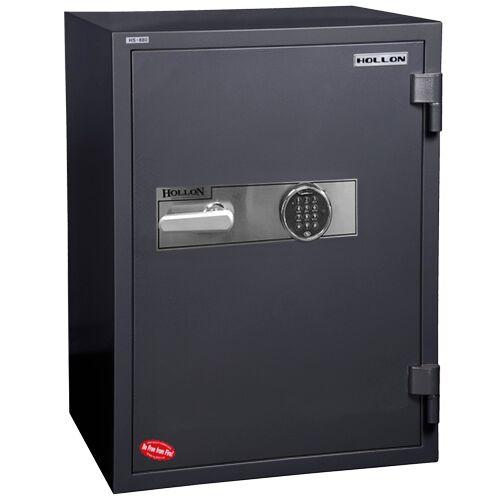
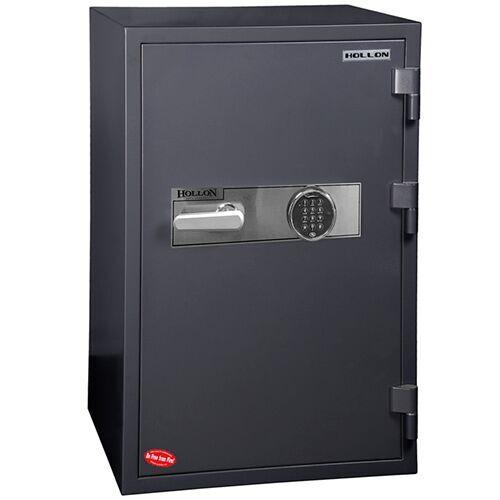
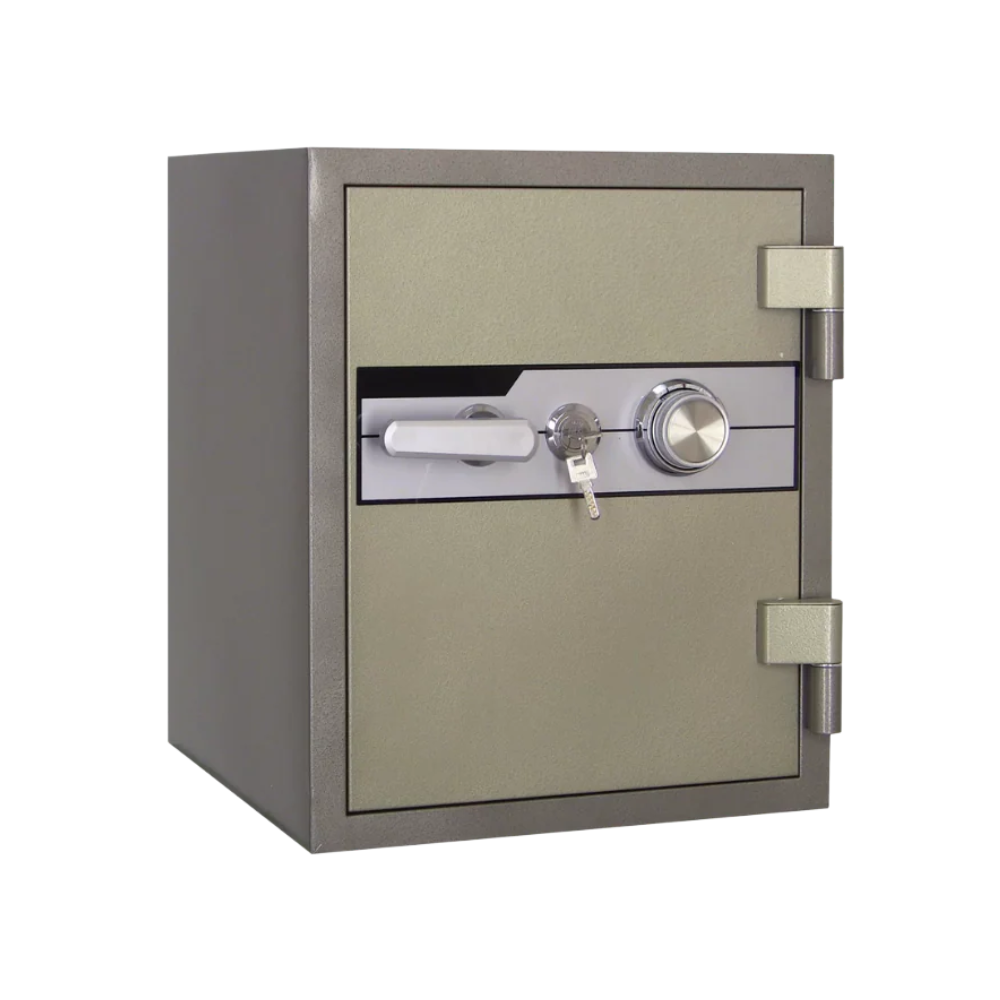
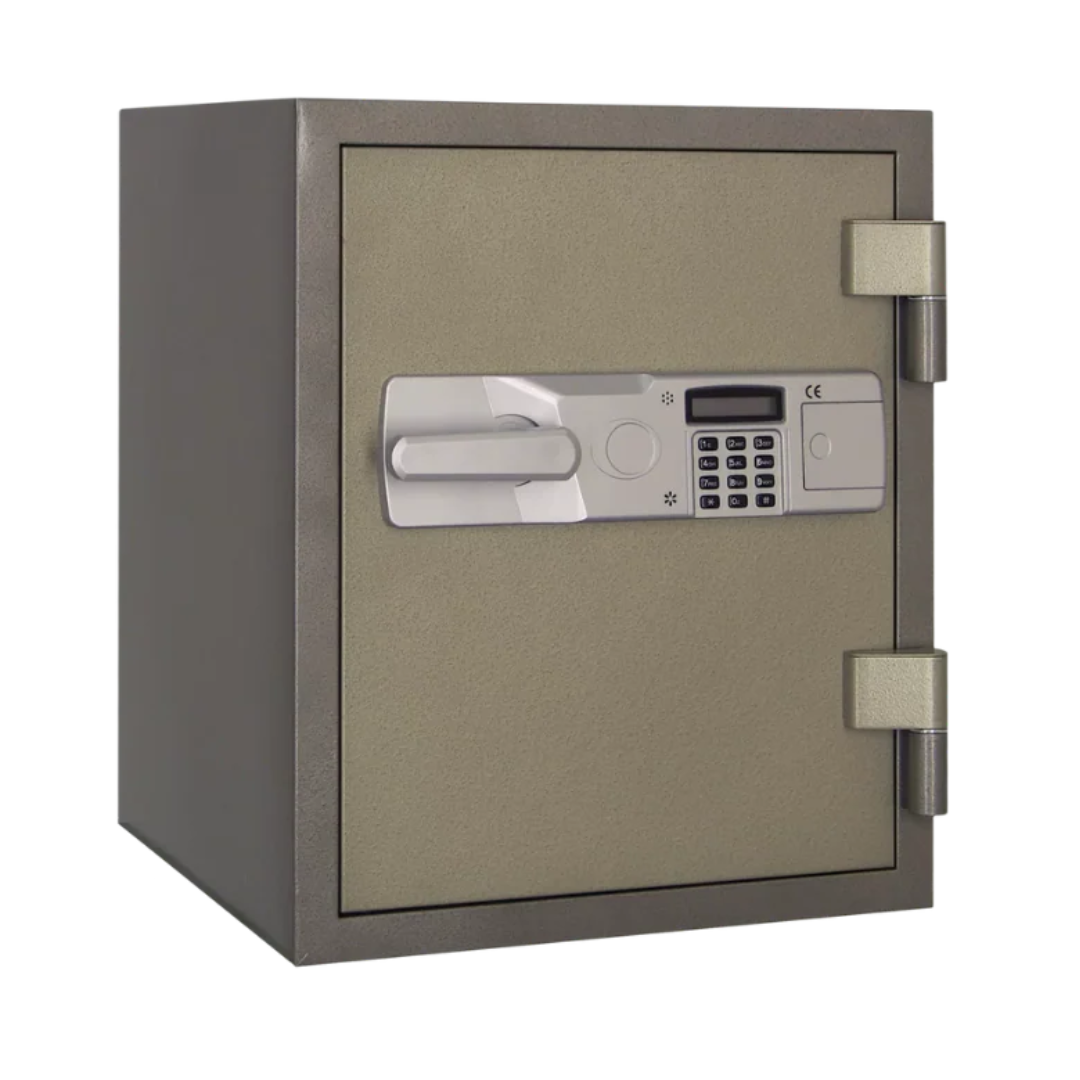
An office safe serves a different purpose than a home safe or gun safe. It needs to protect cash floats, sensitive files, backup drives, and valuable equipment in an environment where multiple people may have access to the same space. The right model depends on how much you need to store, who needs access, and whether fire protection is a priority.
A standard burglary safe offers steel construction and a quality lock, but it will not protect paper documents, backup drives, or USB storage in a fire. Paper chars at 451 degrees Fahrenheit and digital media fails at around 125 degrees. A fireproof office safe keeps the interior below those thresholds for its full rated duration. For any office storing contracts, tax records, or client files, a UL-listed fire rating is not optional.
| Safe Type | Best For | Key Feature |
|---|---|---|
| Electronic Keypad | Multi-staff offices | Changeable codes, no key management |
| Biometric | Owner or manager access only | Fastest access, logs fingerprints |
| Fireproof | Document and media storage | UL-listed fire rating, keeps interior below 350°F |
| Drop Depository | Retail and cash-heavy businesses | Cash drops without opening main compartment |
Office safes range from compact under-desk models that hold a small cash float and a few files, to full-height floor safes that anchor to a concrete floor. For most small offices, a medium-size electronic keypad safe with a fire rating handles both daily cash management and document protection. Anchor every office safe to the floor or wall regardless of its weight. A safe that can be carried out is not secure.
UL listings for office safes cover two separate categories: fire resistance (TL-rated for burglary resistance, ETL for fire) and burglary resistance (RSC for basic, TL-15 and TL-30 for higher security). For most small offices, an RSC-rated burglary safe with a UL-listed fire rating is the appropriate choice. Higher-security TL-rated safes are designed for jewelry stores, pharmacies, and facilities storing high-value inventory.
For most small businesses, a medium-size electronic keypad safe with a 1-hour fire rating covers both cash security and document protection. If your business handles significant daily cash volume, a depository safe with a drop slot is a better choice so employees can make deposits without access to the main compartment.
Yes, always. Even safes that weigh 200 pounds can be removed by two people with a hand truck. Anchoring to a concrete floor or floor joists with the included hardware eliminates this risk entirely. Most office safes include pre-drilled anchor holes and mounting hardware in the box.
Office safes are typically rated for heavier daily use, include audit-friendly access options like changeable codes, and are more often UL-certified for burglary resistance. Home safes focus more on fire protection and ease of use. In practice, many models serve both environments well.
Yes, if the safe is large enough and has a fire rating that protects electronic media. Standard paper fire ratings protect the interior up to 350 degrees Fahrenheit. For laptops and USB drives, look for a safe with a media fire rating that keeps the interior below 125 degrees Fahrenheit, which is the threshold for digital media damage.
Electronic keypad office safes can typically be reprogrammed using a manager override code, which is set during initial installation. The process varies by brand but usually involves holding the reset button with the door open and entering the old code followed by the new one. Keep the manager code in a secure location separate from the safe itself.
Browse our full selection of business and commercial safes: