A gun safe that is too small usually reveals itself at the worst possible time: after you add an optic, bring home another rifle, or realize there is nowhere secure for ammunition, documents, and accessories. Choosing what size gun safe you need is less about counting the guns you own today and more about building a secure, usable setup that will still work a few years from now.
The right answer depends on your firearm types, storage goals, available floor space, and the level of burglary and fire protection you need. Capacity matters, but exterior dimensions, interior layout, weight, and installation access can matter just as much.
What Size Gun Safe Do You Actually Need?
Start with the number and type of firearms you plan to store, then double that number when comparing a safe's advertised gun capacity. That is not overbuying. It is a realistic adjustment for modern firearms and real-world organization.
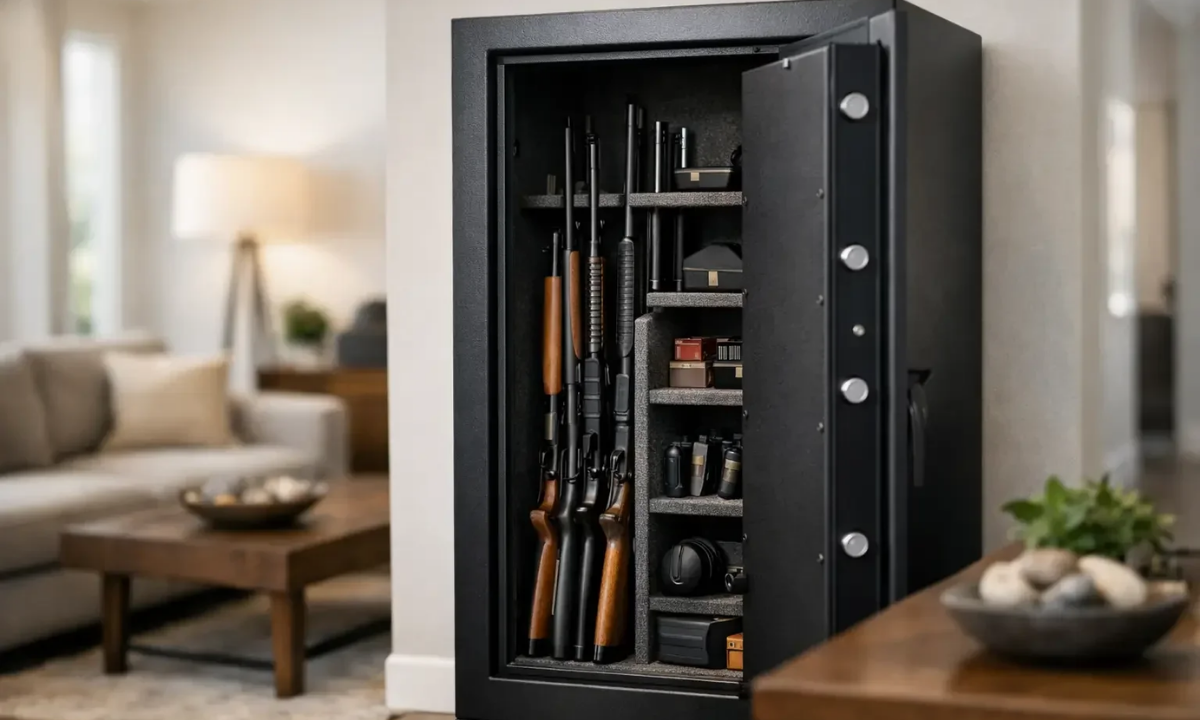
Manufacturers commonly rate capacity using closely spaced, bare long guns. A 24-gun safe may hold 24 slim rifles or shotguns under ideal conditions, but it will not feel like a 24-gun safe once you account for scopes, pistol grips, bipods, slings, and padded interior panels. AR-style rifles especially take up more room than traditional hunting rifles.
For many households, a safe advertised for 24 to 30 long guns is a practical starting point for a collection of 10 to 15 long guns. If you own only a few firearms today but expect your collection to grow, stepping up one size is usually far less expensive than replacing a cramped safe later.
A practical capacity rule
Think in terms of usable capacity rather than the number printed on the product label. If you currently own six rifles and shotguns, a 12- to 16-gun model may work if you have limited space and do not need to store much else. A 20- to 30-gun safe is generally the more comfortable choice when you want room for optics-equipped rifles, handguns, ammunition, or valuables.
For collectors with 15 or more long guns, consider a 36- to 60-gun safe, or evaluate two safes. Two properly anchored safes can offer better organization and placement flexibility than one oversized unit, particularly in a home with stairs or tight hallways.
Measure the Safe's Exterior, Not Just Its Capacity
Before comparing models, measure the space where the safe will live. Record the width, depth, and height, then leave practical clearance for opening the door and accessing the interior. A safe that technically fits inside a closet may be frustrating to use if the door cannot open fully or shelving is blocked by a wall.
Depth deserves special attention. Many full-size gun safes are roughly 24 to 30 inches deep, and the door can add substantial clearance when open. If the safe will sit in a garage, closet, basement, or dedicated safe room, measure the path to that space too. Doorways, turns in hallways, stair landings, and low ceilings can limit what can be delivered and installed safely.
Weight is part of the measurement process. A larger gun safe with meaningful fire protection and thicker steel can weigh several hundred pounds, while high-security models may weigh well over 1,000 pounds. Confirm that the intended floor location can support it, especially on an upper level. A concrete slab is often an ideal location because it supports the weight well and makes anchoring straightforward.
Account for More Than Long Guns
A gun safe often becomes the central security point for much more than rifles and shotguns. Plan interior space for handguns, magazines, ammunition, important documents, family heirlooms, jewelry, and other valuables you want protected from unauthorized access.
Door organizers can make a major difference. They keep pistols, magazines, and small accessories from occupying shelf space, but they also reduce the effective depth available for long guns. Similarly, adjustable shelving is valuable because it lets you trade a few rifle positions for space that better fits your actual gear.
A useful layout is one that separates firearms from the items you access most often. A few adjustable shelves for ammunition and protective cases can be more useful than a tightly packed row of long guns. However, avoid overloading any safe with large amounts of ammunition. Beyond weight and space concerns, local fire code requirements and manufacturer recommendations may affect how and where ammunition should be stored.
Choose Size Alongside Security and Fire Protection
The biggest safe is not automatically the best safe. If your budget forces a choice, prioritize construction quality, a reliable lock, anchoring capability, and an appropriate fire rating over inflated capacity claims.
For a gun safe kept in a lower-risk home environment, look for solid steel construction, locking bolts, a quality electronic, mechanical, or biometric lock, and pre-drilled anchoring holes. A UL-listed lock is a meaningful trust signal because it has been tested to recognized performance standards.
Fire ratings also vary widely. Some gun safes offer protection for 30 minutes, while others are rated for 60, 90, or 120 minutes at specified temperatures. A longer rating can be worthwhile if the safe will store documents, irreplaceable valuables, or firearms in an area where a fire may take longer to reach. Read the rating details rather than relying on broad terms such as “fireproof.” The test temperature, duration, and construction all matter.
If your primary concern is serious burglary resistance, a standard residential gun safe may not be enough. Higher-security safes with heavier steel, composite barriers, relockers, and TL-rated burglary protection are built for a different threat level. They also cost more, weigh more, and may require professional installation. That trade-off is worthwhile for high-value collections or valuables that demand stronger protection.
Plan for Access Without Sacrificing Safety
A full-size gun safe is excellent for long-term storage, but it is not always the best answer for a bedside handgun. If you need fast access for home defense, a dedicated quick-access handgun safe can complement your larger safe. This approach keeps long guns, collectibles, and excess handguns secured in one location while placing an authorized-access option where it is genuinely needed.
Consider who needs access. Electronic locks are convenient and allow quick code changes, while mechanical locks avoid batteries and appeal to buyers who prefer a simple, time-tested system. Biometric locks can be fast, but quality matters. Test enrollment carefully, keep backup access methods available, and avoid treating any single access feature as a substitute for responsible storage practices.
The safe's location should support both security and routine use. A hidden, anchored safe in a climate-controlled interior area is usually preferable to an exposed garage location. Garages and basements can work, but humidity, temperature swings, and water exposure may require extra precautions such as a dehumidifier, moisture control, or an elevated installation.
Do Not Skip Delivery and Anchoring
A gun safe that is not anchored can be tipped, moved, or attacked more easily. Anchoring it to concrete or a properly supported floor structure is one of the most valuable security steps you can take. It also protects children and other household members from the danger of a heavy safe tipping forward when the door is open.
Confirm the safe's mounting-hole layout before purchase and decide whether you will need professional installation. For very heavy safes, delivery is not a standard furniture move. Stairs, narrow turns, and finished flooring can change the installation plan and cost. It is better to identify those challenges before the safe arrives than to compromise on placement afterward.
A Better Way to Make the Final Choice
Choose the safe that fits your space, holds roughly twice the long-gun capacity you need today, and offers the security level appropriate for what you are protecting. Then verify the interior configuration, door clearance, safe weight, delivery route, fire rating, lock type, and anchoring plan.
A thoughtfully sized gun safe gives firearms a secure home without turning every retrieval into a game of rearranging gear. If you are between two sizes and can accommodate the larger model safely, the extra room is usually protection you will be glad to have.