A dedicated gun room should make responsible storage easier every single day. The best gun room setup example is not a room packed wall-to-wall with firearms. It is a controlled space where firearms are secured from unauthorized access, protected from fire and humidity, and organized well enough that you can account for what you own.
For some households, that space is a converted closet with a full-size gun safe. For a collector or rural property owner, it may be a reinforced room with a vault door and several safes inside. The right answer depends on your collection, household, local requirements, budget, and the level of protection you expect from the room itself.
Start With the Room, Not the Accessories
Before choosing racks, cabinets, or lighting, assess the room’s location and construction. A first-floor interior room is often easier to access and may simplify safe delivery. A basement can offer privacy and stable temperatures, but it introduces moisture and flood considerations. An upstairs room can work, although the combined weight of a large safe, firearms, ammunition, and shelving deserves professional review before installation.
Choose a space away from routine foot traffic and obvious exterior sightlines. A room directly visible from a garage, front entry, or street-facing window draws unnecessary attention. At the same time, avoid a location that makes emergency access difficult or forces you to carry heavy items through a tight, unsafe path.
The room itself is part of the security plan, but it should not replace a properly rated safe. Standard interior doors, drywall, and residential locks are not designed to resist determined forced entry. Think of the room as a controlled outer layer. The gun safe, or safes, remains the primary barrier protecting firearms.
Check the floor and delivery path
Weight is one of the most overlooked parts of a gun room plan. A large gun safe can weigh well over 1,000 pounds before it is loaded. Confirm the floor structure, door openings, stairways, turns, and threshold clearances before ordering. Measure the safe’s exterior dimensions and compare them with the delivery route, not just the final room.
A safe also needs working clearance. Leave room to open the door fully, extend drawers or interior racks, and move safely around it. A safe placed tightly into a corner may look efficient but can make the lock, hinges, and interior far less convenient to use.
A Gun Room Setup Example for a Typical Home
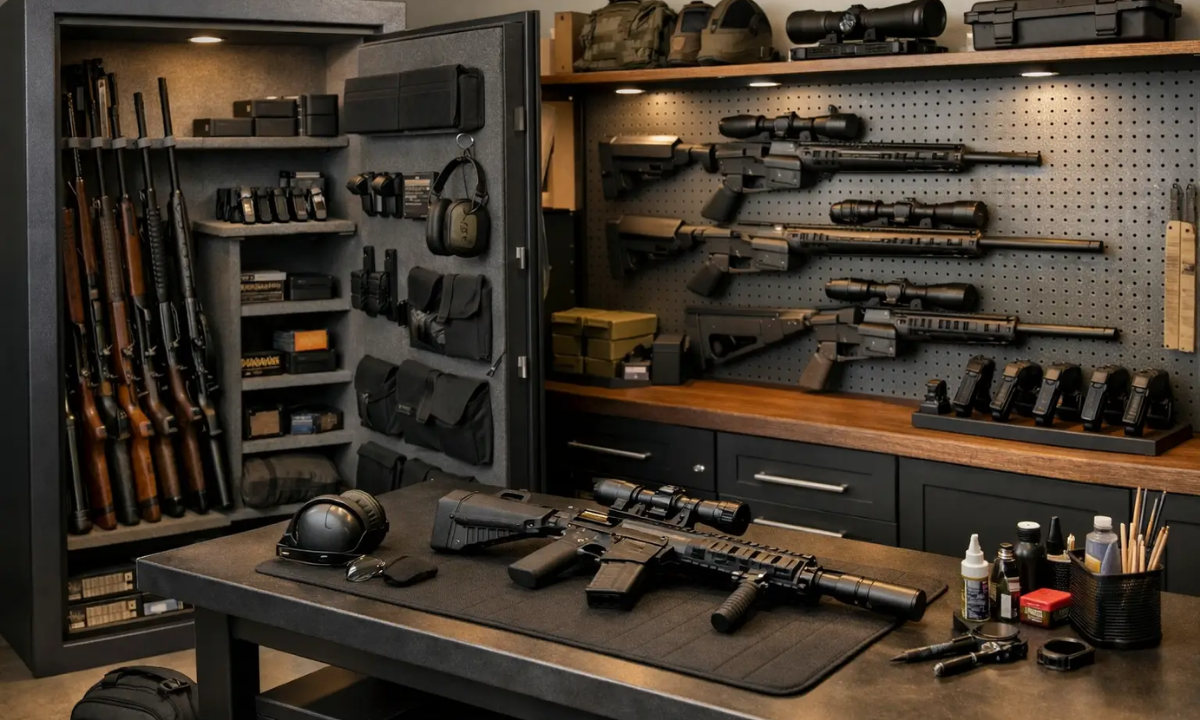
Picture a 10-by-12-foot interior room with one standard entry door and no exterior windows. The main wall holds a fire-rated gun safe that is anchored to the floor according to the manufacturer’s instructions. The safe is sized with future growth in mind, rather than only the firearms currently owned. A practical rule is to buy more capacity than you think you need because stated gun capacities often assume tightly packed, unscoped long guns.
The safe contains long guns, handguns stored in appropriate interior organizers, essential documents, and small valuables that need fire protection. A separate quick-access handgun safe is mounted in a permitted, discreet location outside the gun room only when quick access is genuinely needed and responsible household access controls are in place.
On an adjacent wall, lockable steel storage holds cleaning supplies and non-firearm accessories. Ammunition is stored according to applicable laws, manufacturer guidance, and the owner’s needs, with attention to cool, dry conditions. Keeping ammunition organized and separate from solvents, oils, and other household chemicals makes the room easier to manage.
A narrow work surface provides a clean place for routine inspection and maintenance. It is not a display area and should not encourage leaving firearms unsecured. Closed storage below the bench keeps tools and supplies from accumulating in the open.
This arrangement creates clear zones: secure firearm storage, accessory storage, maintenance space, and environmental control. The room remains functional without becoming cluttered or broadcasting what is inside.
Choose Safe Security Based on the Risk You Are Managing
Not every gun room requires the same safe. A homeowner primarily concerned with keeping firearms away from children and casual theft may choose a quality residential gun safe with a reliable lock, solid door construction, live locking bolts, and anchoring capability. A collector with higher-value firearms may need thicker steel, better burglary resistance, more sophisticated boltwork, and additional layers of security.
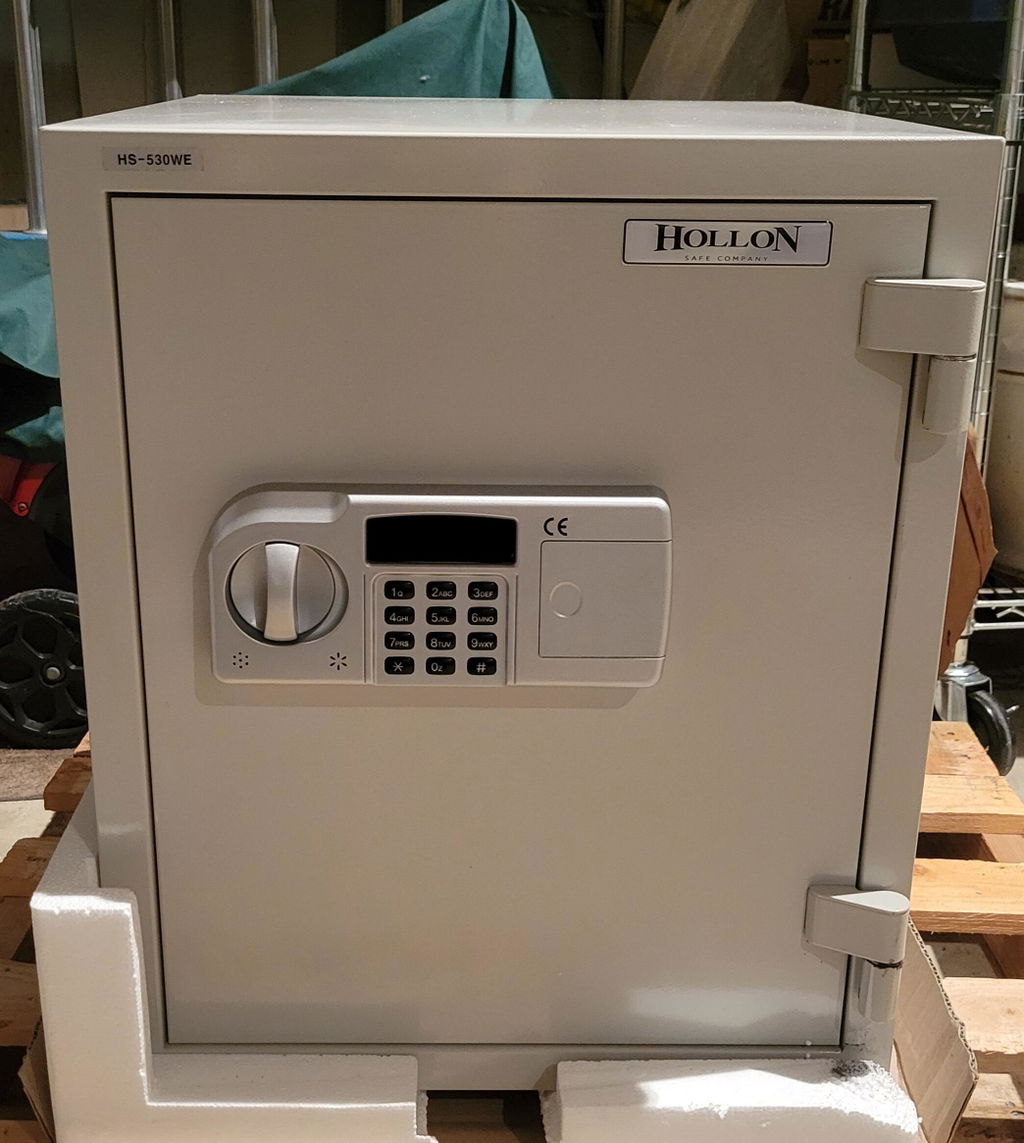
Pay attention to the specifications behind the marketing language. Steel thickness, door construction, lock listing, locking bolts, relockers, and anchor points all affect the safe’s real-world role. A UL-listed lock provides useful reassurance that the lock has been evaluated to recognized standards. For higher-risk collections or locations with greater burglary exposure, burglary-rated safes and vault doors may be worth the additional investment.
Fire protection requires the same careful comparison. Fire ratings vary by testing method, duration, and stated temperature. A safe advertised with a 60-minute fire rating is not identical to every other 60-minute model. Look at the manufacturer’s stated testing information, temperature rating, construction, and whether the protection level matches the documents and valuables stored inside.
A vault door can be a strong choice when converting a properly prepared room into a secure storage area. Still, the wall, frame, ceiling, and surrounding construction matter. Installing a high-security door on a lightly built room does not automatically create a vault. In many homes, a high-quality anchored gun safe delivers the better value and the more predictable level of protection.
Control Access Without Making Daily Use Difficult
The goal is simple: authorized adults should be able to access firearms safely, while children, visitors, and unauthorized individuals cannot. The details vary by household.
Electronic locks offer convenient code access and can be helpful when more than one authorized adult needs entry. Mechanical dial locks have a long-standing reputation for durability and do not rely on batteries, though they take more time to operate. Biometric locks can provide fast access, but fingerprint performance depends on sensor quality, enrollment, clean fingers, and consistent use. A quality safe should have an emergency access procedure consistent with its lock design.
Do not treat the gun room key, safe override key, or lock code casually. Keep access information controlled and avoid obvious hiding places. If household circumstances change, such as a move, divorce, employee departure, or lost key, update access credentials promptly.
Local and state firearm storage laws can differ substantially, particularly where minors or prohibited persons may have access. Review the rules that apply to your location and make the room plan at least as secure as those requirements demand.
Manage Humidity, Fire, and Power Thoughtfully
Humidity is a long-term threat to firearms, optics, documents, and leather accessories. A hygrometer gives you a simple way to monitor conditions. Many owners aim to maintain moderate relative humidity, often around 40% to 50%, but the best setting depends on the climate and materials in the room. Excess moisture encourages corrosion, while extremely dry conditions can affect wood stocks and leather.
A dehumidifier or safe-specific dehumidifying solution may be appropriate, especially in basements and humid regions. If you run power into a gun room, use a qualified electrician and avoid improvised cords passing under doors or through walls. Electrical work should support safety, not create another fire or security concern.
Smoke alarms, appropriate fire extinguishers, and a monitored home security system can add useful layers. They do not make a safe fireproof or burglary-proof, but early warning can reduce losses. Keep paper records and serial-number documentation secured, and consider maintaining protected copies separate from the firearms themselves.
Organize for Accountability, Not Display
A gun room can look impressive, but presentation should never outrank security. Open wall displays may be appropriate only in a truly controlled, professionally secured environment. In most homes, enclosed storage is the wiser choice.
Create a simple inventory with make, model, serial number, photographs, and insurance information where appropriate. Update it when you buy, sell, transfer, or service a firearm. This record can be invaluable after a theft, fire, or insurance claim, and it also makes routine audits easier.
Keep maintenance supplies labeled and contained. Separate oils, solvents, batteries, spare parts, hearing protection, and range gear so they are easy to find without unloading an entire cabinet. A tidy room supports safer handling because it reduces distractions and prevents small items from becoming lost among larger equipment.
Build in Layers and Leave Room to Grow
The strongest gun room designs use layers: a private room location, controlled entry, an anchored safe, sensible access practices, environmental monitoring, and accurate inventory records. No single feature carries the entire burden of protection.
If you are planning your first dedicated space, start with the safe and the room’s physical realities. It is usually easier to add shelving, lighting, and organizers later than to correct an undersized safe, weak installation plan, or inaccessible delivery route. A carefully planned room gives you a practical place to protect what matters most and the confidence that responsible storage is part of your daily routine.