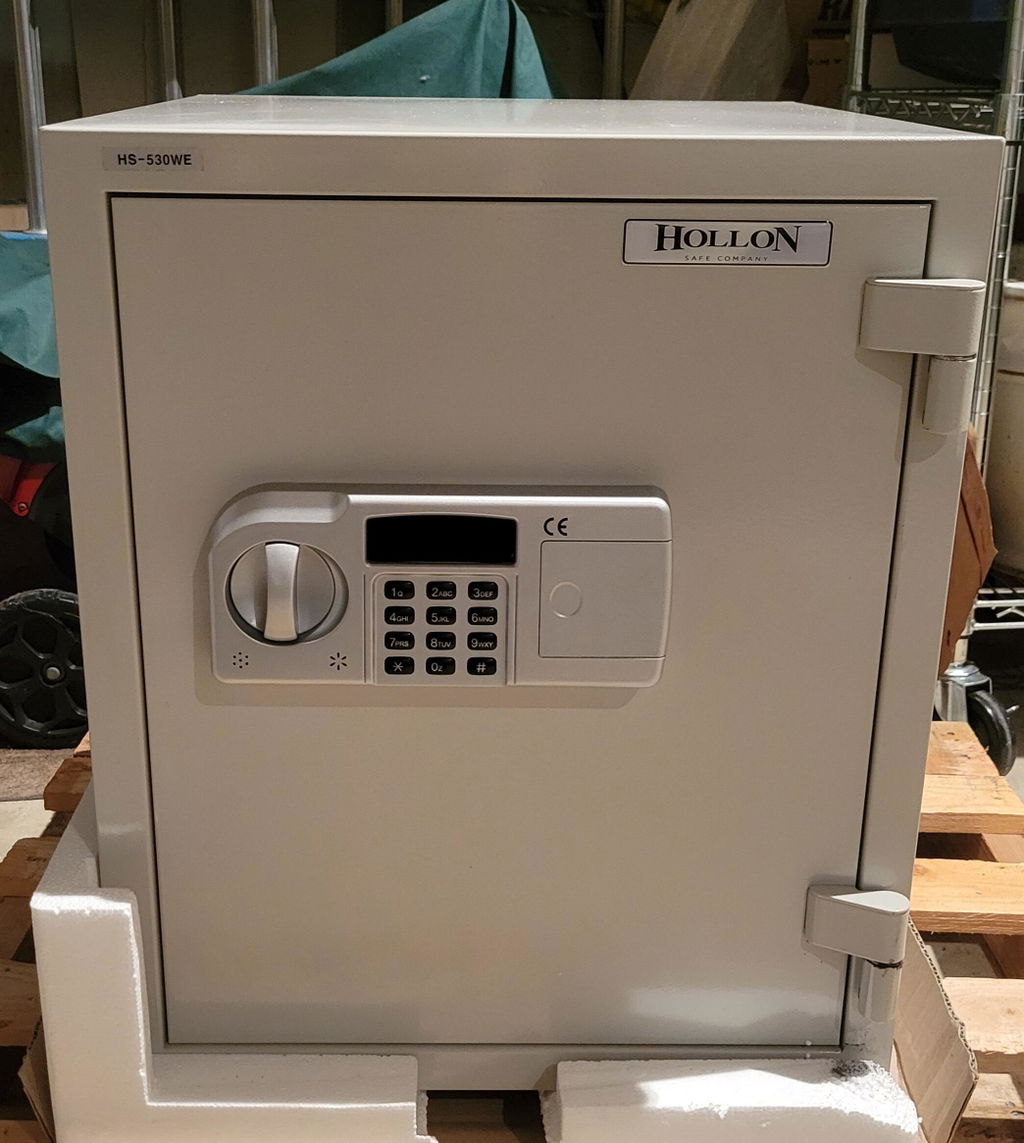
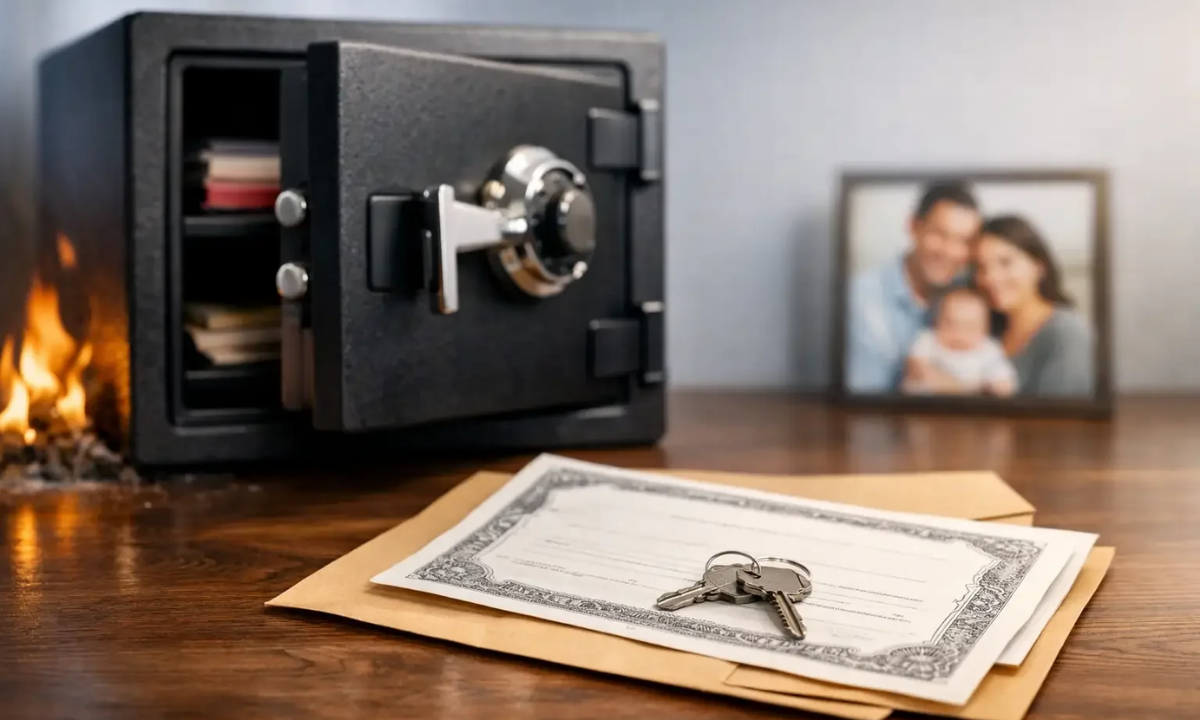
A birth certificate is small, easy to misplace, and surprisingly difficult to replace when you need it quickly. A fireproof safe for birth certificates gives your family a dedicated place to protect this essential record from house fires, water exposure, theft, and everyday household disorder. The right choice is not necessarily the biggest or most expensive safe. It is the one with documented fire protection, practical document storage, and a location your family can access when it matters.
Why Birth Certificates Need More Than a Filing Drawer
Birth certificates tend to sit with other records that are just as hard to replace: Social Security cards, passports, marriage licenses, property documents, vehicle titles, insurance policies, and medical directives. A standard metal filing cabinet keeps papers organized, but it can transfer heat quickly during a fire. A basic lockbox may deter casual access, but many are not rated for meaningful heat exposure or water intrusion.
Paper begins to char and deteriorate at temperatures far below the heat produced by a typical house fire. That is why a safe's fire rating matters more than a marketing label that simply says “fireproof.” A properly designed fire safe uses insulating materials to keep the interior temperature below the point where paper records are likely to be damaged, even while the exterior is exposed to extreme heat.
For most households, the goal is straightforward: preserve original documents so you are not trying to prove your identity, file an insurance claim, or settle an estate while also recovering from a disaster.
What Fire Ratings Actually Tell You
The most useful safe specifications explain how long the safe protects its contents and under what test conditions. You may see manufacturers list a rating such as 30 minutes, one hour, or two hours at a stated temperature. A one-hour fire rating at 1700°F, for example, indicates a much more meaningful level of protection than a vague claim with no time or temperature attached.
Look closely at whether the rating comes from an independent testing organization, such as UL, or from the manufacturer. Independent testing generally provides more confidence because the safe has been evaluated against a defined standard. For paper documents, a UL Class 350 fire rating is a familiar benchmark. The “350” refers to the maximum internal temperature threshold intended to protect paper records.
That said, fire ratings are not a promise that every item will survive every fire. Fire conditions vary based on the size of the home, where the fire begins, how long it burns before firefighters arrive, and whether the building collapses. A longer rating gives you a larger margin of protection, which can be worthwhile if you live in a rural area with longer emergency response times or keep many irreplaceable records at home.
One Hour or Two Hours?
A one-hour fire-rated document safe is often a sensible starting point for birth certificates and a modest household document collection. It offers meaningful protection without requiring the size, weight, or cost of a larger safe.
A two-hour model can make more sense when the safe will also store family archives, estate records, valuable paper collections, or business documents. It is also a practical choice for homeowners who want greater protection against a severe structural fire. The trade-off is simple: longer fire ratings usually mean heavier construction, more insulation, and a higher price.
Water Resistance Is Not an Afterthought
Fire is only part of the risk. Water from sprinkler systems, firefighting hoses, burst pipes, or flood conditions can ruin documents that survive the heat. For a fireproof safe for birth certificates, water resistance deserves nearly as much attention as the fire rating.
Many document safes include a gasket that expands during a fire to help seal the door opening against smoke and water. Some manufacturers also provide water-resistance testing, often measured by how long the safe can withstand water exposure or submersion. Read those claims carefully. “Water-resistant” does not always mean waterproof, and it does not necessarily mean the safe is suitable for a basement that regularly floods.
If basement flooding is a possibility, elevate the safe on a stable platform and avoid placing original documents directly on the bottom of the safe. Store them in archival document sleeves or a sealed document pouch inside the safe. This adds a second layer of protection against moisture, dust, and minor leaks.
Choose the Right Size Before You Buy
The birth certificates themselves need very little room. The mistake is buying a tiny safe based only on today's paperwork, then discovering it will not hold passports, tax records, house documents, family photos, and other items you later decide should be protected.
A compact document safe works well when you need to secure a few critical records in letter-size folders. For a growing family, a larger home safe or fire-rated filing cabinet may be the better fit. Measure the documents you plan to store, including folders and protective sleeves, rather than relying only on a safe's external dimensions.
Interior layout matters too. Adjustable shelves help keep documents flat and accessible. A removable tray can be useful for passports, keys, and small valuables, but make sure it does not consume the space needed for file folders. If you are considering a fire-rated gun safe for documents as well as firearms, remember that its interior capacity may be reduced by door organizers, shelving, and gun storage hardware.
Security Matters, But Match It to the Threat
A fire safe and a burglary safe are not automatically the same thing. Many small fire chests are designed primarily to protect papers from heat and may offer limited resistance against determined forced entry. That can be perfectly appropriate for a safe kept in an occupied home, hidden from plain view, or used as part of a broader home security plan.
If you are storing passports, jewelry, cash, or other high-value items alongside birth certificates, consider a heavier home safe with solid-steel construction, locking bolts, an anchor point, and a quality lock. A safe's burglary protection is influenced by more than steel thickness. Door design, bolt work, relockers, lock quality, and secure installation all play a role.
For higher-value collections or serious burglary concerns, look beyond basic fire chests toward burglary-rated safes. A TL-rated safe provides a different level of protection, but it may be excessive for documents alone. The right answer depends on the value of what is inside and the risks at your property.
Lock Types for Family Documents
Key locks are simple and dependable, but the key itself needs a secure backup location. Combination locks avoid batteries and can provide years of reliable use, although they take longer to open. Electronic keypad locks offer quick access and easy code changes, which many households prefer for frequently needed records.
Biometric access is convenient for some uses, but it should not be the only consideration for a document safe. A reliable override method and clear battery maintenance are more valuable than speed when you may only open the safe a few times a year. Whichever lock you choose, keep the safe's backup keys, override instructions, and combination recovery details separate from the safe itself.
Where You Put the Safe Can Improve Protection
Placement affects both fire exposure and theft risk. Avoid garages, attics, and unfinished sheds, where temperature swings, humidity, and water exposure can be harder on documents and safe components. A first-floor interior location is often practical, especially away from exterior walls and areas with obvious plumbing risks.
Do not overlook weight. Even a modest fire-rated safe can be heavy, while larger safes may require professional delivery, careful floor planning, and anchoring. If the model is designed to be bolted down, use the manufacturer-approved mounting method. Anchoring helps prevent a thief from simply carrying the safe away, but any mounting penetration should be handled according to the safe's instructions so it does not compromise fire or water performance.
A closet can provide discreet storage, but confirm that the door can open fully and that you can remove documents without wrestling with shelves or stored items. The best safe location is secure, dry, accessible to authorized family members, and realistic for regular use.
Organize the Contents So They Are Useful Later
A safe only helps if the documents inside can be found quickly. Use labeled folders for each household member and separate original records from copies. Keep a simple inventory of what is stored, along with issue dates and renewal reminders for passports or other time-sensitive documents.
Digital backups are also wise, but they do not replace originals. Scan birth certificates and other records, then store encrypted copies in a secure digital location. This gives you a reference if the physical document is temporarily inaccessible or damaged, while the original remains protected in the safe.
Check the safe at least once or twice a year. Replace electronic lock batteries before they are depleted, inspect the door seal, and make sure documents remain dry and flat. This is also a good time to remove records you no longer need and add new ones.
A well-chosen document safe is a small part of a larger family preparedness plan. Choose a model with a credible fire rating, practical water protection, enough room to grow, and security that fits your home. When an essential record is needed, the comfort of knowing exactly where it is can be just as valuable as the protection the safe provides.