A house fire may be the emergency people picture first. But the water used to put it out, a burst supply line, a flooded garage, or a storm-driven leak can do just as much damage to paperwork and electronics. So, are waterproof safes worth it? For many homes, the answer is yes - provided you understand what the rating actually promises and do not confuse water protection with burglary protection.
A waterproof safe can be a smart layer of protection for passports, insurance records, backup drives, family photos, cash, and other items that cannot simply be replaced. It is not automatically the best safe for every firearm, jewelry collection, or business cash operation. The right choice depends on what you are protecting, where the safe will sit, and which threat is most likely.
What a Waterproof Safe Actually Protects Against
Most consumer safes marketed as waterproof are better described as water-resistant. Their doors use seals that limit water intrusion during a specific test, often involving submersion at a stated depth for a stated period. A common rating might indicate protection for 24 hours in several inches of water. That can be valuable after firefighting runoff or a short-term basement flood.
The details matter. Water ratings are not universal, and one manufacturer’s claim may be tested differently from another’s. Look for the exact depth and duration rather than relying on a front-label promise alone. A safe rated for 24 hours in 8 inches of water is designed for a very different event than one rated for longer submersion or deeper water.
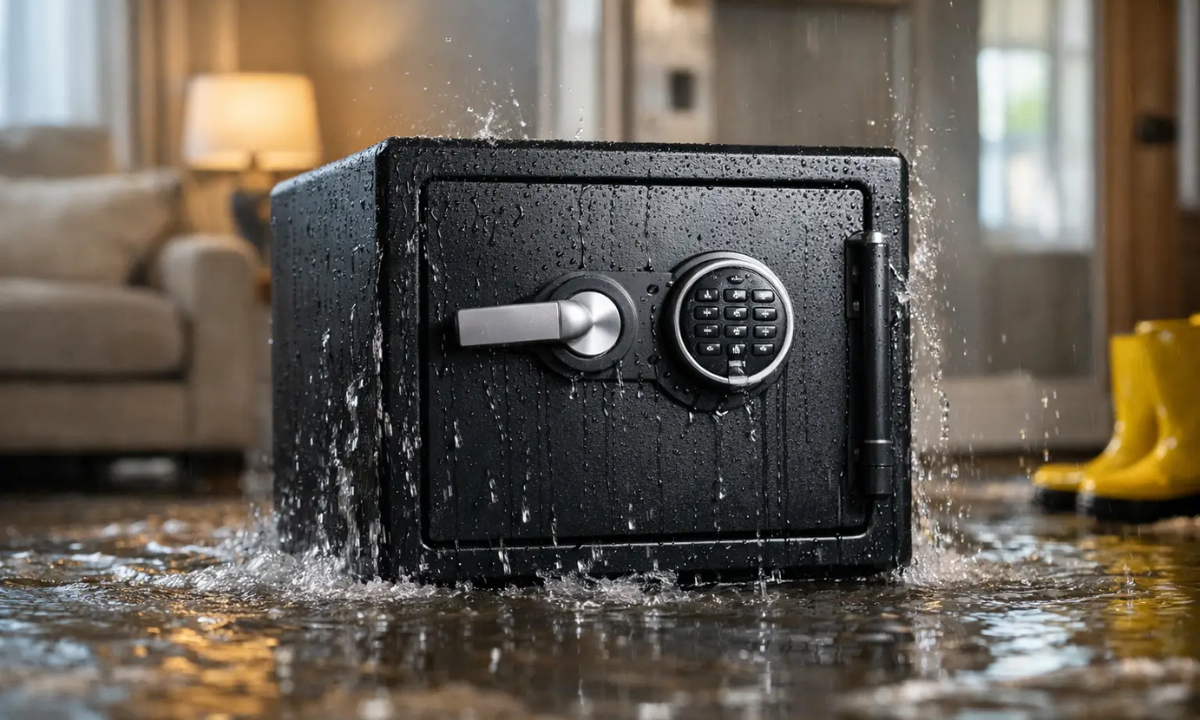
Also consider what happens in a real flood. A safe that floats, tips over, or is carried by moving water may experience pressure, impacts, and prolonged exposure beyond its rating. Water can enter through damaged door seals, cable openings, bolt holes, or areas altered during installation. A rating is meaningful protection, not a guarantee that every item will emerge perfectly dry after every disaster.
Are Waterproof Safes Worth It for Documents?
For paper records, waterproof protection is often well worth the extra cost. Birth certificates, property deeds, vehicle titles, Social Security cards, estate documents, and irreplaceable photos can be ruined quickly by water. Even when paper is recoverable, drying and restoration are time-consuming and expensive.
A fire-rated safe with a credible water-resistance rating offers useful protection against the two hazards that often arrive together. During a fire, sprinklers or hoses can soak the room long after flames are controlled. A safe that handles heat but allows water inside may still leave you with swollen, smeared, or mold-prone documents.
For digital media, be more selective. USB drives, external hard drives, SSDs, and optical media can be harmed by heat, moisture, or both. Standard fire-safe interiors may stay too hot for sensitive media even when paper survives. If digital backups are a priority, choose a safe or separate media container specifically rated for the temperature and water exposure that electronic media requires. Keep a second encrypted backup off-site as well.
Water Protection Is Not the Same as Security
A common buying mistake is choosing a waterproof fire chest for items that really need burglary protection. Portable document safes can do a good job protecting papers from heat and water, but many have lighter construction, simple locking mechanisms, and limited resistance to prying or forced entry.
If you are storing jewelry, significant cash, collectibles, or firearms, start with the security level. Look at steel thickness, door construction, locking bolts, relockers, lock quality, and anchoring provisions. For higher-value assets, a burglary-rated safe, including a TL-15 or TL-30 model when appropriate, offers a substantially different level of attack resistance than a basic fire safe.
Water resistance may still be a useful feature, but it should not be the deciding specification. A well-built burglary safe anchored to a concrete floor is harder to remove or pry open than a lightweight waterproof chest. The best protection comes from matching the safe’s construction to the loss you are trying to prevent.
The Gun Safe Question: Useful, With a Catch
Waterproof protection can make sense in a gun safe, particularly for owners who keep safes in basements, garages, or areas exposed to plumbing risks. It can help protect records, accessories, and the safe’s contents from limited water exposure after an emergency.
The catch is humidity. A tightly sealed safe can trap moisture inside, especially after opening it in humid weather or placing damp items inside. Firearms, ammunition, optics, and metal accessories need a controlled interior environment. Use a quality dehumidifier or desiccant system, monitor humidity with a hygrometer, and inspect it regularly. Water resistance outside the safe does not eliminate the need for corrosion prevention inside it.
Gun owners should also prioritize responsible storage features: sufficient capacity, reliable locking, solid boltwork, an appropriate fire rating, and secure anchoring. A quick-access handgun safe has different needs than a full-size rifle safe. A waterproof claim is a worthwhile bonus only when the safe already meets your security and access requirements.
Where You Install It Changes the Answer
A waterproof safe is most valuable when the installation location has a realistic water risk. Basements, ground-floor utility rooms, garages, and homes in flood-prone areas are obvious examples. A safe near a water heater, washing machine, or exposed plumbing deserves extra consideration too.
Placement is still your first line of defense. Elevate a safe or its contents when possible. In a garage or basement, a concrete or steel pedestal can help reduce exposure to shallow flooding. Avoid placing a safe directly below plumbing, near a sump pump, or against a wall known to take on water.
Anchoring needs some thought. Bolting a safe down improves theft resistance, but it can create penetration points in the base unless the manufacturer provides a sealing method or specifically approves the installation. Follow the safe manufacturer’s instructions exactly. Do not drill additional holes in a water-resistant safe without confirming the effect on its protection and warranty.
What to Check Before You Buy
When comparing models, ask for the performance information behind the marketing language. A useful waterproof safe should clearly state the tested water depth, test duration, and whether the rating applies to a closed and locked safe. If the claim is vague, treat it as a convenience feature rather than disaster protection.
Next, compare the water rating with the fire rating. A 30-minute fire rating may be adequate for some document storage needs, while homes with longer emergency response times may justify 60 minutes or more. Fire ratings should identify the tested temperature and duration, because not all ratings measure the same conditions.
Then evaluate capacity honestly. Documents grow over time, and adding binders, media cases, or heirlooms fills a small safe fast. Buy enough interior space for the items you need to protect now, with room for the records you will accumulate later.
Finally, consider weight and installation. Heavier safes generally offer better security and stability, but delivery access, flooring, stairways, and final placement must be planned before purchase. A professionally placed and properly anchored safe is usually safer than a larger model that ends up sitting unsecured in an inconvenient spot.
When a Waterproof Safe May Not Be Worth the Premium
You may not need water resistance if your safe will be on an upper floor, away from plumbing, and used mainly for lower-value items. In that case, your budget may be better spent on stronger burglary construction, a better lock, or professional anchoring.
It can also be unnecessary for a business that needs frequent cash deposits. A depository safe should be selected first for its cash-handling design, burglary resistance, and operational controls. For a pharmacy, retail store, or restaurant, access management and attack resistance often matter more than submersion protection.
That said, water protection is usually a sensible investment when replacing destroyed documents would be painful, when the safe is located below grade, or when fire protection is already part of the plan. The price difference is often small compared with the cost and disruption of recovering from water damage.
Choose the safe around the items and risks you actually have, not the longest feature list. If your goal is to protect what matters most from fire, water, and theft, the strongest choice is the one with ratings and construction that fit your home, your valuables, and its final installation location.