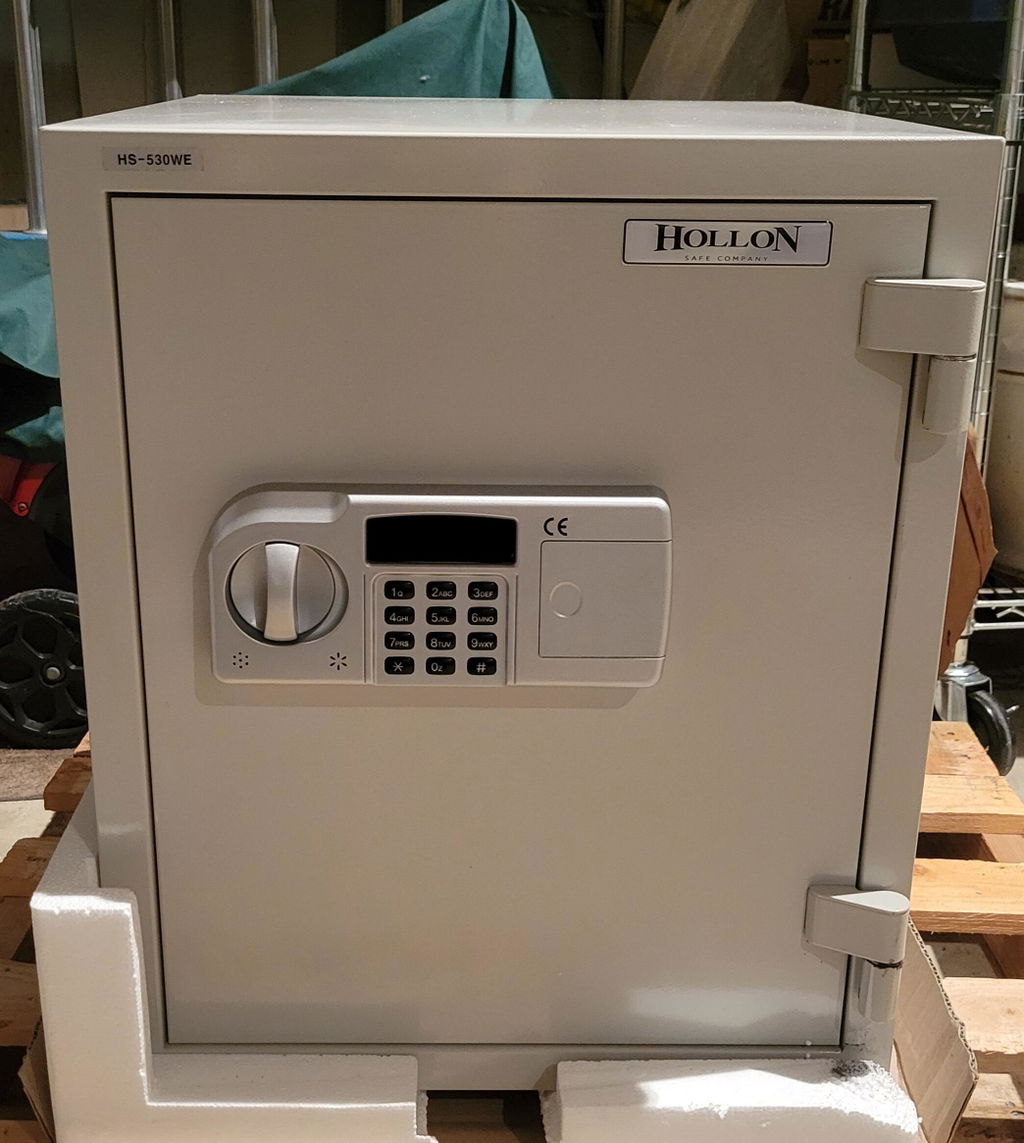
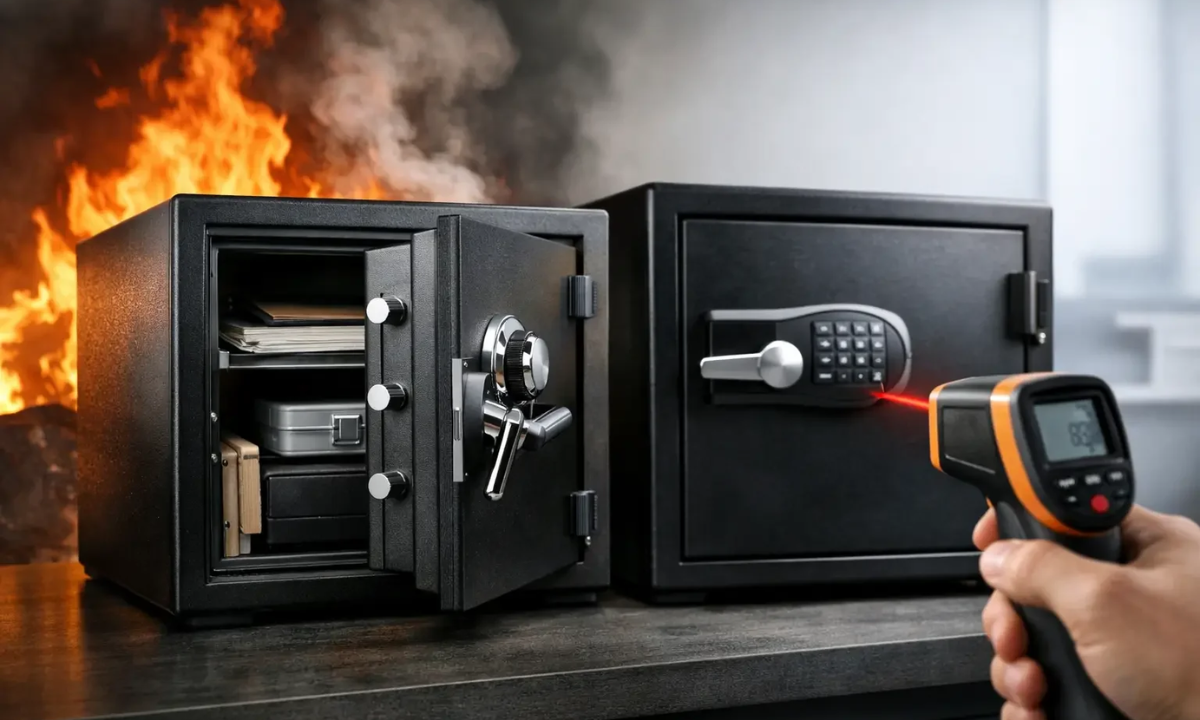
A safe labeled “fireproof” can still offer very different protection from the one beside it. Knowing how to compare fire ratings means looking past the largest number on the product page and asking what was tested, for how long, at what temperature, and what the safe was designed to protect.
For a homeowner protecting passports and family records, a 30-minute rating may be appropriate. For a gun owner with an irreplaceable collection, or a business storing records that cannot be recreated, the right answer may be a heavier safe with a longer, independently tested rating. The goal is not to buy the highest rating by default. It is to match the protection to the real risk.
Start With the Full Fire-Rating Claim
A fire rating should describe a test, not just a marketing promise. At a minimum, compare three figures: the length of exposure, the external furnace temperature, and the interior temperature the safe maintained during testing.
A claim such as “60 minutes at 1,400°F” means more than “1-hour fire rating,” because it tells you the heat level involved. A 60-minute test at 1,200°F and a 60-minute test at 1,700°F are not equivalent. Fire temperatures vary based on the structure, fuel load, ventilation, and where the safe sits in the building. A rating is a controlled test result, not a guarantee that every possible fire will produce the same outcome.
Also read the wording carefully. A product may state that it has fire-resistant materials or a fire seal without claiming that the completed safe passed a timed fire test. Those construction features can be valuable, but they are not a substitute for a documented rating.
Compare Fire Ratings by Test Standard
The most useful ratings identify the testing organization and classification. UL is one of the most recognized independent testing organizations in the safe industry. UL fire classifications focus on the maximum interior temperature a container maintains while exposed to fire for a specified period.
UL Class 350: Paper Documents
UL Class 350 products are intended to protect paper records. During the test, the interior must remain below 350°F. Since paper can begin to char or ignite at temperatures around that threshold, this is the classification most relevant to birth certificates, deeds, tax records, contracts, photographs, and many other paper valuables.
You may see Class 350 ratings for one-half hour, one hour, two hours, or longer. When all else is equal, a two-hour Class 350 rating provides a longer tested period than a one-hour Class 350 rating. But the safe’s size, placement, and burglary protection still matter before you decide it is the better purchase.
UL Class 150 and Class 125: Digital Media
Digital media is more heat-sensitive than paper. Hard drives, USB drives, DVDs, backup tapes, and similar media can be damaged well before paper burns. UL Class 150 keeps the interior below 150°F, while Class 125 maintains an even lower interior temperature and tightly controls humidity.
A typical gun safe with a strong 60- or 90-minute fire claim may be suitable for firearms and some paper documents, but it should not automatically be treated as a safe storage solution for sensitive electronic media. If digital records are central to your home or business, use a media-rated insert or a separate UL-rated media safe.
Manufacturer Fire Tests
Many residential and gun safe manufacturers publish fire ratings based on their own furnace testing or testing performed by another laboratory. These ratings can still help you compare models within the same brand or testing method. The key is to avoid treating unlike claims as interchangeable.
For example, a safe rated for 75 minutes at 1,400°F under one manufacturer’s testing protocol cannot be directly measured against a safe rated for 60 minutes at 1,680°F under a different protocol unless you understand the test conditions. Look for details on the test temperature, duration, internal temperature target, and whether the safe was independently verified.
Do Not Compare Duration Alone
“Two hours” looks better than “one hour,” and often it is. But duration by itself leaves out too much information. The longer rating could have been tested at a lower furnace temperature, under a different standard, or on a smaller model than the one you are considering.
When comparing two safes, use the same order every time: first identify the standard or test source, then compare duration, external temperature, and interior protection level. That approach prevents a bold headline number from doing all the work.
It also helps to ask whether the rating applies to the exact model. Fire performance can vary across a safe series as dimensions, door design, insulation thickness, and interior volume change. A manufacturer may use a representative test, but a serious purchase deserves confirmation that the stated rating applies to the model you plan to order.
Match the Rating to What You Store
Fire ratings are most useful when tied to the contents that matter most. Paper records generally need a documented paper-protection rating. Digital media needs a lower-temperature environment. Firearms need protection from heat, smoke, and damage to stocks, optics, and finishes, but a gun safe should also be evaluated for access control, theft resistance, capacity, and anchoring.
For many gun owners, a 60- to 90-minute fire-rated gun safe offers a practical balance of protection, weight, interior space, and budget. A larger rating can be worthwhile when the safe is in a rural location with longer fire department response times, when it stores high-value collections, or when the property presents a greater fire exposure.
Businesses should think about recovery time. A retail store may need to protect cash and daily receipts overnight, while a pharmacy or office may need records that support operations after a loss. A fire-rated record safe or fire file cabinet may be a better fit than using a burglary-focused depository safe for everything.
Understand What a Fire Rating Does Not Tell You
A fire rating and a burglary rating measure different threats. A safe can be highly fire-resistant without offering meaningful defense against forced entry. Likewise, a heavy TL-rated burglary safe may not provide the document-level fire rating required for paper records or media.
Evaluate security separately. Look at the steel construction, lock listing, bolt work, relockers, door design, and whether the safe can be professionally anchored. For higher-risk cash, jewelry, or commercial inventory, a UL TL-15 or TL-30 burglary rating addresses a different question: how long the container resisted a defined tool attack.
Water resistance is separate, too. Heat can activate expanding door seals that help block smoke and hot gases, but that does not necessarily mean a safe is waterproof or designed to withstand firefighting water. If flood exposure, sprinklers, or hose runoff are concerns, look for a specific water-resistance claim and understand the stated depth and duration.
Consider Placement, Weight, and Installation
The best fire rating can be undermined by a poor installation. A safe on an upper floor may face greater fall risk if the structure collapses. A safe in a garage can be exposed to fuel, chemicals, or a fast-moving fire. A safe in a basement may avoid some direct heat but face water and debris after suppression efforts.
There is no universally perfect location. Choose a place that is practical for daily access, limits visibility to visitors, allows secure anchoring, and can support the safe’s weight. Confirm floor capacity before placing a large gun safe, TL-rated safe, or fire file cabinet on an elevated floor.
Keep the safe organized as well. Important documents should be stored in sealed sleeves or folders, and digital media should go into a properly rated media container. Avoid packing a safe so tightly that you cannot quickly locate critical items during an evacuation or recovery.
Questions to Ask Before You Buy
Before comparing prices, get clear answers to these questions:
- What standard or test protocol supports the fire-rating claim?
- How long was the safe tested, and at what external temperature?
- What interior temperature was maintained during the test?
- Does the rating apply to paper, digital media, firearms, or general contents?
- Is the claim for the exact model and size being purchased?
- Does the safe also meet the burglary, water, access, and anchoring needs of the location?
A knowledgeable safe specialist should be able to help translate these specifications into a practical recommendation rather than simply steering you toward the longest advertised rating.
A fire rating is one part of a complete protection plan, not a label to compare in isolation. Choose the safe that gives your specific valuables the right level of tested fire protection, then install it thoughtfully and secure it against the risks that matter at your property.