Biometric Door Locks

1 product

Showing 1 - 1 of 1 product

Showing 1 - 1 of 1 product
View
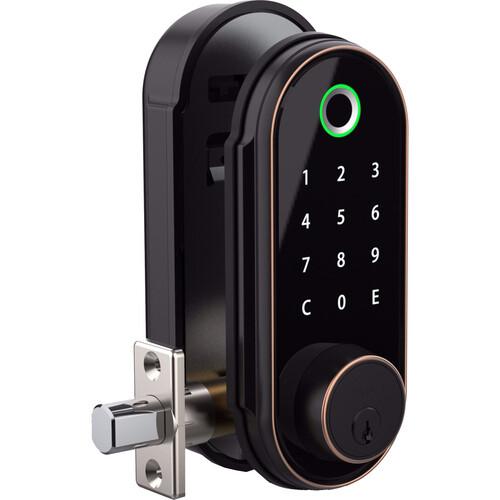
Barska Ea13580 Biometric Keypad Door Lock

Biometric Door Locks: What to Know Before You Buy

A biometric door lock reads a fingerprint in under a second and either grants access or holds firm. That speed is the whole point. When you are carrying groceries, managing a child, or arriving home late at night, a lock that responds to your hand instead of a key or a code removes one friction point from a moment that already has enough of them. Secure Zoned carries biometric locks across a range of form factors so you can match the technology to the door without compromising on finish or security grade.

The core technology is a capacitive or optical fingerprint sensor embedded in the handle or deadbolt body. The sensor maps ridge patterns, converts them to an encrypted template stored in onboard memory, and compares that template to a live scan at the moment of entry. Most residential-grade units accept between 10 and 100 fingerprints, making it practical to enroll every adult in a household plus a backup or two. Better units also include a keypad or physical key cylinder as a fallback when the sensor is wet, dirty, or depleted.

Battery life is the variable most buyers underestimate. A quality biometric deadbolt runs on four AA batteries and handles 10,000 or more cycles before a swap is needed. A low-end unit may drain in weeks under heavy use. If the lock is on a door that opens dozens of times a day, look for a model that warns you at 20 percent capacity and includes a 9-volt emergency terminal on the exterior face so you can jump-start it from outside if the batteries die unexpectedly.

Biometric Deadbolt vs Biometric Handle Set: Which Fits Your Door?

Feature Biometric Deadbolt Biometric Handle Set
Primary use Adds a second bolt above existing handle Replaces handle and lock in one unit
Installation complexity Low; standard 2-1/8 in bore Moderate - requires matching bore pattern
Security grade ANSI Grade 1 or 2 available Usually Grade 2
Best for Exterior front and back doors Interior doors, offices, secondary entrances
Finish options Satin nickel, matte black, bronze Satin nickel, matte black

How many fingerprints can a biometric door lock store?

Most residential biometric door locks store between 10 and 100 fingerprint templates. Entry-level models land at 10 to 20, which covers a typical household. Higher-capacity units that store 50 to 100 are better suited to rental properties, small offices, or any door where multiple authorized users rotate over time. Each user can usually enroll both a primary and a backup finger, which matters if one hand is ever wet, gloved, or injured.

What happens if the battery dies on a biometric lock?

Most biometric door locks include a low-battery warning light or audible alert when charge drops below 20 percent. If the battery is fully depleted before you replace it, the majority of models have a 9-volt emergency terminal on the exterior keypad face. Touching a standard 9-volt battery to those contacts provides enough power to authenticate and enter. Always keep a spare 9-volt somewhere accessible outside the door for this scenario.

Are biometric door locks secure enough for a front door?

ANSI Grade 1 biometric deadbolts meet the same physical security standards as keyed deadbolts at that grade, including 250-pound forced-entry resistance and a 1-inch throw bolt. The fingerprint sensor itself is encrypted and cannot be spoofed by a photograph or a lifted print on consumer-grade units. The main gap is connectivity: WiFi-enabled models have a larger attack surface than offline units, so for maximum security on a primary exterior door, an offline Grade 1 deadbolt with keypad backup is the strongest combination.

Recently viewed