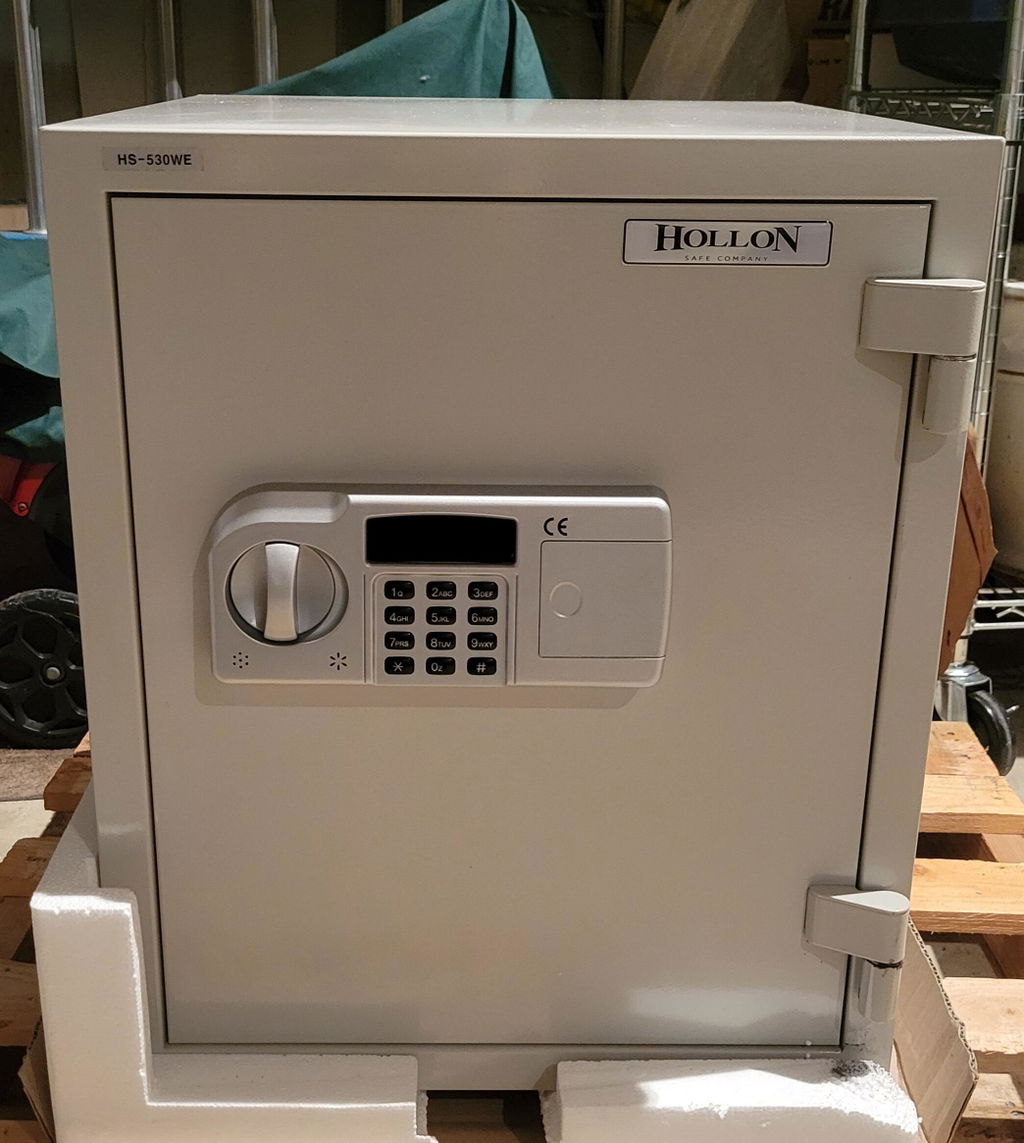

A fingerprint reader can make a safe feel remarkably simple: place a finger on the scanner, hear the lock release, and access what you need without searching for keys or entering a code. That convenience is exactly why a biometric safe review needs to look beyond the scanner itself. For a bedside handgun safe, document safe, or office lockbox, the better choice depends on how reliably the safe opens for you, how well it resists unauthorized access, and whether its construction matches the valuables inside.
Biometric safes are not all built for the same job. A compact quick-access safe may prioritize opening speed and a bolt-down mounting plate. A larger fire-rated safe may use a biometric lock as one access option alongside a keypad, while its steel body, locking bolts, and fire protection do the heavier security work. Knowing the difference helps you pay for the protection you actually need.
What a Biometric Safe Actually Does
A biometric lock identifies an enrolled fingerprint rather than relying only on a key or numeric code. Most consumer safes use an optical or capacitive fingerprint sensor. After you program one or more fingerprints, the scanner compares a new scan with the saved data and signals the lock to open when it finds a match.
The benefit is practical: authorized users do not have to remember a combination under pressure, and a curious child cannot simply watch someone enter a code. Many models can store multiple fingerprints, which is useful for a spouse, trusted family member, or designated employee.
Still, a fingerprint reader is an access method, not a complete security rating. It does not tell you how thick the steel is, whether the door has pry resistance, how the safe handles fire, or whether it can be anchored. A fast-opening biometric safe with light construction can be an appropriate solution for controlled quick access, but it is not a replacement for a burglary-rated or TL-rated safe protecting high-value assets.
Biometric Safe Review: The Features That Matter Most
When comparing biometric safes, start with the operating experience. Then examine the physical security around the lock. The best model is one that meets both requirements for your setting.
Recognition speed and consistency
Fast access matters most with a handgun safe. A good scanner should recognize an enrolled fingerprint consistently in ordinary conditions, not only after several careful attempts. Product specifications may describe a claimed opening time, but the more meaningful question is whether the reader works with the natural way you place your finger when you are tired, stressed, or reaching from an awkward angle.
Fingerprints can be affected by moisture, dirt, lotion, minor cuts, and very dry skin. That does not make biometric access unreliable by definition, but it is a reason to enroll the same finger more than once from slightly different angles when the lock allows it. Enrolling two or three fingers per authorized user also gives you a sensible backup if one finger is injured.
For a bedside safe, test the reader during the day before relying on it at night. Practice opening the safe with the lighting and positioning you will actually use. If the safe is intended for defensive firearm storage, ensure it opens without requiring a sequence that feels difficult from your normal sleeping position.
Backup access is not optional
Every electronic or biometric safe should provide a dependable backup method. Depending on the model, that may be a mechanical override key, an electronic keypad, an external battery connection, or more than one of these options.
A backup key is useful, but it creates a responsibility: it must be stored securely away from the safe. Keeping it in an obvious drawer next to a handgun safe defeats much of the access control the safe is meant to provide. A keypad backup can be convenient for everyday use, while an external battery terminal can prevent a dead battery from turning a simple battery change into a lockout.
Before buying, check exactly how emergency access works. Some override keyholes are hidden behind a small cover. Others are more visible. Neither approach is automatically better, but you should understand the trade-off between quick recovery and a less exposed lock face.
Construction, door design, and mounting
A biometric lock can only protect the container it is installed on. For compact safes, look at the steel gauge, door thickness, latch or bolt design, and hinge placement. A pry-resistant door edge and a solid locking mechanism matter more than a glossy finish or a large number of stored fingerprints.
Mounting is equally important. A portable safe that is not secured can be removed and attacked elsewhere. Many quick-access handgun safes include pre-drilled mounting holes, a cable, or both. A cable can add a layer of deterrence in a vehicle or temporary location, but direct mounting to a solid surface is usually the stronger choice for a permanent home setup.
Use the manufacturer-provided mounting hardware when appropriate, and confirm what sits behind the surface before drilling. A nightstand, closet shelf, vehicle console, wall stud, or concrete floor each require a different approach. The goal is not merely to hide the safe. It is to make forced removal more difficult while keeping authorized access practical.
Power and low-battery behavior
Most biometric safes run on standard batteries. Battery life varies based on scanner use, interior lighting, and lock design, so replace batteries on a schedule rather than waiting for a warning tone. A fresh set of quality batteries is inexpensive insurance against an inconvenient lockout.
Review the safe's low-battery warning and emergency power options. Also pay attention to whether the safe retains fingerprint data during a battery change. Many models do, but confirming this detail before purchase can prevent surprises.
For a safe protecting firearms, avoid treating the battery compartment as an afterthought. Make sure you can reach it according to the manufacturer's instructions without compromising the safe's installation or your ability to maintain it safely.
Choose the Safe Type Before Choosing the Lock
A biometric lock makes the most sense when access speed is a primary need. That usually points to handgun safes, bedside safes, vehicle safes, and certain office applications. If you are securing a home-defense handgun, a compact biometric model can help keep the firearm unavailable to children and unauthorized visitors while still allowing prompt access for a trained owner.
For rifles, shotguns, collections, jewelry, or irreplaceable documents, a full-size safe may be the better starting point. In that category, evaluate fire ratings, body steel, door construction, boltwork, lock listing, and anchoring capacity first. Biometric entry can be a useful convenience feature, but it should not distract from the safe's fundamental protection level.
Business buyers should take a similar approach. A biometric cabinet can support restricted access for keys, small valuables, or controlled supplies, but cash-heavy retail operations may need a depository safe. Pharmacies may need a solution designed for their specific storage and access-control requirements. For larger cash reserves or high-value inventory, burglary ratings and professional installation deserve more weight than a fingerprint reader.
Common Trade-Offs to Consider
Biometric access is convenient, but it has limits. A mechanical dial lock has no batteries to replace and can be an excellent choice for long-term security, though it is slower to open. An electronic keypad is often quicker than a dial and easier for multiple users, but its code can be observed or shared. A biometric lock avoids the memorization issue, yet it depends on clean scans, battery power, and quality electronics.
There is no universally best lock type. A homeowner who needs immediate access to a secured handgun may reasonably prioritize a biometric safe with keypad and key backup. A collector protecting firearms and valuables from burglary may favor a heavier safe with a proven electronic or mechanical lock, substantial steel, and secure anchoring. A business owner may choose based on audit needs, employee access, and cash-handling procedures.
Be cautious of features that sound impressive without explaining performance. High fingerprint capacity may be useful for a workplace, but it is less meaningful for a one- or two-person household. Interior lights, silent mode, and charging ports can improve daily use, but they do not replace a strong door, secure mounting, and a reliable locking system.
Questions to Ask Before You Buy
A focused comparison is easier when you can answer a few practical questions. What are you protecting? How quickly do you need access? Where will the safe be installed? Who needs authorized entry? What happens if the battery dies or the scanner misses your fingerprint? Finally, what level of forced-entry and fire protection does the situation call for?
Measure the installation space and the items going inside before ordering. For handgun storage, account for the firearm, magazines, holster if applicable, and the room needed for the door or lid to open. For document storage, verify internal dimensions rather than assuming letter-size papers or folders will fit flat. For mounted safes, check the footprint, lid clearance, and cable or bolt location.
A biometric safe earns its place when it makes responsible storage easier to use every day. Choose one with reliable backup access, construction appropriate to the risk, and a mounting plan that supports the protection you expect. The right safe should give you fast access when it is truly needed and quiet confidence the rest of the time.