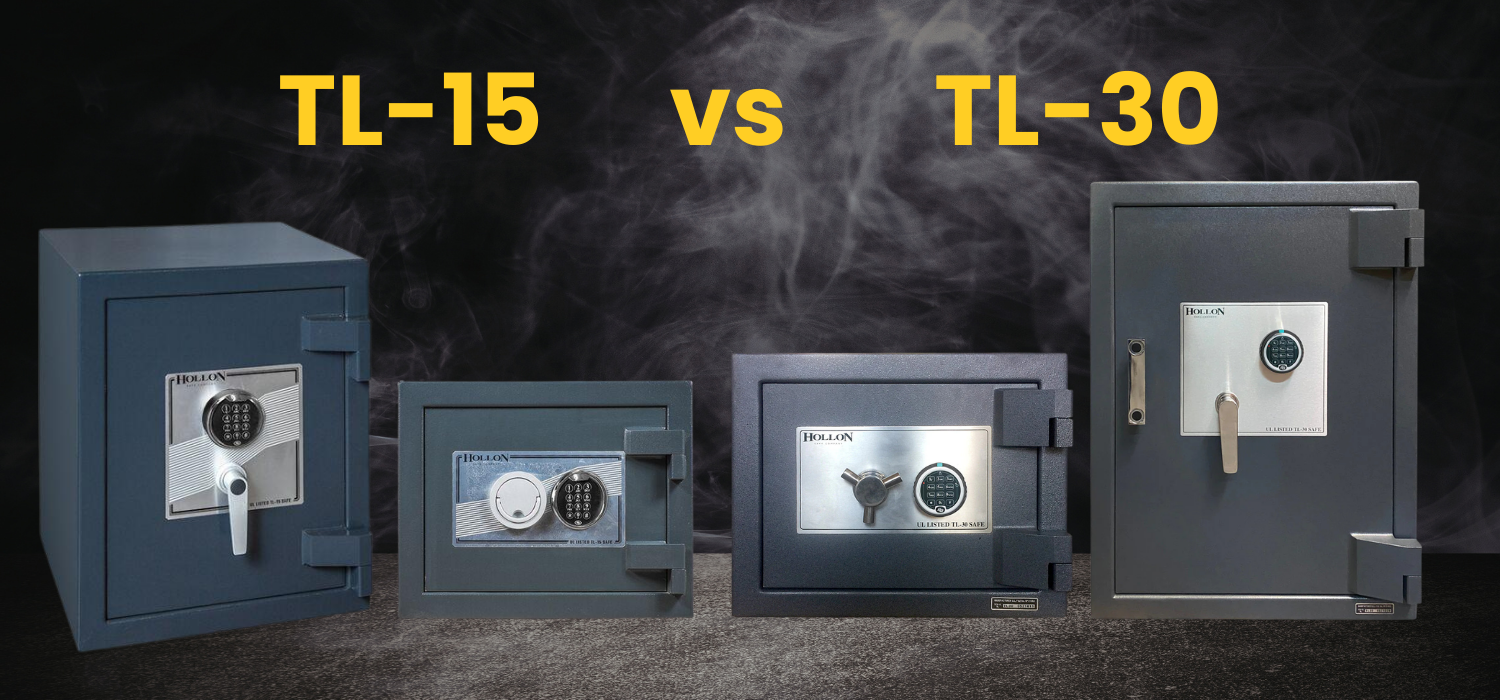
If you are shopping TL-rated burglary safes, it usually starts with a simple question and a not-so-simple reality: are you protecting valuables from a smash-and-grab, or from someone who shows up prepared, stays on the job, and knows exactly where to attack?
That is the real difference behind a TL-15 safe vs TL-30. Both are serious upgrades from typical “burglary” or “gun safe” language. Both are built to resist tool attacks. But they do not serve the same risk profile, and buying more rating than you need can be as wasteful as buying less rating than your situation demands.
What TL ratings actually mean (and why it matters)
TL is a UL (Underwriters Laboratories) burglary resistance rating. In plain terms, the rating is based on how long a trained attacker can work on the safe and still fail to make an opening large enough to access contents.
The part that trips people up is the word “time.” TL time is net working time, not “they were in your building for 15 or 30 minutes.” If an attacker has to reposition, change tools, pry off something that does not count as the tested area, or take breaks, that does not automatically mean the clock is running the way most people imagine.
Another key point: TL-15 and TL-30 refer to attacks on the door (the common designation is TL-15 or TL-30, sometimes described as “tool resistant door”). Some models extend protection to multiple sides (you may see variants that specify broader coverage), but for most shoppers comparing TL-15 vs TL-30, the practical question is how much resistance you are buying at the primary point of attack.
TL-15 safe vs TL-30: the practical difference
A TL-15 safe is tested to withstand a 15-minute net tool attack on the door by experts using common hand tools and power tools allowed in the test. A TL-30 safe is tested to withstand that same type of attack for 30 minutes.
On paper, that sounds like “double the time.” In real buying terms, it often signals a step change in construction: thicker and more complex door assemblies, more aggressive barrier materials, heavier bodies, and overall more “work” required for someone to cut, drill, or peel their way to an opening.
That construction difference is why TL-30 units tend to jump in weight and cost. Shipping logistics, installation planning, floor loading, and anchoring become part of the decision - not afterthoughts.
What you usually get when you move up to TL-30
Not every manufacturer builds the same, but moving from TL-15 to TL-30 often includes a combination of heavier steel, stronger composite barriers, and more robust internal protection around the lock and boltwork. You are paying for more resistance where it matters: the door face, the locking mechanism area, and the ability to keep the door secured under sustained tool work.
If you are protecting high-value items that are liquid and portable - cash, jewelry, watches, precious metals, controlled substances, or business deposits - the extra margin is not theoretical. It is the difference between “they gave it a real try” and “they had enough time to finish the job.”
Choosing based on threat, not just rating
A helpful way to decide is to picture the most realistic threat you face and be honest about your environment.
If you are a homeowner storing a moderate collection of valuables and important documents, you might be more likely to face fast, opportunistic burglary. In that case, the biggest upgrades are often: getting a real burglary rating (TL instead of marketing terms), anchoring the safe correctly, and placing it where it cannot be attacked comfortably.
If you are a business handling cash or regulated inventory, the threat profile changes. After-hours attacks can involve time, privacy, and power tools. The longer an attacker can work without interruption, the more that extra tested resistance matters.
When TL-15 is often the right fit
A TL-15 safe is commonly the smart choice when you want meaningful burglary resistance but you also need to keep total cost, weight, and installation complexity manageable. It is often a strong match for:
- Homeowners securing jewelry, heirlooms, and important paperwork where the goal is to defeat common break-in attempts.
- Small offices that need a credible safe for documents, devices, or limited cash exposure.
- Buyers who have good layers around the safe - alarm monitoring, cameras, good door and window security - and want the safe to hold up long enough for the rest of the system to matter.
When TL-30 starts to make sense
TL-30 is typically worth it when your contents are high value, easy to resell, or you would face severe consequences if they were stolen. That can mean financial loss, regulatory exposure, or safety risk.
TL-30 tends to be the better call for:
- Retail and hospitality environments with larger cash cycles, deposits, or high-value inventory.
- Pharmacies, medical offices, and other settings where theft has compliance implications.
- Collectors or high-net-worth homeowners storing concentrated value in a small footprint (precious metals, high-end jewelry, rare watches).
The hidden deal-breakers: weight, anchoring, and placement
Most TL-15 vs TL-30 decisions get made on the rating, then fall apart when the safe arrives at the curb. Plan these factors early.
First is weight. TL-rated safes are built to resist attack, and that mass is part of the security story. But weight affects everything: freight delivery, moving into position, and whether your installation spot can handle the load.
Second is anchoring. A high-rated safe that is not anchored can still be stolen outright if the attacker can tip it, get leverage, or remove it to work on it elsewhere. Many units are designed with anchoring provisions, but installation quality matters. If you are placing the safe in a garage, back room, or office area with easier access, anchoring becomes even more critical.
Third is placement. Put the safe where it is hard to attack comfortably. Tight corners, limited swing room for tools, and reduced privacy all work in your favor. Even a strong safe benefits from an environment that does not give an attacker a clean setup.
Don’t confuse fire protection with burglary protection
A common mistake is assuming a “fireproof safe” covers burglary, or that TL automatically implies superior fire performance. Fire ratings and burglary ratings are different tests for different threats.
If you need to protect paper records, passports, or business documents, a fire rating can be just as important as TL. If you are protecting digital media, requirements can be stricter because heat and humidity thresholds are lower for electronics and storage media.
In many real-world purchases, the right answer is a safe that balances both risks: credible tool resistance plus a fire rating that matches your documents, location, and evacuation realities.
Lock choices, relockers, and the parts you never see
When you compare TL-15 safe vs TL-30 models, pay attention to lock quality and internal protection - not just door thickness.
Many TL-rated safes use UL-listed locks (mechanical dial or electronic). The “best” lock type depends on your operation. Mechanical dials have a long track record and do not rely on batteries. Electronic locks can be faster for daily access and are popular for business workflows. What matters most is that the lock is reputable, properly installed, and protected.
Relockers are another feature that matters in an attack. If someone drills or punches the wrong spot, relockers can trigger and keep the safe locked down. These features are part of why TL-rated safes are a different category than typical consumer security containers.
A decision framework that stays honest
If you want a clean way to decide without overbuying, start with the value and replaceability of the contents, then overlay the time and privacy an attacker could realistically have.
If the loss would be painful but survivable, and your location and security layers make extended tool time unlikely, TL-15 is often the value sweet spot.
If the contents represent concentrated value, carry compliance risk, or your environment increases the chance of a prolonged attack, TL-30 is usually the more responsible purchase - even if it costs more up front.
If you want help matching a rating to a specific use case, our team at Secure Zoned can guide you by size, placement constraints, and threat level so you do not end up with a safe that is great on paper but wrong for your space.
The part most buyers miss: buying the right “system,” not just a safe
A TL-rated safe is a core layer, not the whole plan. The best results come when the rating, installation, and environment work together: anchored properly, placed intelligently, supported by alarms and access control, and sized so you do not end up storing valuables outside the safe because it is too small.
Buy for the life you actually live - how often you access it, who needs access, and what you are protecting on your best day and your worst day. When that picture is clear, TL-15 vs TL-30 stops being a debate and starts being a straightforward match.