You buy a bedside safe for one reason - you want fast access when you need it, and locked storage when you don’t. The catch is that “nightstand safe” can mean wildly different things: a compact biometric box that keeps a handgun away from kids, or a heavier steel safe that’s meant to slow down a smash-and-grab.
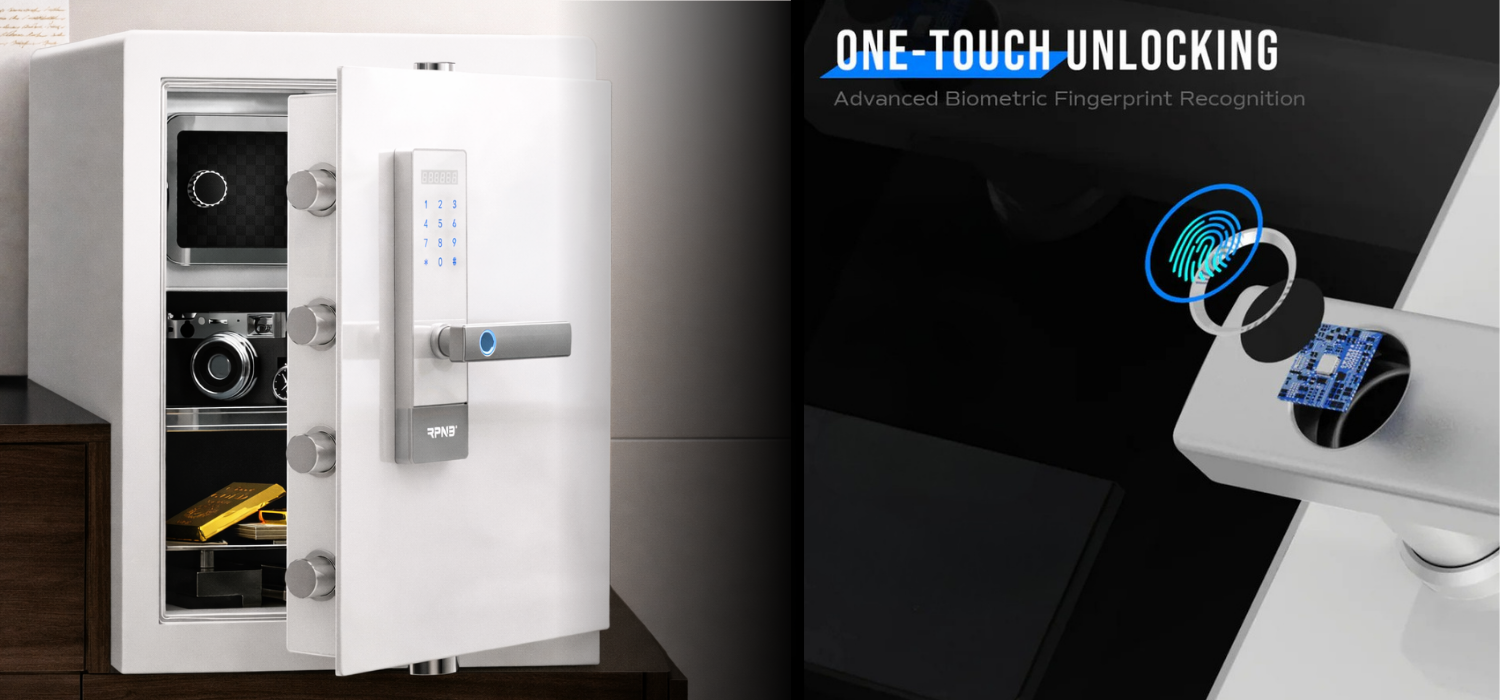
The RPNB white fingerprint nightstand safe sits squarely in the quick-access category. It’s designed to blend into a bedroom setup, open quickly by fingerprint, and hold a small set of essentials close to where you sleep. If you’re deciding whether it’s the right choice, the real question isn’t “Is it good?” - it’s “Is it the right tool for the threat, the room, and the habits in this home?”
What the RPNB white fingerprint nightstand safe is built to do
The job description is simple: controlled access, fast. That typically means a biometric reader up front, a motorized or solenoid-driven lock mechanism, and an interior layout sized for a compact-to-full-size handgun plus a spare magazine, or valuables like a passport, jewelry, and cash.
The “white” finish matters more than people admit. In a bedroom, many buyers want something that doesn’t look like a matte-black steel box. A lighter finish can also reduce the “spot it instantly” effect if it’s sitting in an open shelf cubby, but it’s primarily an aesthetic integration play.
This type of safe is not trying to compete with a heavy burglary safe or a UL-rated gun safe. Think of it as a controlled-access container that reduces risk in everyday life: kids, guests, roommates, service workers, and the basic reality that most nightstands are easy to open.
Where biometric nightstand safes win - and where they don’t
Biometric access is about convenience, but it has real safety implications. If you’re storing a defensive handgun, friction matters. The more annoying it is to access, the more likely it is to end up outside the safe “just for tonight.” A fingerprint reader can reduce that temptation.
That said, biometrics come with trade-offs. Fingerprint sensors can struggle with very dry hands, wet hands, bandages, or worn fingerprints (common for some trades). The better biometric designs mitigate this with multiple enrolled fingerprints and a secondary entry method. Before you commit to bedside biometric storage, decide whether every authorized user can reliably open it under imperfect conditions.
And then there’s the other side of the equation: what you’re defending against. A compact biometric nightstand safe is excellent for preventing unauthorized access and reducing negligent handling. It is not a high-resistance burglary container. If your primary concern is a forced-entry theft where the intruder has time, you typically step up to a heavier, anchored safe with thicker steel, a more robust locking system, and ideally recognized burglary ratings.
Fit and placement: the “nightstand” part is the whole point
The best safe is the one that fits your room and your routine without creating new problems.
Start with dimensions and door swing. Nightstand safes are often placed in tight spaces - between bed and wall, inside a cabinet, or on a lower shelf. Make sure the door can open fully without hitting a side panel or catching on bedding. Also pay attention to how you’ll reach it from a sleeping position. If you have to sit up, open a drawer, and then contort to reach the keypad or fingerprint reader, the quick-access benefit drops fast.
Noise matters too. Many biometric safes use an electronic lock that makes a distinct beep and a mechanical clunk. If discreet access is a priority because you don’t want to wake a partner or alert others in the house, look at whether sound can be muted and how loud the lock actuation is in real use.
Finally, think about visibility. If you expect the safe to live in plain sight, the white finish may help it blend with furniture, but “blend” isn’t the same as “secure.” Visibility can invite tampering from a curious teen or a visitor. Even in a trusted household, it’s smart to position the safe where it’s accessible to you but not showcased.
Anchoring: the difference between storage and security
If you take only one technical point seriously, make it this one: small safes that aren’t anchored can be carried out.
A nightstand safe should be treated like a quick-access container that needs to be mechanically tied to something solid. Anchoring to a stud, the floor, or a heavy piece of furniture changes the equation. It doesn’t magically turn it into a burglary-rated safe, but it prevents the easiest theft method - grab the whole box and open it later.
When you plan the install, consider what you’re anchoring into. Thin particleboard furniture backs are not the same as a wall stud or subfloor. If you’re using a nightstand cabinet, anchoring through the safe and into a structural element behind it is typically stronger than anchoring only to the furniture panel.
If you rent, anchoring can still be workable, but you need to decide what modifications you can make and how you’ll patch them later. For many renters, the best compromise is anchoring to a heavy, solid wood furniture component and adding secondary measures like positioning to reduce leverage for prying.
Power and access management: plan for the “2 a.m.” scenario
Most biometric nightstand safes rely on battery power. That’s normal, but it means you should treat power like a maintenance item, not a surprise.
Set a battery replacement schedule. Don’t wait for the low-battery chirp. Put it on the calendar the same way you would smoke detector batteries. If the safe provides a low battery warning, take it seriously - electronic locks can behave inconsistently when voltage drops.
Also think about redundancy. A biometric safe is only as good as your ability to open it when the fingerprint reader fails or the battery dies. If your model includes a keypad override, use it occasionally so you know it works and you know the code from memory. If it has a physical key override, store the key in a location that doesn’t defeat the purpose of the safe. A common mistake is leaving the override key in the same nightstand drawer.
For multi-user households, enrollment discipline matters. Enroll multiple fingers per authorized person (for example, index and thumb on both hands). That way, if one finger is injured or your hand placement is awkward from bed, you still have options.
What it’s best for: realistic use cases
The RPNB white fingerprint nightstand safe tends to make the most sense when your goal is fast, controlled access to a small set of items.
For firearm owners, it’s often a responsible bedside solution for a single handgun, especially in homes with kids or frequent visitors. It can reduce unauthorized handling while keeping access quick for the responsible adult.
For non-firearm use, it’s a clean option for passports, medication that should be controlled, cash, jewelry you wear daily, and small electronics. If you travel often, it can also function as your “launch point” storage - the place you drop keys, wallet, and documents so they’re not scattered around the home.
The key is to keep your expectations aligned with the product class. If you’re protecting high-value jewelry collections, significant cash, or irreplaceable documents, you typically want a heavier, fire-rated safe with more steel and more resistance to forced entry. Nightstand safes are about access control and speed, not long-duration attack resistance.
How to decide if this is the right safe for your home
Decision-making gets easier when you separate three questions.
First: what are you protecting against? If your top concern is children or guests accessing a firearm or medication, a biometric nightstand safe is often a strong fit. If your top concern is burglary while you’re away, consider stepping up to a heavier, anchored safe and treating the nightstand safe as secondary storage.
Second: how fast do you really need access? If you want one-handed access from bed, prioritize a layout and opening method that works in a half-awake state. Practice matters. A safe that’s “quick” in a product description can still be awkward if it’s mounted too low or the door opens into a tight space.
Third: where will it live, and can you anchor it properly? A biometric safe that’s perfectly placed and anchored can be meaningfully more secure than a “better” safe that ends up unanchored because it didn’t fit.
If you want a second set of eyes on your use case - bedside handgun access, apartment install constraints, or how to layer quick access with higher-security storage - Secure Zoned can help you compare options across security tiers at https://securezoned.com.
A few practical habits that make any bedside safe work better
A nightstand safe is only as reliable as the routine around it. Keep the interior organized so you can grab what you need without fishing. If you store a handgun, consider how it sits inside the safe so you get a consistent grip. If the interior includes padding or a tray, make sure it doesn’t shift and interfere with the door or the lock.
Test access in the conditions that matter: lights off, from bed, with your non-dominant hand, and when you’re not perfectly positioned. If a spouse or partner is also authorized, make sure they can open it too, not just on a good day.
And take a conservative approach to what you store together. A safe can hold multiple item types, but mixing valuables with anything that could damage them (loose keys scratching jewelry, for example) is a slow-motion regret.
The most secure setup is the one that fits your space, matches your real risks, and is easy enough that you’ll actually use it every single night.