
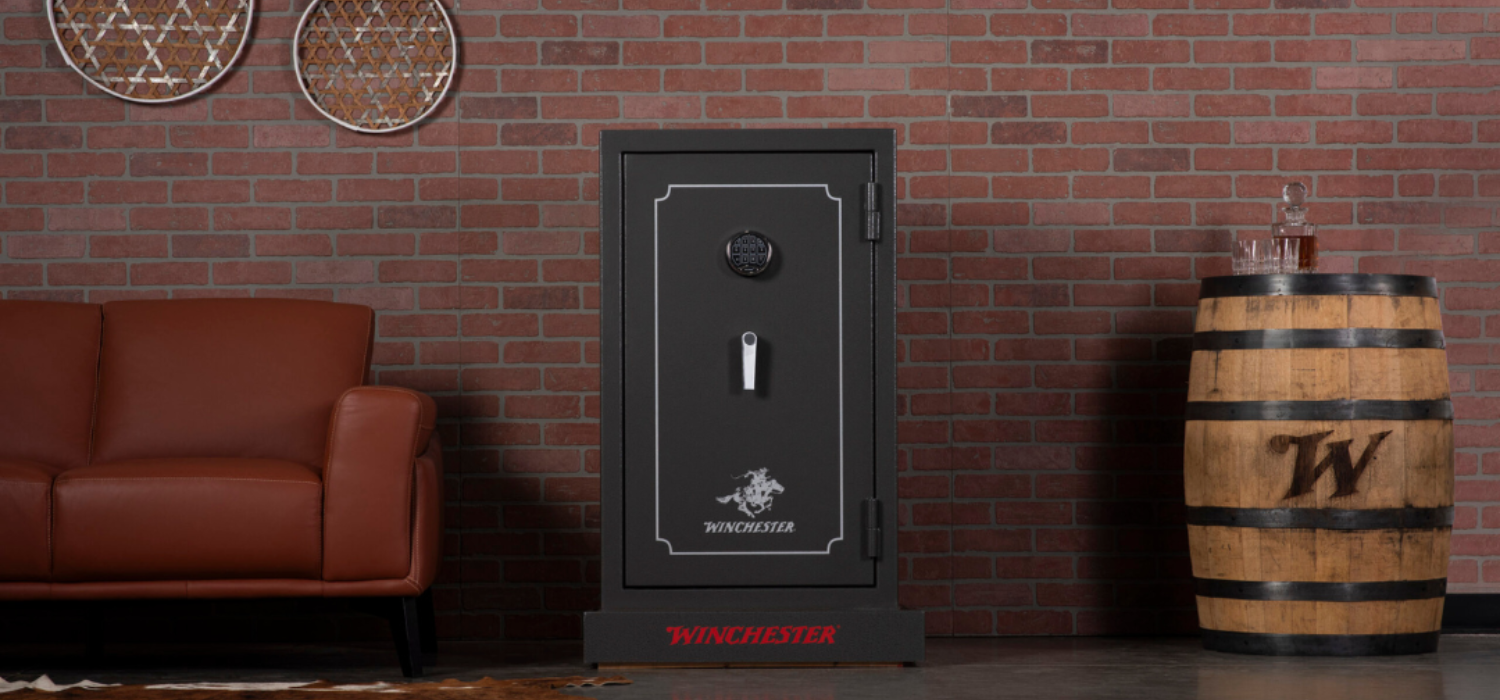
If you have kids in the home, or you ever have guests who should not be around firearms, a gun safe stops being a “nice to have” and becomes part of responsible ownership. The harder question is which safe actually fits your space, your collection, and your expectations for protection.
This Winchester gun safe review is written for buyers who want clear trade-offs - not hype. Winchester offers popular, widely available long-gun safes with practical feature sets, and they can be a strong value depending on the model line and what you expect the safe to defend against.
Winchester gun safe review: who Winchester fits best
Winchester safes tend to fit homeowners who want an all-in-one gun safe with familiar features: electronic entry, interior organization, carpeted storage, and a fire rating on many models. They are often chosen by first-time safe buyers and by growing collections that need a step up from a cabinet.
They are not automatically the right fit for buyers who need true burglary performance comparable to high-end RSC designs or commercial-grade TL-rated protection. If your risk profile includes targeted theft, extended tool attacks, or high-value inventory beyond firearms, you should look harder at heavier, thicker-steel options and higher-rated burglary safes.
Build quality and steel: what you are really buying
Most shoppers start with capacity claims like “24 gun” or “36 gun,” but the more meaningful question is how the safe is constructed. Winchester safes commonly land in the value-to-midrange space: heavier and more secure than a thin metal cabinet, but not built like a purpose-driven burglary safe.
Steel thickness is the biggest driver of real-world resistance. Winchester’s line varies by series, so one model can feel substantially different from another. When you compare models, focus on the body steel and the door construction, not just overall weight or the number of locking bolts advertised. Bolt count can look impressive on paper, but the steel behind the bolts and the overall door design is what dictates how the system holds up.
A practical way to think about it: if you want a safe primarily for responsible storage, quick access control, and smash-and-grab deterrence, many Winchester options deliver. If you want meaningful delay against hand tools and prying, you will likely want thicker body steel and a more substantial door.
Locks and access: electronic convenience vs long-term confidence
Winchester gun safes are commonly sold with electronic locks. For most households, an electronic lock is the easiest day-to-day experience: fast entry, simple code changes, and no dialing in the dark.
The trade-off is that electronics are still electronics. You are relying on batteries, keypads, and internal components that can fail over many years. That does not mean electronic locks are “bad,” but it does mean you should plan like a security-minded owner:
- Use fresh name-brand batteries and change them on a schedule.
- Keep your override key (if your model includes one) secured and not stored next to the safe.
- Consider whether you want a lock with recognized listings (like UL listings) depending on model availability.
Mechanical dial locks trade speed for long-term simplicity. If you are the type of owner who prioritizes “it works the same way 15 years from now,” a dial can be a better match. If you prioritize quick access and shared use with a spouse, electronic usually wins.
Fire ratings: how to interpret Winchester’s claims
Winchester safes often advertise fire protection. That matters for many buyers because a gun safe frequently becomes the home’s default storage for documents, suppressor tax stamps, optics, and other valuables.
Here is the nuance: fire ratings are not all equal. Some safes reference time and temperature (for example, 60 minutes at a given temperature), but the test method and the standard used matter. Also, a gun safe interior is not the same as a paper-document safe. Fire insulation strategies vary and can protect contents differently depending on the material and the scenario.
For firearms, the goal is usually to limit heat exposure that can damage finishes, stocks, and optics. For paper records, you care about keeping interior temperature low enough to prevent ignition and to reduce charring. If documents are a core concern, consider pairing the gun safe with a small, purpose-built fire-rated document container inside, or storing irreplaceable papers in a dedicated fire file or media safe.
Also pay attention to door seals. A good expanding seal helps keep smoke and heat from pouring in around the perimeter, especially when fire departments add water to the situation.
Interior layout and real capacity (the “24-gun” reality check)
Winchester’s interiors are typically designed to sell the idea of “max capacity,” but real-world owners rarely store a safe that way. Scoped rifles, AR-style rifles, pistol grips, extended magazines, and slings all consume space. A safe advertised at 24 guns might feel comfortable at 12-16 once you add optics and you want to avoid banging firearms together.
The upside is that many Winchester safes include door organizers and flexible shelving. That helps you move from pure long-gun storage into a more practical system: handguns on the door, ammo and accessories on shelves, and rifles spaced out to protect finishes.
If you already own more than a few long guns, it is worth sizing up rather than buying “just enough.” Most owners do not regret extra interior volume. They do regret a safe that forces tight stacking and constant reshuffling.
Installation and anchoring: the make-or-break step
Even a heavy safe can be moved with enough leverage, time, and motivation. Anchoring is one of the simplest upgrades you can control.
If you place a safe in a garage or on a slab, anchoring into concrete can be a strong option. In a second-floor or framed-floor installation, you still want anchoring, but you should be thoughtful about joists and load distribution. Winchester safes vary in weight, and you need to confirm the floor can handle it, especially if you are going larger.
Placement matters as much as bolts. A corner placement can reduce pry access. A tight closet can limit tool swing. And if your safe is visible from a front window or easy to spot from the garage door, you are advertising a target.
If you want help selecting a model that fits both your collection and your installation location, Secure Zoned offers call/text guidance and a broad safe catalog at https://securezoned.com.
Security expectations: what a Winchester safe can and cannot do
A realistic security plan is layered. A gun safe is one layer.
A Winchester gun safe is typically a strong step for:
- Keeping firearms secured from unauthorized access in the home.
- Creating a meaningful barrier against opportunistic theft.
- Providing some level of fire protection, depending on model and scenario.
Where it can fall short is against a prepared attack with time and tools. If you are protecting very high-value collections, cash, or regulated inventory, you may want to consider burglary-rated options that are designed and tested for more aggressive threats.
That does not mean Winchester is a poor choice. It means you should match the safe to the risk. If your main risk is household access control and the typical quick burglary, Winchester often makes sense. If your risk includes targeted theft, choose a safe built specifically for that level of attack.
Model selection: how to pick the right Winchester safe
Instead of chasing the biggest capacity number, start with three questions.
First, what are you storing besides long guns? If you have handguns, optics, important papers, or jewelry, prioritize shelving flexibility and door organization.
Second, where is it going? A taller safe may fit your collection better but can be difficult in a basement stairwell. A wider safe may interfere with door swings or closet framing. Measure twice, and include clearance for the handle and door opening.
Third, what is your timeline? If you are buying for a growing collection, buy for the next five years, not just what you own today. Most safe upgrades happen because the interior is no longer workable, not because the safe “failed.”
Useful add-ons that actually improve outcomes
A few upgrades help keep firearms and contents in better condition and make the safe easier to live with.
Humidity control is the big one. Many homes and garages swing through humidity changes that drive corrosion. A dehumidifier rod or desiccant system is inexpensive compared to refinishing a rusted firearm.
Lighting is the next. A safe interior gets dark fast, and a simple light kit makes it easier to handle firearms safely and avoid scraping optics on shelves.
Organization matters too. Door panels, pistol holders, and shelf liners reduce clutter and prevent the “pile effect” where safe contents get damaged simply from being hard to access.
The bottom line on value
Winchester gun safes are popular because they hit a practical middle ground: better than cabinets, approachable pricing, and features that make day-to-day storage easy. For many homes, that is exactly the right balance.
Just buy with eyes open. Do not assume capacity ratings reflect scoped rifles. Do not treat a fire label as equal to a dedicated document safe. And do not skip anchoring.
If you choose a Winchester safe that matches your collection size, install it thoughtfully, and control humidity, you get what most gun owners actually want: dependable access for you, denied access for everyone else, and fewer worries when you leave the house.