
A register gets hit fast. It is rarely a long, noisy break-in where someone spends 20 minutes fighting a safe. Most retail loss happens in seconds - a snatch-and-run, a coercion event at the counter, or cash that simply disappears between shifts.
That is exactly why an under-counter safe earns its keep. Done right, it changes the math: less cash exposed, fewer opportunities for internal theft, and a place to secure high-risk items without turning your checkout into a fortress.
What an under counter safe for retail is (and is not)
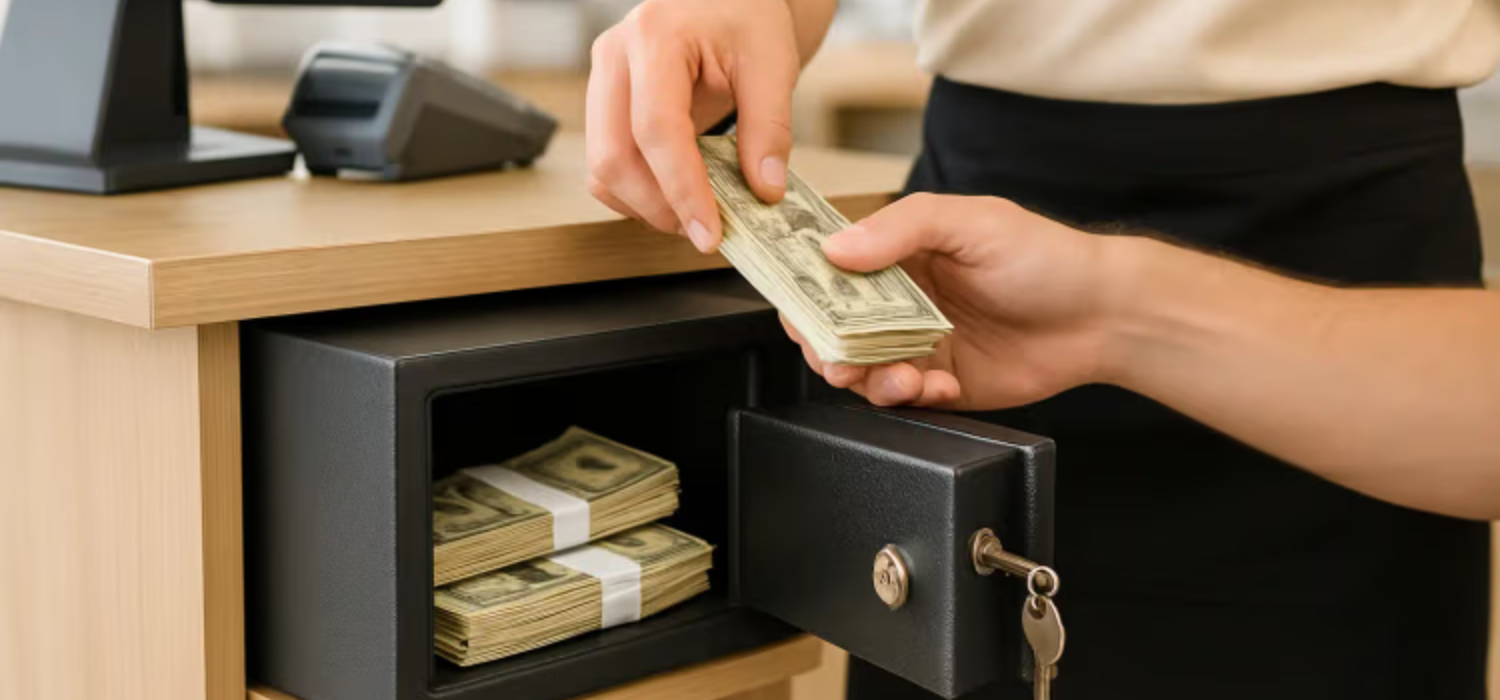
An under counter safe for retail is a compact safe designed to mount under a sales counter or at the cashier station. The goal is simple: keep cash, till drawers, and small high-value items out of sight and out of easy reach while staying accessible to authorized staff.
It is not a replacement for a high-security burglary safe in a back office when you are holding large cash totals overnight. Under-counter units are about reducing exposure during operating hours and controlling deposits at the point of sale. If you routinely store substantial cash overnight, you may need an under-counter unit for daytime control plus a heavier safe (or a TL-rated safe) for end-of-day storage.
Why retailers choose under-counter placement
The location matters as much as the steel. Under-counter installation removes the safe from customer sightlines, reduces temptation, and makes a grab less likely. It also reduces the “routine risk” problem: the longer staff must step away from the register to secure cash, the more shortcuts happen.
Under-counter placement also supports better behavior. When deposits are easy, they happen on schedule. That alone can lower loss more than upgrading locks, because you are reducing the amount of cash that ever sits in a drawer.
The two designs that actually matter: drop safes vs access safes
Most retail buyers end up choosing between a deposit-style drop safe and an access-style under-counter safe.
Deposit (drop) safes for controlled cash handling
A drop safe is designed so employees can deposit bills or envelopes through a slot, chute, or rotary hopper without opening the main door. That is the entire point: deposits happen often, but the main compartment stays locked.
This design is a strong fit for convenience stores, quick-service restaurants, and any operation where multiple employees handle cash. It also helps in coercion scenarios. If someone demands cash, the register has less to give, and the safe is not something staff can open on the spot.
The trade-off is access. If you need to retrieve cash frequently during a shift, a drop safe can feel restrictive. Many retailers solve this by keeping minimal change in the drawer and using the safe for bills and larger drops.
Access safes for quick storage at the point of sale
An access safe is closer to a conventional compact safe. It can be useful when you need to store items that are not “drop friendly,” like rolled coin, key sets, checks, or small electronics. Some retailers also use access safes for controlled storage of age-restricted items or other small, high-risk products kept near the counter.
The trade-off is exposure: every time the door opens, your security depends on staff habits and who is present. If you expect frequent opening, think carefully about lock choice, audit needs, and whether a deposit safe would reduce risk more.
Security levels: where retail needs tend to land
Retail is not one-size-fits-all. A vape shop with high-value inventory at the counter has different needs than a boutique that mostly takes card payments. Still, you can make smarter decisions quickly by understanding what drives real-world outcomes.
Construction and steel: what “good enough” looks like
Under-counter safes typically prioritize manageable size and mountability over extreme weight. For retail, the biggest practical jump in protection often comes from thicker steel on the door and body, stronger hinges, and a solid boltwork design.
If your safe is light enough to carry, anchoring becomes non-negotiable. A basic safe that is properly anchored can outperform a heavier safe that is not.
Burglary ratings: when to consider TL-rated safes
If you are storing significant cash, controlled substances, or very high-value goods, burglary resistance deserves more attention. TL-15 and TL-30 safes are tested against professional tool attacks for a defined time, and they can be the right move in higher-risk environments.
The reality is that many under-counter installations cannot accommodate the weight and footprint of a TL-rated safe. In those cases, the practical approach is layered protection: under-counter deposit control during business hours, and a higher-rated safe in a secure back area for overnight exposure.
Lock choices: reliability vs speed vs accountability
Retail safes live in high-use conditions. The best lock is the one your team will use correctly, every day, without failures that force workarounds.
Electronic keypad locks
Electronic locks are popular in retail because they are fast, easy to train, and practical for frequent openings. Many models support multiple user codes, which helps with accountability and code changes after staffing updates.
The trade-off is battery dependency and occasional lockouts if maintenance is ignored. If you choose electronic, set a policy: battery replacement on a schedule, not when the keypad starts acting up.
Dial (mechanical) locks
Mechanical dial locks are proven and do not rely on batteries. They are a good fit when the safe is opened less often and you want simplicity over speed.
The trade-off is training and time. In a busy retail environment, slow access can lead to bad habits, like leaving the safe open “just for a minute.”
Time-delay features
Time delay can be a strong deterrent in robbery scenarios because it prevents immediate access even under duress. Some retailers pair time delay with a deposit safe approach so staff can still make drops during a shift, but cannot open the main door instantly.
It depends on your operation. If managers legitimately need quick access to cash for daily tasks, time delay may create friction. If your priority is robbery deterrence, it is worth serious consideration.
Installation: the detail that decides whether the safe works
Under-counter safes are only as strong as their mounting. A thief does not need to defeat the lock if they can remove the entire unit.
Anchor into solid structure whenever possible. Concrete is ideal, but many retail counters sit on wood framing and finished flooring, so you may be anchoring into studs, blocking, or a reinforced base. The goal is to prevent prying and removal, not just keep the safe from sliding.
Also think about visibility and workflow. The safe should be reachable by staff without awkward body positioning that broadcasts “safe access” to the line. If employees have to kneel and fumble with a keypad in view of customers, your placement is working against you.
Operational habits that make the safe pay off
A safe is not just hardware. Your procedures determine whether it reduces loss or becomes another ignored box.
Start with deposit cadence. If you only drop cash at the end of a shift, you still have a full drawer during the most vulnerable hours. Smaller, more frequent drops reduce incentive and opportunity.
Next is code control. Limit who has opening authority, change codes when roles change, and treat “shared codes” as a temporary bridge, not a permanent plan. If the lock supports multiple users, use that feature to tighten accountability.
Finally, define what goes in the safe. Retail gets messy when staff improvise. If checks go in the drawer “for now” or high-value returns sit under the counter, the safe is not doing the job you bought it for.
Choosing the right size and interior layout
Size is not only about capacity. It is about what you need to secure without forcing the door open repeatedly.
If you are dropping bills in envelopes or deposit bags, make sure the interior can accept them without crumpling or jamming. If you are storing till trays or small lockboxes, measure them and compare against internal dimensions, not external.
Interior organization matters more than most buyers expect. A small shelf, a cash tray, or a place to keep deposit keys can reduce “door-open time,” which reduces exposure at the counter.
Common mistakes we see in retail safe purchases
The first is buying for the best day instead of the worst day. If your busiest shift is Friday night, that is the scenario you should design for - highest cash volume, most staff turnover, and the most distractions.
The second is treating “hidden under the counter” as a security plan. Concealment helps, but it does not replace steel, locking, and anchoring.
The third is skipping the bigger picture. If your store needs deposit control, an access-only safe may not reduce shrink. If your store needs burglary resistance overnight, an under-counter safe alone may not be enough.
How to narrow your choice quickly
If your main goal is reducing register cash and limiting employee access, prioritize a deposit/drop design with a solid anti-fish feature and a lock you can manage operationally.
If your main goal is quick secured storage of small valuables at the point of sale, an under-counter access safe can be a better match, but only if you are realistic about who will open it and how often.
If you are unsure which direction fits your store, it helps to talk through your cash flow, staffing, and install constraints with a safe specialist. Secure Zoned offers call and text support and carries a wide range of retail-focused safes, including deposit and higher-security options, at https://securezoned.com.
A safe should feel boring after week two - no drama, no workarounds, just a quieter counter and fewer problems to chase.