
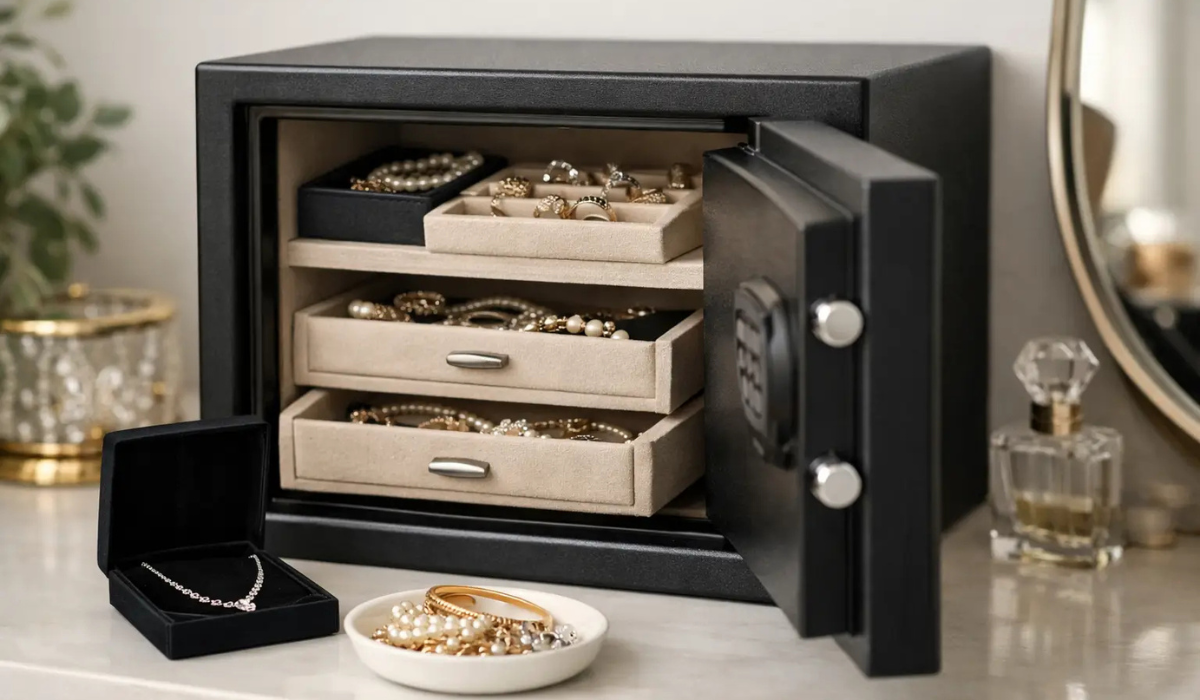
A jewelry box on a dresser works for organization. It does very little for protection. If you are shopping for the best safes for jewelry storage, the real question is not just where your pieces fit - it is what you need them protected from.
For some buyers, the main risk is a fast smash-and-grab burglary. For others, it is fire, water exposure after firefighting, or simply poor storage conditions that tarnish metals and damage watches, gemstones, and heirloom pieces. The right safe depends on the value of the collection, how often you access it, and whether you want the safe hidden in the home or built into a more visible security setup.
What the best safes for jewelry storage need to do
Jewelry safes are different from basic home safes because the contents are small, high-value, and often vulnerable to scratches, humidity, and disorganized stacking. A safe that protects passports and cash may still be a poor fit for rings, necklaces, and watches if the interior is just one open compartment.
The best safes for jewelry storage balance burglary resistance, fire protection, and interior organization. That usually means solid steel construction, a dependable lock, bolt-down capability, and interior shelves or drawers that let you separate pieces instead of piling them together. If you own fine jewelry with appraisals in the five-figure range or higher, construction quality matters more than cosmetic features.
Fire rating also deserves careful attention. Jewelry itself does not burn the way paper does, but heat can still damage watch movements, adhesives, finishes, and presentation boxes. A fire-rated safe adds another layer of protection, especially for mixed storage where jewelry is kept alongside documents, cash, or digital media.
Start with the threat, not the product category
A common buying mistake is searching by the word "jewelry" and assuming any safe marketed that way is enough. In practice, you should start by asking what kind of event you are preparing for.
If burglary is the primary concern, focus on steel thickness, door construction, locking bolts, hard plates, relockers, and anchor points. A lighter fire chest with a basic keypad may look convenient, but if it can be carried out of the house, it is not doing much to stop theft.
If house fire is your main concern, look closely at certified or clearly stated fire ratings, such as 30 minutes, 1 hour, or 2 hours at a specified temperature. Higher ratings generally mean more protection, but they also add weight and cost. That trade-off is often worth it for heirloom collections.
If discreet placement matters most, an in-wall or floor safe may make sense. These can work well for modest jewelry collections, but they usually give up some interior capacity and, depending on the model, may not match the burglary protection of a heavier standalone safe.
Which safe type is best for jewelry storage?
Home safes with fire protection
For many homeowners, a compact or mid-size home safe is the best fit. These safes are versatile, easier to place in a closet or bedroom, and often provide a practical mix of fire resistance and burglary protection. They also tend to have better shelf layouts for trays, small lock boxes, and organized storage inserts.
This is often the right category if your collection includes wedding jewelry, watches, family pieces, and a few important documents. Look for interior dimensions that give you room to grow. Jewelry collections rarely stay the same size for long.
Burglary safes for higher-value collections
If the collection value is significant, stepping up to a burglary-rated or higher-security safe is usually the better move. These models are built more heavily and are better suited for resisting forced entry tools. They can be less polished inside, so some buyers add aftermarket jewelry trays or soft-lined organizers.
The upside is clear - stronger construction, better lock protection, and more confidence if your home is vacant for long stretches or your area has elevated burglary risk. The trade-off is weight, price, and sometimes less emphasis on decorative interiors.
In-wall safes for discreet storage
In-wall safes can work well for smaller jewelry collections or for storing a few high-value pieces you want out of sight. They are easier to conceal behind artwork or inside a closet, which can reduce opportunistic theft.
Still, wall safes are limited by stud spacing and depth. They are not ideal if you need deeper shelves, lined drawers, or space for watch boxes and larger cases. They also require careful installation, and concealment should not be confused with high burglary resistance.
Floor safes for hidden protection
A floor safe offers excellent concealment and, when properly installed in concrete, strong resistance against removal. For certain homes, this can be a smart solution for compact, high-value jewelry storage.
The limitation is access and organization. Floor safes are not the most convenient choice for pieces you wear daily, and their vertical layout may not be ideal for delicate necklaces or multiple watch rolls.
Features that matter most
Lock type gets plenty of attention, but it should not overshadow the structure of the safe itself. An electronic lock offers faster access and simple day-to-day use. A dial lock reduces dependence on batteries and electronics. Biometric access can be convenient, though for jewelry storage it is usually less critical than it is for defensive firearm access.
Anchoring is non-negotiable for most residential installations. Even a well-built safe loses a lot of value if it can be tipped, pried more easily, or removed entirely. A smaller safe with strong bolt-down installation often outperforms a larger unanchored unit.
Interior setup matters more than many buyers expect. Shelves should be adjustable where possible. Soft-lined compartments, pull-out trays, and divided storage help prevent chains from tangling and gemstones from rubbing against each other. If the safe you want has the right protection but a plain interior, that is usually fixable with jewelry inserts or small organizers.
Humidity control is another detail worth planning for. Some safes can trap moisture, especially in humid regions or lower-level rooms. For fine jewelry, watches, and mixed precious-metal storage, a dehumidifier or moisture-control product can help preserve condition over time.
Size planning is where buyers usually undershoot
People tend to buy for the collection they have today instead of the one they will have in three or five years. That is how a safe becomes overcrowded, which defeats the purpose of organized protection.
If you store earrings, rings, bracelets, and necklaces in separate trays, they take up more room than you think. Add watches, heirloom boxes, paperwork, appraisals, and insurance records, and interior capacity starts shrinking fast. A little extra space usually pays off.
Weight is part of that equation. Heavier safes generally offer better protection, but they also place more demands on delivery, placement, and flooring. Upper-level installation may require special planning. This is one area where speaking with a knowledgeable retailer can save a lot of frustration.
Brand and build quality matter
Not all safes in the same size range are built to the same standard. Recognized manufacturers often separate themselves through thicker steel, better bolt work, stronger lock protection, more credible fire testing, and more complete anchoring hardware. Those details are easy to miss if you compare only by dimensions and sale price.
A practical way to shop is to compare specific specifications side by side: body steel, door thickness, fire rating, lock listing, bolt count, internal dimensions, total weight, and included mounting features. Secure Zoned takes this approach across its catalog because those specs tell you much more than marketing labels alone.
How to place a jewelry safe at home
Placement should support both security and daily use. A garage may offer space, but it can expose valuables to humidity and temperature swings. A master closet is often more practical, especially for regular access. A less obvious interior location usually beats a convenient but predictable one.
Try to avoid placing the safe where it is immediately visible to guests, contractors, or anyone passing through the home. Concealment is not your only defense, but it adds friction for opportunistic theft. If the safe is smaller, anchoring inside a closet or built-in cabinet can be a smart setup.
It also helps to think beyond the safe itself. Keep appraisals, serial numbers for watches, and jewelry photos organized. Physical protection works best when paired with good documentation and insurance planning.
A better way to choose
The best jewelry safe is rarely the smallest model with velvet lining or the largest model that fits the room. It is the one that matches your risk level, your collection size, and the way you actually live with your valuables.
If you wear a few pieces every day, prioritize access and organization. If you are protecting heirlooms, high-end watches, or a growing fine jewelry collection, lean harder into steel, fire rating, and anchoring. And if you are stuck between two sizes, the larger safe is usually the smarter long-term choice.
Protecting jewelry is not just about preventing loss. It is about making sure the pieces tied to milestones, family history, and real financial value are still there - and still in good condition - when you need them.