
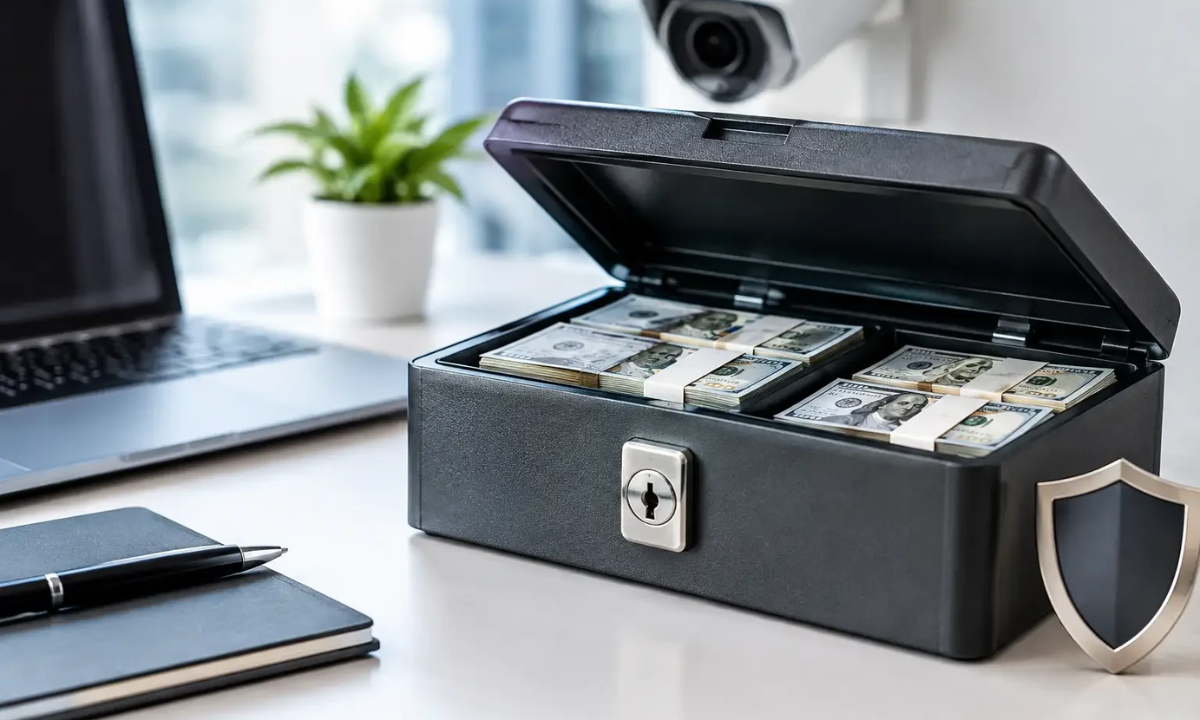
A busy register at closing time is one of the most vulnerable moments in a business day. Cash is counted, staff may be tired, and the trip from the drawer to the back office can create unnecessary exposure. Current cash security trends reflect a practical shift: businesses are tightening accountability, reducing hands-on handling, and choosing safes based on the real risk of their operation rather than price alone.
For restaurants, retailers, pharmacies, hotels, and service businesses, cash may no longer be the only way customers pay. But where cash is still accepted, it remains a theft target and an operational responsibility. The right physical security plan protects the deposit, the employees handling it, and the business owner who needs confidence after the lights are off.
Cash Security Trends Start With Controlled Access
The most meaningful change in commercial cash protection is not a new lock or a new app. It is the move away from broad access. When several employees can open the same safe using the same key or combination, it becomes difficult to determine who handled cash and when.
Businesses are increasingly choosing electronic locks with individual user codes, time-delay functions, and audit capability. A manager can assign a code to a specific employee instead of sharing one combination across a shift. If an employee leaves, that code can be removed without replacing a lock or changing access for everyone else.
That does not mean an electronic lock is automatically the best choice for every business. Mechanical combination locks have a long record of reliability and do not depend on batteries or programming. For a small office with limited staff and infrequent cash deposits, a quality UL-listed mechanical lock may be the straightforward choice. Electronic locks make the most sense when multiple users, changing schedules, or accountability requirements make access control more complex.
Depository Safes Are Replacing Overnight Cash Storage
A common weak point is holding bills in a register drawer, desk, or unlocked office until the end of the day. Depository safes address that problem by allowing employees to make deposits without opening the main safe compartment.
A front-loading deposit slot, hopper, or rotary drum lets cash, checks, and deposit envelopes move into the protected body of the safe. Staff can complete a drop during a shift, while only an owner or authorized manager has access to retrieve the contents. This separation is valuable for businesses with late hours, multiple shifts, or frequent cash pickups.
The right deposit method depends on what is being dropped. A narrow slot may work for envelopes and checks but not bundled currency or small deposit bags. A rotary hopper is useful when the business needs to prevent fishing attempts through the opening. Restaurants with regular cash drops, convenience stores, and hospitality operations often benefit from this added protection.
A depository safe should also be sized for actual deposit volume. Buying too small often leads to crammed envelopes, jammed openings, and risky overflow storage. Consider your busiest day, not your average Tuesday.
Time-Delay Locks Can Reduce Hold-Up Risk
Time-delay locks are receiving more attention because they can help deter a specific threat: a criminal forcing an employee to open a safe immediately. Once activated, a time delay requires a preset waiting period before the lock can open. The delay may encourage the offender to leave rather than wait, while giving staff time to follow company procedures.
There is a trade-off. A time-delay setting can frustrate managers who need quick access to funds during normal operations. For that reason, it is usually better suited to safes holding accumulated deposits than to cash drawers that must be accessed repeatedly. The setting should match the business's schedule, staffing, and emergency procedures.
Cash Security Trends Favor Layered Protection
A safe is one part of a cash-control system, not the entire system. The strongest setups combine a properly selected safe with sound procedures, thoughtful placement, and secure installation.
Start with location. A cash safe should be away from public view and preferably outside obvious employee traffic patterns. Placing it in a manager's office may be appropriate, but a space that is visible through a storefront window or easily reached from a rear entrance creates a different risk profile. The goal is not merely to hide the safe. It is to make access controlled and discreet.
Anchoring matters just as much as location. Many commercial safes are designed with pre-drilled mounting holes so they can be anchored to concrete or another suitable structural surface. A burglar may not be able to defeat a heavy safe quickly, but a safe that can be removed can be attacked elsewhere. Follow the manufacturer's mounting guidance and consider the building's floor construction before making a purchase.
Businesses should also separate the safe's role from the alarm system's role. A monitored alarm, cameras, and controlled keys or access cards can add deterrence and evidence. The safe provides physical resistance and containment. Neither replaces the other.
Burglary Ratings Matter More Than Exterior Appearance
A large steel cabinet can look secure without providing meaningful burglary resistance. For cash that may accumulate overnight, the construction details deserve close attention: steel thickness, door design, boltwork, hard plate protection, relockers, and lock certification all affect the safe's performance.
For higher-risk businesses or larger cash holdings, burglary-rated safes offer a clearer standard than marketing language alone. A TL-15 safe is rated to resist common mechanical and electrical burglary tools for 15 minutes of net working time by trained testers. A TL-30 safe provides 30 minutes under the same type of test. These ratings do not mean a thief will stop after exactly 15 or 30 minutes, and they do not eliminate the need for an alarm or proper anchoring. They do provide a recognized benchmark when the stakes are higher.
The right rating depends on several factors: how much cash remains on site, the business's neighborhood and hours, whether the building has monitored security, and any insurance requirements. A small office that deposits cash daily may not need the same protection as a jewelry retailer or a business holding weekend receipts until Monday. It is better to match the safe to the exposure than to overbuy features that do not serve the operation.
Fire Protection Serves a Different Purpose
Cash, paper records, signed contracts, and backup documents can all be damaged by fire. A fire-rated safe can protect those items for a stated time and temperature, but fire protection is not the same as burglary protection. Some fire safes are designed primarily to protect documents and may not have the construction needed for significant cash theft risk.
If both risks matter, look for a safe that addresses both. A business may choose a burglary-rated safe with a fire rating, or use separate storage for cash and critical records. Ask what will be stored, how long it must remain protected, and whether digital backups reduce the need for paper-document capacity.
Smaller Cash Balances Are Still the Best Defense
One of the most practical trends is operational rather than technical: businesses are reducing the amount of cash kept on site. More frequent bank deposits, armored pickup services where appropriate, and shift-based safe drops can limit the loss from a break-in or internal theft.
Clear written procedures matter here. Employees should know when to make a drop, who can retrieve deposits, how discrepancies are documented, and what to do if they are threatened. Procedures should never put an employee at risk to protect money. Cash can be replaced. People cannot.
It is also wise to review access and cash-handling practices whenever staffing changes, hours expand, or the business opens a new location. A safe that worked well for one register and two managers may no longer fit a growing operation with delivery drivers, shift leads, and multiple closing teams.
The best cash-security decision is rarely the most complicated one. It is the one that fits your daily deposit volume, limits unnecessary access, stays anchored where it belongs, and provides a level of burglary and fire protection that matches what you stand to lose. A well-chosen commercial safe gives your team a clear process and gives you one less uncertainty at the end of every business day.