
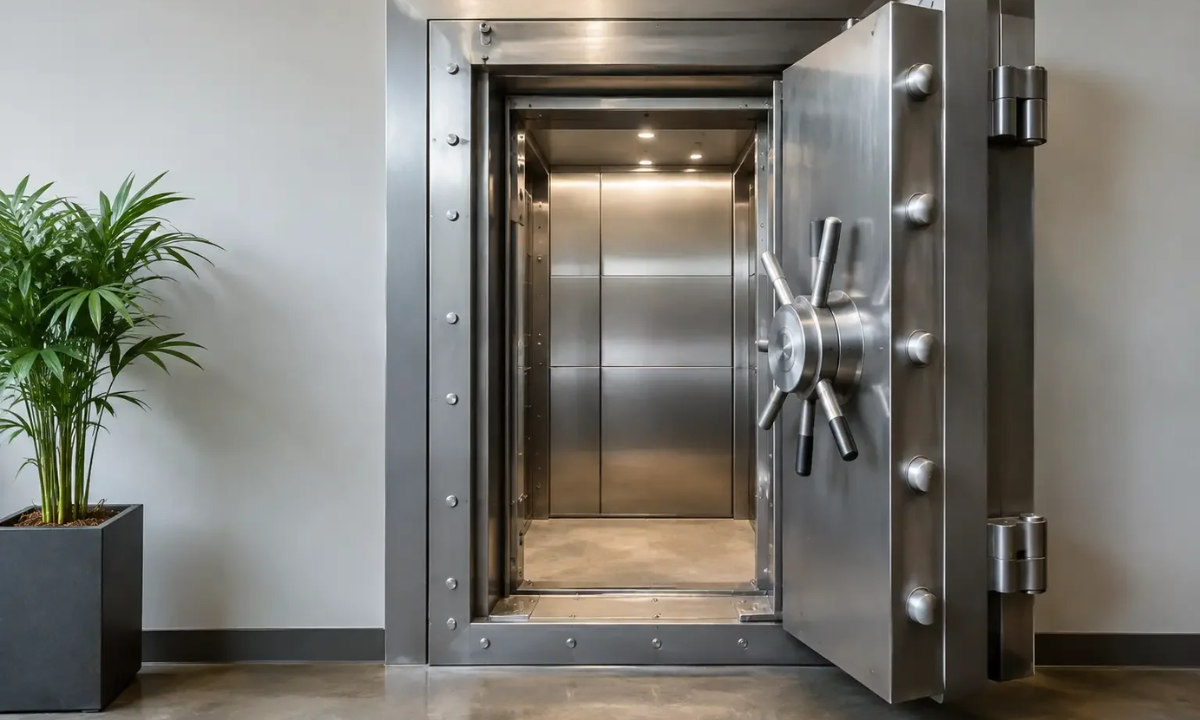
A quality safe protects what is inside it. Vault doors protect the entire room behind them. For homeowners with substantial firearm collections, family valuables, or sensitive records, and for businesses with high-value inventory or cash-handling needs, vault doors can create a purpose-built security space without purchasing an oversized freestanding safe.
That difference matters. A vault door is not simply a heavier residential door with a bigger lock. Its security depends on the door itself, the frame, the surrounding wall construction, the opening it is installed into, and the way the room will be used every day. The right choice starts with a clear plan, not just an impressive-looking steel door.
What a Vault Door Is Designed to Do
A vault door secures an enclosed room, closet, or reinforced space. Once installed correctly, it can turn a basement room, storm shelter, walk-in closet, or commercial back room into a protected area for firearms, documents, jewelry, collectibles, cash, and other valuables.
The capacity advantage is often the main reason people consider one. A large gun safe has a fixed interior and must be moved into the home as a complete unit. A vault room can be designed around the collection: long-gun racks along one wall, shelving for ammunition or valuables, filing storage for records, and enough aisle space to access everything safely. That flexibility can be especially valuable for collectors whose storage needs are likely to grow.
For businesses, a vault room may provide organized storage for controlled inventory, records, cash drawers, or high-value merchandise. However, it should not be treated as a substitute for operational controls. Access procedures, alarm coverage, cameras, inventory practices, and insurance requirements still matter.
The Door Is Only One Part of the Security System
A vault door can be exceptionally strong, but it cannot compensate for a weak opening or unreinforced surrounding walls. This is the most important point to understand before comparing steel thickness, bolt counts, and lock styles.
A properly designed vault room typically uses reinforced concrete or masonry construction. The door frame must be securely embedded or anchored into that structure, according to the manufacturer’s requirements. Installing a heavy security door in a conventional wood-framed wall may provide privacy and some delay against attack, but it does not deliver the same level of burglary protection as a fully reinforced room.
The floor matters as well. Many vault doors are extremely heavy, and the room may eventually hold safes, gun racks, shelving, ammunition, or dense document storage. Before installation, confirm that the slab or structural floor can support the combined load. A qualified contractor or structural professional can help evaluate the opening, wall assembly, clearance, and floor capacity before a door is ordered.
This planning stage also prevents a common disappointment: ordering a door that physically fits the rough opening but leaves insufficient room for the swing, trim, handles, or interior shelving.
In-swing or out-swing?
Door swing is a practical decision with real security and safety implications. An in-swing vault door opens into the protected room, leaving the exterior hallway clear. An out-swing model can preserve interior floor space and may be preferred where people could need to exit a shelter area if debris blocks the exterior side.
Neither direction is automatically better. Consider the room layout, emergency egress plan, furniture placement, and whether interior contents could obstruct the door. The manufacturer’s design and the construction of the opening should guide the final decision.
How to Compare Vault Door Security
Marketing terms such as “heavy duty” and “maximum security” are not enough for a purchase at this level. Look for measurable construction details and independent ratings where available.
Steel, bolts, and the frame
Steel thickness gives one indication of a door’s resistance to prying, drilling, and cutting, but it is not the whole story. A well-built door combines substantial steel with an engineered frame, reinforced door edges, hardplate protection around the lock, and a strong boltwork system.
Active locking bolts secure the door when it is locked. Many higher-security designs also include dead bolts on the hinge side, so removing or attacking hinges does not release the door. Relockers add another layer of protection by triggering secondary locking mechanisms if someone attempts to punch, drill, or tamper with the lock area.
Ask for the actual specifications. Gauge terminology can be confusing because lower gauge numbers represent thicker steel. If you are comparing models, use the stated steel thickness, door construction, frame design, and security rating rather than relying on one feature alone.
Burglary ratings and what they mean
Some vault doors are built to meet recognized burglary standards, while others are residential security doors without a formal rating. A rating can help buyers compare products more confidently because it reflects testing against defined attack methods.
For high-value residential or commercial applications, a door associated with a UL burglary classification may be worth the investment. TL-15 and TL-30 ratings, for example, refer to the amount of time a safe or vault product is designed to resist skilled attack using specified tools. These ratings are serious performance markers, but they also come with higher costs, heavier construction, and more demanding installation requirements.
The right level depends on what you are protecting, where the property is located, your alarm and monitoring setup, and any insurance requirements. A homeowner protecting a responsible firearm collection may need a different solution than a jewelry retailer storing high-value merchandise overnight.
Fire protection needs careful interpretation
Some vault doors include fire-resistant materials and fire seals that help limit heat and smoke intrusion. That can be a meaningful benefit for documents, heirlooms, and firearms, but fire protection claims should be examined closely.
A stated fire rating should identify the test duration and temperature, such as 90 minutes or two hours at a specified heat level. Keep in mind that the vault room itself must also be constructed with fire resistance in mind. A fire-rated door installed in a room with standard drywall and unprotected penetrations will not create the same result as a fully planned fire-resistant enclosure.
If paper records, photos, or digital media are your priority, consider their different heat tolerances. Electronic media generally needs more protection from heat and humidity than paper documents. You may still want a dedicated fire-rated media safe inside the vault room for the most sensitive items.
Choosing the Right Lock for Daily Use
The lock affects both security and how likely you are to use the room properly. Most vault doors are available with an electronic lock, a mechanical combination lock, or, in some cases, redundant lock options.
An electronic lock is convenient for frequent access and can eliminate the need to spin a dial. Quality electronic locks may offer time-delay functions, multiple user codes, audit features, and lockout settings that are helpful in commercial environments. Confirm whether the lock is UL listed, how it is powered, and how emergency access is handled if batteries fail.
Mechanical combination locks have a long track record and do not rely on batteries. They take longer to operate and require careful dialing, but many buyers prefer their simplicity for long-term storage or low-traffic applications.
Biometric access can be useful on quick-access handgun safes, but it is less common as the sole access method on high-security vault doors. For a room protecting major assets, proven lock construction and reliable override procedures deserve more attention than novelty features.
Installation Details That Should Be Decided Early
Vault door installation is a construction project, not a curbside delivery task. The door’s weight, dimensions, handing, mounting method, and clearance requirements should all be confirmed before delivery is scheduled.
Measure the intended opening more than once, including the approach path from the delivery point to the installation location. A door that can fit through an exterior entry may still be unable to turn down a hallway or descend a staircase. Professional installation is often the sensible choice, particularly for heavier doors or concrete-wall applications.
Also plan the details that are easy to overlook: lighting inside the room, ventilation, electrical outlets, dehumidification, cellular or alarm signal limitations, shelving, and a method for organizing firearms so they are secured and accessible. If the room will store firearms, build the layout around responsible access and separation from unauthorized users.
When a Vault Door Makes Sense
Vault doors make the most sense when you need more space than a traditional safe can provide, have a suitable room that can be reinforced, and are willing to invest in correct installation. They are especially practical for serious gun collections, extensive document archives, valuable collections, and businesses that need secure storage integrated into their workspace.
A freestanding safe may be the better choice if you need a simpler installation, live in a property where structural modifications are impractical, rent your space, or only need to protect a limited number of items. There is no benefit in overbuilding a solution that does not match your property or day-to-day needs.
Before making a decision, define what goes inside the room, estimate its future capacity, identify the protection level required, and involve qualified installers early. A well-chosen vault door becomes part of a complete protection plan - one that gives the people who rely on it a more secure, organized place for what matters most.