
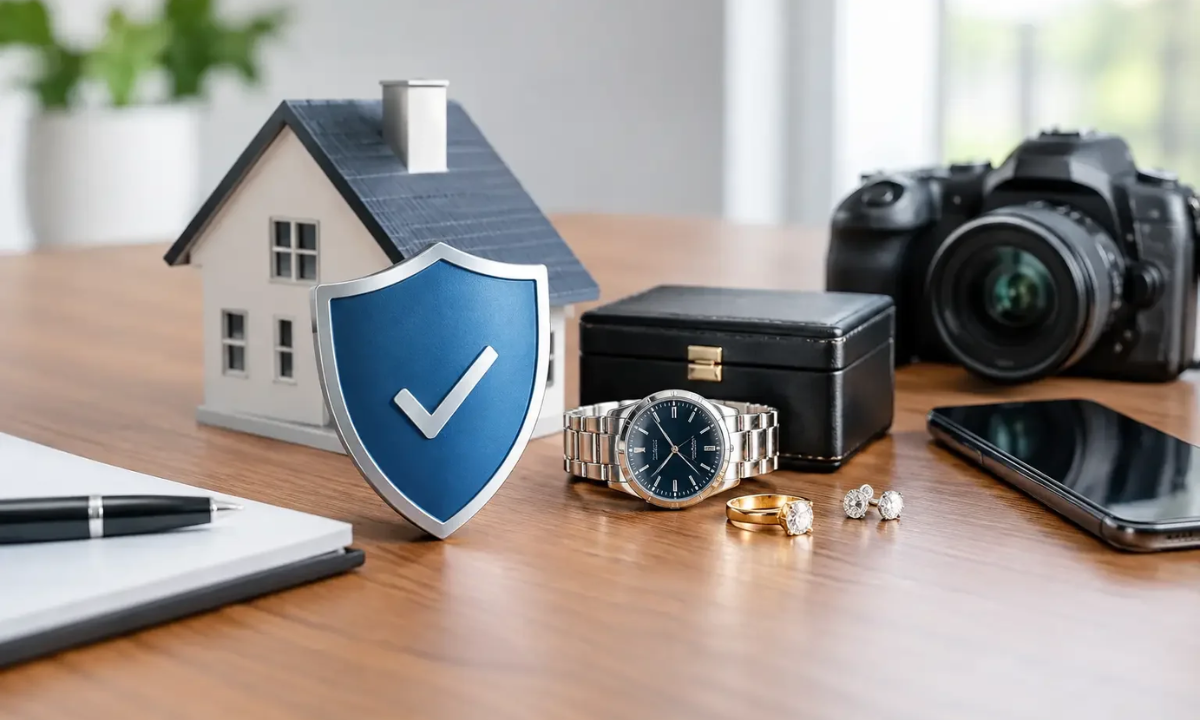
A quality safe can reduce the risk of theft, fire damage, and unauthorized access. It does not automatically mean every item inside is fully insured. This safe insurance guide helps homeowners, gun owners, collectors, and business operators understand the question that matters after a loss: what does the policy actually pay for?
Insurance and physical security work best together. Your safe provides a layer of real-world protection before a loss occurs. Insurance can help you recover financially afterward, subject to deductibles, coverage limits, exclusions, and documentation requirements. The details vary by policy, which is why it pays to review them before you need to file a claim.
Start With What Your Policy Covers
Most homeowners policies include personal property coverage for belongings damaged or stolen from your home. Renters policies typically provide similar coverage for a renter's possessions. But broad personal property coverage is not the same as unlimited coverage for every high-value item.
Many policies set special limits for categories that are frequently stolen or difficult to value. Jewelry, watches, firearms, cash, collectible coins, precious metals, business property, and certain electronics may have lower caps than the total personal property limit. A policy might cover a substantial amount of household contents overall while limiting theft coverage for jewelry or firearms to a much smaller amount.
Read the declarations page first. It summarizes your coverage limits and deductible. Then review the personal property section and ask your insurance agent about special limits, theft limits, off-premises coverage, and exclusions. Do not assume that a fire loss and a burglary loss will be handled under identical limits.
A safe itself may also be covered as personal property, but replacement cost depends on the policy terms. If you own a heavy gun safe, jewelry safe, fire safe, or TL-rated burglary safe, keep its invoice, model number, serial number, photographs, and installation records. A policy cannot reimburse what you cannot reasonably identify and value.
A Safe Insurance Guide to High-Value Items
The items inside the safe usually deserve more attention than the safe itself. Coverage needs change considerably depending on what you protect.
Firearms and related equipment
Responsible firearm storage protects against theft and unauthorized access, but insurance treatment varies. Some homeowners and renters policies cover firearms under standard personal property coverage, while others apply a specific theft sublimit. Accessories, optics, ammunition, suppressors, and collectible firearms may require separate consideration.
A detailed inventory is essential. Record make, model, serial number, caliber or gauge, purchase date, purchase price, and current estimated value. Clear photos help, especially for custom firearms and accessories. Keep copies outside the safe as well as in a secure digital location. If the safe is damaged in a fire or forced entry, the records stored only inside it may be unavailable when you need them.
For a collection that exceeds your policy's limit, ask about scheduled personal property or a specialty firearms policy. Scheduling can provide an agreed or stated value for listed items, though premiums, appraisal requirements, and deductibles differ by insurer.
Jewelry, watches, and heirlooms
Jewelry is one of the most common areas of underinsurance. A family ring may have emotional value that no policy can replace, while its current market value may be far higher than the original purchase price. Standard policies often limit theft coverage for jewelry and may not cover every type of mysterious disappearance or accidental damage.
For pieces with meaningful value, obtain a current appraisal from a qualified professional and ask whether scheduling is appropriate. Update appraisals periodically, particularly for diamonds, gold, and collectible watches. Photos should show each piece clearly, including hallmarks or identifying details where possible.
A burglary-rated safe, properly anchored and placed out of obvious view, can be a sensible part of a jewelry protection plan. However, a basic fire-resistant document safe is not automatically designed to defeat determined burglary attempts. Match the safe's construction and lock to the value and risk profile of what it holds.
Cash, documents, and records
Cash is often subject to a low policy limit. A safe can protect money from casual theft, but it does not turn a large amount of stored cash into fully insured property. Businesses that keep daily receipts, tips, or change funds should confirm their commercial crime, money, and securities coverage rather than relying on a general property policy.
Important documents have a different challenge. The paper itself may be inexpensive, but replacing it can be time-consuming and stressful. Birth certificates, property records, passports, legal agreements, photographs, and business records benefit from fire and water protection. For paper documents, look for a safe with a tested fire rating appropriate for records and understand that fire protection is time-based, not permanent.
Digital media requires more care. Paper-rated safes can reach internal temperatures that may damage flash drives, hard drives, and other media. If you store digital backups, use a media-rated container or maintain encrypted backups in a separate secure location.
Your Safe Can Support a Better Claim
Insurance companies may ask how property was stored, especially after a burglary. A safe does not guarantee coverage, and it should never be represented as a requirement unless your insurer says so. Still, good safe selection and installation can demonstrate responsible loss prevention and may influence eligibility for discounts with some carriers.
Anchoring matters. A burglar may not need to defeat a safe that can be removed from the property. Use manufacturer-approved mounting hardware and anchor points whenever the safe is designed for them. For larger gun safes and burglary safes, professional delivery and installation can reduce the risk of injury and help ensure the unit is positioned and secured correctly.
Keep proof of the safe's security features. Save product specifications that identify steel construction, lock type, boltwork, relockers, fire rating, and burglary rating. UL-listed locks and independently tested TL-15 or TL-30 burglary ratings carry more meaning than vague marketing terms. A safe with a recognized rating may also be relevant when an insurer evaluates a high-value collection, although approval and discounts are always insurer-specific.
Avoid overstating protection. A two-hour fire rating at a specified temperature is valuable, but fire conditions, water exposure, installation location, and duration all affect the outcome. Likewise, a quick-access handgun safe is built for timely authorized access, not for the same burglary resistance as a large, anchored TL-rated safe. Choose each product for its intended role.
Home, Renters, and Business Coverage Are Different
Homeowners and renters should be especially cautious when personal property is used for business. A laptop used occasionally for work may be treated differently from inventory, customer files, cash receipts, tools, or pharmacy products stored at home. Standard personal policies often limit coverage for business property, particularly when it is off premises or used to generate income.
Business owners need to review commercial property coverage alongside crime coverage and business interruption coverage. A retail store, restaurant, hotel, medical office, or pharmacy may need protection for cash, checks, inventory, controlled items, keys, and critical records. A depository safe can improve cash-handling procedures, but it does not replace the right policy limits or employee theft coverage.
Consider the practical workflow, too. A safe that is too small, too difficult to use, or poorly located may encourage employees to leave deposits unsecured. The best setup balances security, access control, accountability, and the amount of cash or valuables on site at any one time.
Build an Inventory Before You Need It
An inventory is one of the strongest tools in any insurance claim. It does not need to be complicated, but it needs to be complete enough to support ownership and value. Walk through your home, safe, office, or stockroom and document significant items as you go.
For valuables, retain purchase receipts, appraisals, serial numbers, model information, and photos. For firearms, record identifying details carefully and store that information securely. For business assets, maintain invoices and depreciation records. Update the inventory after major purchases, gifts, inheritances, or changes in inventory levels.
Store copies somewhere separate from the safe. An encrypted cloud folder, secure password-protected drive, or trusted off-site location can work. The goal is simple: if the building and the safe are both damaged, your proof of ownership should still be available.
Questions to Ask Your Insurance Agent
Before choosing additional coverage or changing your safe setup, ask direct questions. What are the special limits for firearms, jewelry, cash, collectibles, and business property? Is replacement cost included, or will depreciation apply? Does the policy cover water damage, theft away from home, accidental loss, and damage during a fire? Does an anchored safe or monitored alarm qualify for a discount?
Also ask what documentation the insurer expects for scheduled items and whether appraisals have an expiration period. Get answers in writing when possible. Insurance policies can differ sharply, even when they use similar labels.
A well-chosen safe is not a substitute for insurance, and insurance is not a substitute for secure storage. Put them together with a current inventory, realistic coverage limits, and a safe built for what you actually protect. That preparation gives you more than a product or a policy - it gives you a clearer plan when protecting what matters most becomes urgent.