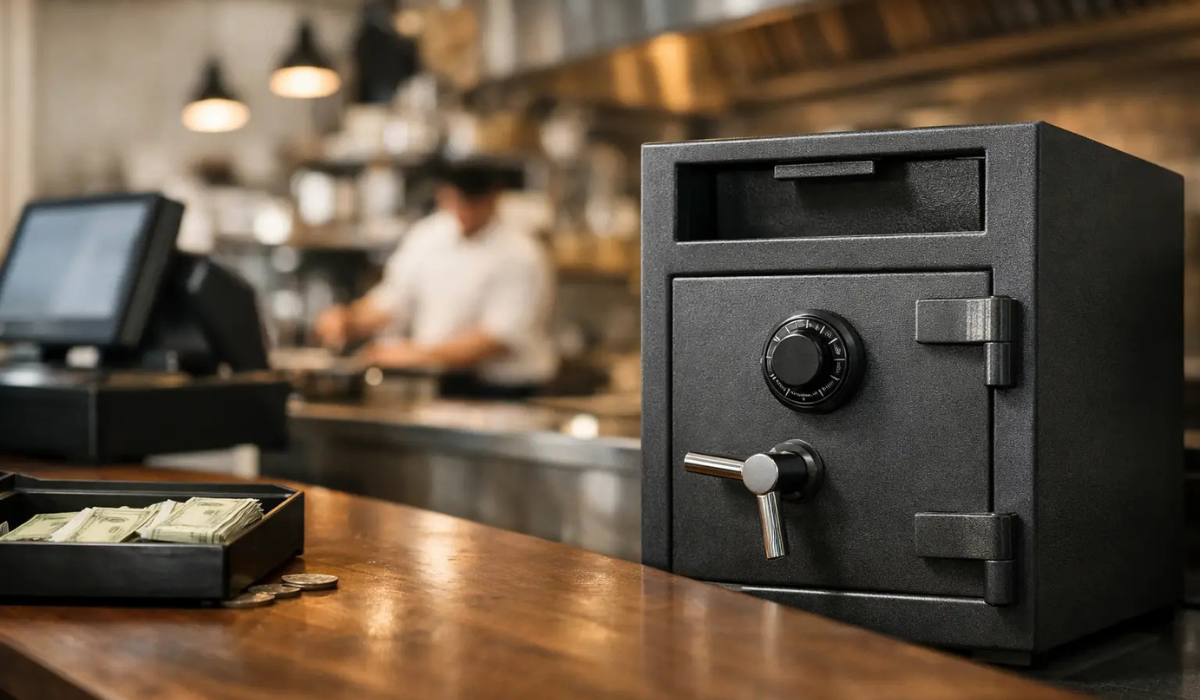
Saturday dinner rush is over, the drawer is heavy, and your closing manager is counting bills in the back office with one eye on the clock. That is exactly when the best depository safe for restaurant use earns its keep. A good drop safe shortens cash exposure, limits employee access, and gives your team a safer, cleaner process for cash drops without slowing down service.
Restaurants have a different cash-handling problem than most retail businesses. The pace is faster, shift changes are frequent, and multiple people may need to deposit cash while only one or two people should be able to open the safe. That is why a standard home safe or basic office safe usually misses the mark. A restaurant needs a purpose-built depository safe designed for repeated drops, controlled access, and real-world daily use.
What makes the best depository safe for restaurant operations?
The right answer depends on your volume, your floor plan, and how your managers handle cash now. But in most restaurants, the best fit shares a few traits. It needs a true deposit function, enough capacity for daily drops, solid steel construction, a dependable lock, and anchor capability so it becomes part of the building instead of a heavy box that can still be removed.
A depository safe is built so staff can place cash, deposit bags, or envelopes into the safe without getting access to the contents below. That separation matters. It reduces temptation, tightens accountability, and keeps your opening and closing procedures more consistent.
For a quick-service restaurant with frequent till skims, a rotary hopper or front-loading deposit door can work well because staff can make drops fast between customer orders. For a full-service restaurant, where managers may use deposit bags and larger bundles of cash at the end of the night, a wider drop opening and more interior capacity may matter more than raw speed.
Size matters, but not the way most buyers think
Many restaurant owners start by asking how much money the safe can hold. That matters, but the safer question is how your team will actually use it. A safe that technically fits your cash volume can still be a bad choice if the drop slot is too small for deposit bags, if the unit is too tall for the office layout, or if it blocks a door swing in a cramped manager station.
Look first at the deposit opening. If your process includes sealed bags, straps, or bundled receipts, the opening needs to accommodate them without forcing employees to fold, jam, or leave deposits unsecured until later. A narrow slot may be fine for bills and checks, but not for bagged drops.
Next, consider how often the safe will be emptied. A smaller restaurant with one daily close can use a more compact body. A high-volume operation running lunch, dinner, bar cash, and multiple shift changes may need more interior room so managers are not constantly emptying it just to keep the process working.
Lock type changes the day-to-day experience
For most restaurants, the lock decision comes down to electronic keypad versus dial. Mechanical dials are proven and durable, but they are slower in a business that already runs on tight timing. An electronic lock is usually the more practical option for restaurant use because it speeds up manager access and makes code changes easier when staffing changes.
That said, not all electronic locks are equal. Look for a quality lock from a trusted maker, ideally a UL-listed option when available. Fast entry is helpful, but reliability matters more. If the safe is opened and closed often, a cheap keypad can create headaches that erase any upfront savings.
Some restaurants also benefit from dual-control or manager-only access features. If several employees can make deposits but only a designated supervisor can open the safe, you have a stronger control point. That does not replace good procedures, but it supports them.
Steel thickness and anti-theft design are worth your attention
A restaurant depository safe is not just there to organize cash. It is there to resist theft long enough to make the crime harder, louder, and less likely to succeed. That means body steel, door construction, locking bolts, relockers, and anchor points all matter.
This is where buyers sometimes underspend. If the safe is holding several days of deposits or sits in a back office with limited visibility, a thin-bodied, lightly built unit may not offer the level of protection your risk calls for. Heavier steel and better door construction usually mean more weight and a higher price, but they also improve real burglary resistance.
It depends on the restaurant. A small cafe that empties the safe daily and keeps low cash on hand may not need the same build level as a busy bar and grill with late-night closes and larger deposits. The point is to match the safe to the exposure, not just the budget.
Installation is not optional
A depository safe that is not anchored is a compromise from day one. Even a heavy safe can be removed with the right tools and enough time. Proper anchoring to concrete is usually the strongest setup, though wood floor installations may still be viable depending on the model and location.
Placement matters too. The best location is usually out of public view, away from obvious traffic paths, but still convenient enough that staff will actually use it during the shift. If a cash drop takes too much time or feels awkward, people delay it. Delayed drops increase drawer exposure, and that defeats the purpose.
In many restaurants, the sweet spot is a manager office or back-of-house area with controlled access. If the safe is hidden too well or placed in a room that is often blocked during service, the process breaks down. Security only works when it fits the workflow.
Features that help restaurants specifically
When comparing models, it helps to think beyond the word safe and focus on restaurant operations. A few features tend to matter more in this setting than they would in a home or general office environment.
A baffle or anti-fish mechanism is important because it helps prevent someone from reaching back through the drop opening to retrieve contents. For restaurants making frequent deposits, that is a core feature, not a bonus.
A hopper-style deposit door can be a smart choice when staff are dropping cash bundles quickly and repeatedly. A front slot may be enough for envelopes and checks, but if your team regularly uses deposit bags, a larger deposit system can make daily use smoother.
Interior lockboxes can also be useful in some operations. If you need separate control over certain funds or want an added layer for manager access, that feature can help. Still, more compartments are not always better. Complexity should serve your process, not complicate it.
Best depository safe for restaurant buyers: how to choose confidently
If you are trying to narrow the field, start with three questions. How many deposits happen per day, what exactly goes through the drop opening, and who should have opening access? Those answers usually eliminate a lot of mismatched options quickly.
From there, compare the practical specs. Check exterior dimensions against your actual space. Review interior capacity based on how often you empty the safe. Confirm lock type, anchor hardware compatibility, door construction, and whether the unit includes anti-fish protection. Weight also matters because it often signals build level, but weight alone does not tell the whole story.
Brand reputation should count for something here. Established safe manufacturers tend to offer better consistency in lock quality, steel construction, and long-term reliability. For a restaurant, where the safe becomes part of a daily operating procedure, reliability is not a luxury feature.
One honest trade-off is convenience versus security level. The fastest, simplest drop design may not be the most resistant unit in the category. On the other hand, a heavier and more secure safe that is frustrating to use can lead to bad staff habits. The best choice usually sits in the middle - secure enough for the risk, easy enough for real use.
Common buying mistakes restaurants make
The most common mistake is choosing by price alone. A bargain unit can look fine on paper, then turn into a daily annoyance because the opening is too small, the lock is inconsistent, or the body feels underbuilt for the cash being stored.
Another mistake is buying too much safe. If your restaurant makes modest cash drops and the contents are removed frequently, a large high-cost unit may tie up budget you could have used for cameras, procedures, or better access control in the office.
The third mistake is ignoring the handoff between the safe and the process. Even the best depository safe for restaurant cash control will not fix vague closing procedures or shared manager codes. The safe should support a clear deposit routine, not stand in for one.
If you are comparing models and feeling stuck, that is normal. This is one of those purchases where small details have an outsized effect once the safe is in use every day. The right depository safe should make your restaurant feel less exposed, your staff more consistent, and your cash handling a lot less stressful.