
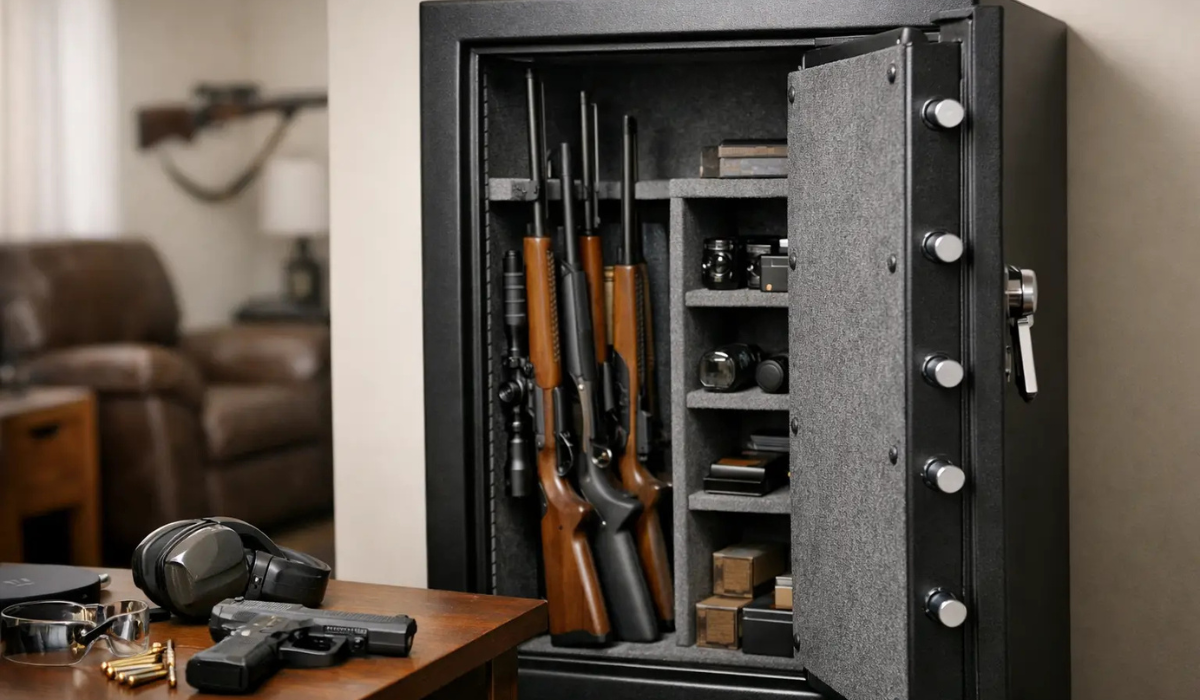
A gun safe usually gets judged by the wrong thing first. People look at the outside, count the long-gun slots printed on the tag, and assume bigger means better. In practice, the right choice comes down to what you need to protect, how fast you need access, and what kind of threat you are actually planning for - unauthorized access, theft, fire, or some combination of all three.
That is why shopping for gun safes can feel more complicated than it should. The good news is that the specs do tell a useful story once you know what they mean. You do not need to memorize every detail, but you should understand which features genuinely improve protection and which ones are mostly there to make a safe look impressive in a product photo.
How to think about gun safes
The first question is not “Which model is best?” It is “What problem am I solving?” A quick-access handgun safe beside the bed serves a very different purpose than a full-size rifle safe in the garage. One prioritizes speed and controlled access. The other leans more heavily on storage capacity, theft resistance, and often fire protection.
For many households, the answer is not one or the other. It is both. A larger safe handles long guns, extra handguns, optics, documents, and valuables, while a small handgun safe covers immediate-access needs. That setup is common because it reflects real life. The trade-off is cost, but it often gives you better day-to-day security than trying to make one safe do every job well.
Size matters, but usable space matters more
One of the biggest mistakes buyers make is choosing based on the advertised gun count. If a safe says it holds 24 guns, that number usually assumes a best-case layout with slim profiles and minimal accessories. Add scopes, slings, pistol grips, magazine extensions, and interior shelves, and the practical capacity drops fast.
If you own modern sporting rifles, scoped hunting rifles, or a mix of long guns and handguns, give yourself more room than you think you need. A safe that seems oversized on day one often feels just right after a year or two. Firearm collections tend to grow, and many buyers eventually want space for passports, jewelry, important paperwork, cash, and heirlooms too.
Interior layout deserves as much attention as exterior dimensions. Adjustable shelving, door organizers, and modular interiors make a real difference because they let the safe adapt to your collection instead of forcing you into a rigid storage plan.
Fire ratings on gun safes explained
Fire protection is one of the most misunderstood parts of the buying process. A fire rating is not a promise that contents will come through any fire untouched. It is a benchmark based on a specific test, temperature, and time period. Even so, a legitimate fire rating can still be extremely valuable.
If your safe is going in a home, fire protection is often worth serious consideration. Documents, family records, photos, and some valuables are at least as vulnerable to heat and smoke as they are to theft. Ratings such as 30 minutes, 60 minutes, 90 minutes, or 2 hours at a stated temperature help you compare one model to another.
What matters is reading the rating carefully. A longer duration at a meaningful temperature is generally better, but it should be viewed alongside the rest of the build. Fireboard insulation, door seals, and overall construction all contribute. If your top concern is burglary resistance, you may not want to overpay for a fire rating while ignoring steel thickness and lock quality. If you are storing documents with firearms, that balance shifts.
Steel thickness and build quality are not small details
A safe’s steel body and door tell you a lot about its resistance to forced entry. Thicker steel generally provides better protection, but buyers often run into confusing gauge measurements and marketing language. Lower gauge numbers mean thicker steel, which is better for security.
This is also where “it depends” matters. Not every buyer needs a very heavy, high-security safe with commercial-grade burglary features. But if your firearms collection has substantial value, or if the safe will be placed in a more exposed location such as a garage, stronger construction deserves priority.
Pay attention to the door, frame, locking bolts, and whether the safe includes relockers or hard plates that protect the lock mechanism from attack. These are not flashy features, but they are part of what separates a true security product from a metal cabinet that mainly keeps honest people honest.
Lock type affects daily use more than most buyers expect
A safe can have strong construction and still frustrate you if the lock does not fit how you use it. Mechanical dial locks are proven, durable, and appealing to buyers who want simplicity without batteries or electronics. The downside is speed. They are slower to open, especially in low light or stressful situations.
Electronic keypad locks are popular because they are faster and easier for everyday access. Many buyers prefer them on full-size gun safes for that reason alone. Quality matters here. A UL-listed lock adds confidence that the lock meets recognized standards.
Biometric access can make sense for some handgun safes where speed matters most. The convenience is real, but biometric performance varies by model and by conditions such as finger placement, moisture, or dirt. For that reason, the best biometric safes usually include backup entry methods rather than relying on fingerprint access alone.
Installation is part of the security plan
Even a heavy safe can be vulnerable if it is not installed thoughtfully. One of the smartest things you can do is anchor the safe properly. Bolting it down helps prevent thieves from tipping it, moving it, or removing it entirely for later attack.
Placement matters too. A safe tucked into a corner, closet, or other constrained space can be harder to pry open than one sitting exposed in the middle of a garage. At the same time, convenience matters. If the safe is so hard to reach that you avoid using it correctly, the setup is not working.
Floor support is another practical concern. Larger gun safes get heavy fast, especially with added fire insulation and a full collection inside. Before delivery, make sure the chosen location can handle the load and that the route into the home is realistic.
Quick access vs. full-size protection
Not all gun safes are meant to solve the same problem, and trying to compare them as if they are can lead to a bad purchase. A quick-access handgun safe is built around immediate retrieval and controlled access in bedrooms, offices, or vehicles. A full-size safe is built around broader storage and layered protection.
If children are in the home, the access question becomes even more important. Responsible storage means preventing unauthorized handling while still allowing lawful owners to reach the firearm when needed. That is why many families pair a rapid-access handgun safe with a larger long-gun safe elsewhere in the house.
Collectors and enthusiasts often need something different again. They may care more about interior flexibility, higher-end fit and finish, stronger burglary protection, and enough space for accessories and documents. A first-time buyer may be better served by a simpler, well-built model with reliable locking and room to grow.
What is worth paying more for
Some upgrades are genuinely worth it. Better steel, stronger bolts, reputable lock systems, meaningful fire ratings, and interior flexibility usually pay off over time. So does choosing a safe from a recognized brand with clear specifications instead of a vague, bargain-bin listing that hides the important details.
Other extras are more situational. Door organizers are useful if you store handguns, magazines, and paperwork. Interior lights are convenient but not essential. Decorative finishes matter if the safe will be visible in a living space, but they should not distract from the core security features.
For high-value collections or serious burglary concerns, stepping up into heavier-duty burglary protection may make sense. For many homeowners, though, the best value is a well-constructed gun safe with honest specs, a dependable lock, solid fire protection, and proper anchoring.
Buying with confidence
The safest purchase is usually not the cheapest safe or the biggest one on the page. It is the model that matches your actual storage needs, your home setup, and the level of protection you expect. A little honesty helps here. If you need quick bedroom access, say so. If you want to protect rifles, family papers, and jewelry from both theft and fire, build around that.
This is also where good guidance matters. A trustworthy retailer should be able to explain the difference between lock types, fire ratings, steel thickness, and installation needs without pushing you into a model that exceeds your use case. At Secure Zoned, that practical approach is what helps buyers narrow the field and avoid paying for the wrong features.
A good gun safe should make responsible ownership easier, not more confusing. When the specs line up with the way you actually live, you end up with something better than a box of steel - you get real peace of mind every time you lock it.