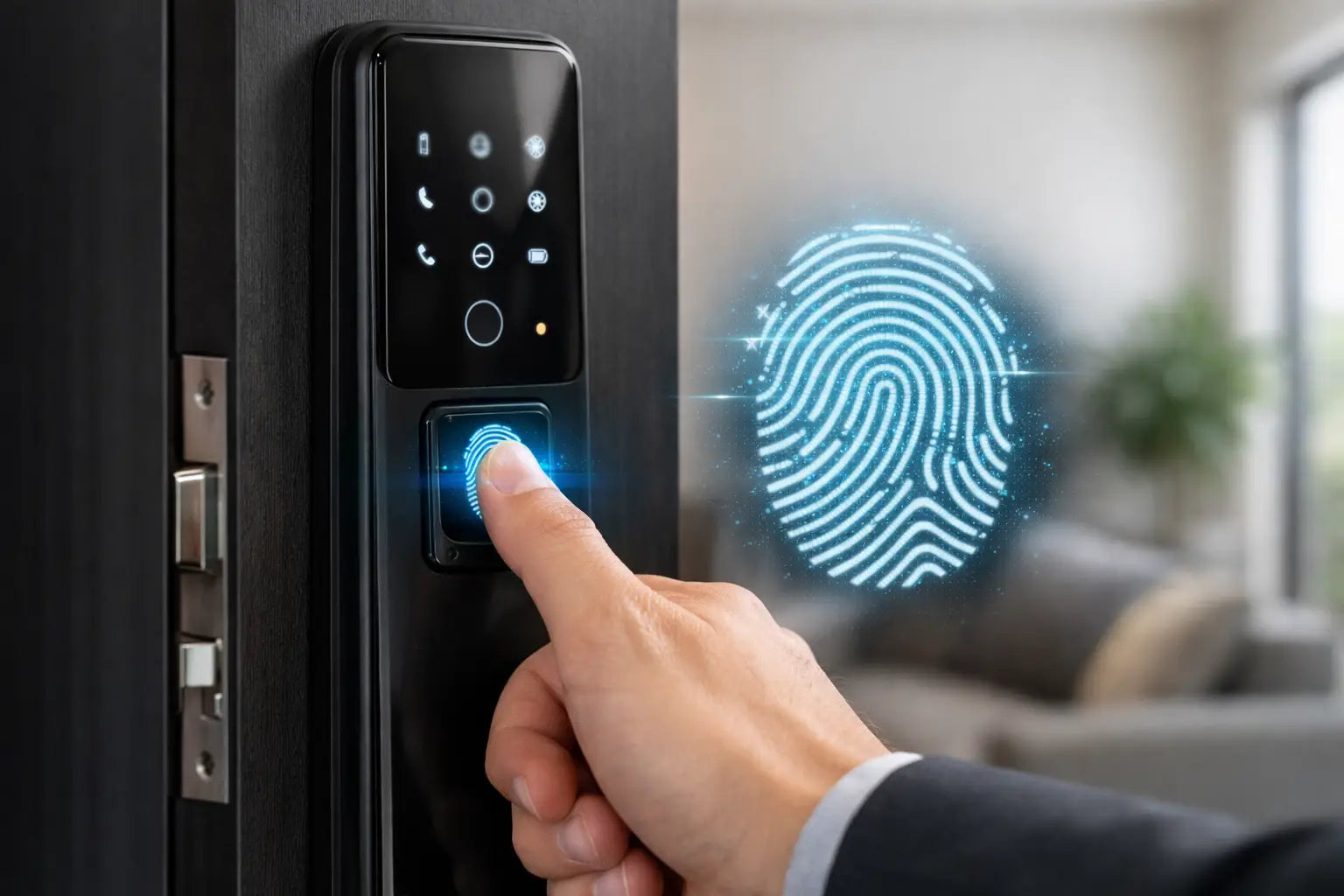
A lost key at the wrong time is frustrating. A borrowed code that never got changed is worse. That is exactly why interest in the biometric door lock with fingerprint keeps growing among homeowners, rental hosts, and small business owners who want faster access without giving up control.
The appeal is easy to understand. You place a finger on the reader and the door opens in a second or two. No digging through pockets, no hiding spare keys, no trying to remember whether you gave that four-digit code to a contractor, employee, or visiting relative six months ago. But convenience is only half the story. The better question is whether fingerprint access actually improves security for your situation.
What a biometric door lock with fingerprint actually does
A biometric door lock with fingerprint uses a sensor to read a stored fingerprint template and compare it against authorized users. If there is a match, the lock releases. Most models also include backup access methods such as a keypad, mechanical key, app control, or all three.
That backup matters more than many buyers expect. Fingerprint access can be quick and reliable, but real life is messy. Wet hands, dirty fingers, changing weather, or a worn sensor can slow recognition. A good lock is not just about the scanner. It is about the full access system around it.
For that reason, the strongest products combine convenience with practical fail-safes. If you are securing a home office, interior stock room, rental unit, or a side entry where key sharing has become a headache, fingerprint access can make daily use easier. If you are trying to secure firearms, cash, documents, or high-value jewelry, the conversation changes. In those cases, the door lock is only one layer, not the whole security plan.
Where fingerprint door locks make the most sense
The best use case depends on what you are protecting and how often the door gets used.
For residential entry doors, fingerprint locks work well when several family members need access and keys tend to disappear. Parents often like being able to give each adult user their own credential instead of circulating copies of the same key. You also avoid the common problem of children forgetting a code and getting locked out.
For interior rooms, they can be even more practical. A home office with sensitive documents, a closet with controlled items, or a supply room in a small business may not need commercial-grade access control, but it may need more than a basic keyed knob. Fingerprint access can be a clean middle ground.
For small businesses, a biometric lock can help limit who gets into private offices, inventory rooms, or employee-only spaces. This is especially useful when staff turnover makes rekeying expensive or when owners want to stop sharing one universal code.
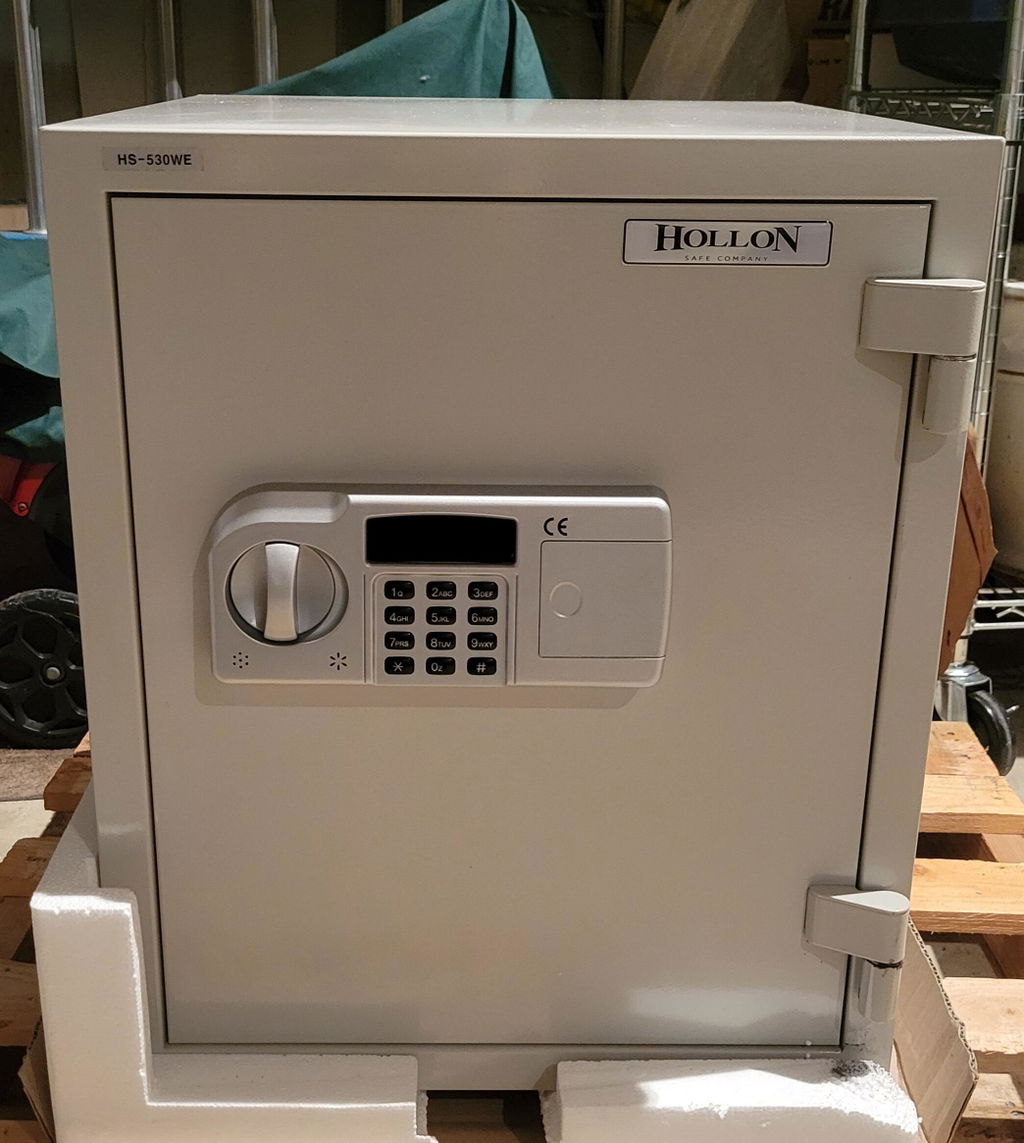
That said, fingerprint door locks are not the same thing as a burglar-rated safe, a vault door, or a firearm safe designed for forced-entry resistance. If the goal is serious protection for guns, cash, records, or family valuables, the lock on the room door should support a larger plan that includes a properly built safe with the right fire rating, steel construction, and lock type.
The trade-off: convenience vs. security depth
This is where buyers should slow down.
A biometric lock can improve day-to-day control, but it does not automatically mean stronger physical security. A fingerprint reader may sound advanced, yet the overall protection still depends on the door, frame, strike plate, hardware quality, and installation. A high-tech lock on a weak hollow-core door is still a weak setup.
The same goes for exterior doors. If the lock body is solid but the frame is poorly anchored, the system can fail at the most basic point. That is why lock shopping should always include the door itself. Material, thickness, reinforcement, and mounting hardware all matter.
There is also the issue of reliability. Some lower-end biometric locks work well in ideal conditions and become inconsistent over time. A missed scan once in a while is annoying at home. At a business with multiple users, it can become a daily problem. Better models usually have faster processors, more accurate sensors, stronger weather resistance, and better app or credential management.
Features worth paying attention to
The fingerprint sensor is the headline feature, but it should not be the only one you compare.
Sensor speed and accuracy come first. A lock that reads quickly and consistently is more than a convenience feature. It affects whether people actually use the system properly or fall back on less secure habits like leaving a door propped open.
User capacity also matters. Some locks are fine for a couple of family members, while others are designed to store dozens or even hundreds of fingerprints. For a household, this may not be a big issue. For a business, it can be the difference between a good fit and a frustrating one.
Build quality is another major factor. Look for solid metal construction, a quality deadbolt, and clear information on weather resistance if the lock will face the elements. Exterior applications in hot summers, cold winters, or heavy rain need more than sleek looks.
Power backup is easy to overlook until the batteries die. Many fingerprint locks run on standard batteries and give low-battery alerts, which is good. Some also allow temporary external power through a backup port. That feature can save a lot of trouble.
Audit and management features can be helpful for rentals and businesses. Not every buyer needs app logs, temporary credentials, or scheduled access windows, but if several people are coming and going, those functions can add real control.
Biometric locks for homes with firearms or valuables
For readers thinking beyond front-door convenience, this topic deserves extra clarity.
A biometric door lock can help restrict access to a room, but it should not be treated as a substitute for a proper gun safe or burglary-rated safe. Responsible firearm storage means securing the firearm itself, not only the space around it. The same logic applies to cash, jewelry, passports, and important records.
If you have a gun room, a biometric lock on the door may add a useful access layer. It can reduce casual access and create another barrier between unauthorized users and your firearms. But the stronger solution is a layered one: quality room access, a correctly anchored safe, and lock features that fit the use case, whether that is quick-access biometric entry for a handgun safe or a dial or electronic lock on a larger long-gun safe.
That layered approach is where practical security decisions tend to pay off. You are not counting on one device to do everything.
Is a fingerprint lock better than a keypad or key?
Sometimes yes, sometimes no.
Fingerprint access is usually faster than entering a code, especially when your hands are full. It also avoids the problem of someone watching you type a PIN. Unlike a physical key, a fingerprint cannot be misplaced on the kitchen counter or copied at the hardware store.
On the other hand, keypads are often simpler and can be more predictable for some users. Elderly family members, guests, or employees may find a code easier than fingerprint enrollment. Mechanical keys remain useful as backups because they do not depend on batteries, apps, or sensors.
For many buyers, the best answer is not choosing one method over another. It is choosing a lock that combines them well. Fingerprint for speed, keypad for shared access, and a physical key for emergency backup is a practical setup.
Installation matters more than many buyers realize
A well-reviewed lock can still disappoint if the installation is sloppy.
The deadbolt has to align correctly. The strike plate should be anchored with longer screws into the framing, not just the trim. Exterior doors should close cleanly without forcing the bolt. If the lock includes app features, those should be configured carefully, with admin access limited to the right person.
For business settings, it is worth thinking through traffic flow before installing anything. A private office door has different needs than an employee entrance or inventory room. You want the lock to match the way the space is actually used, not just the way it looks in a product photo.
Who should buy one and who should skip it
A biometric door lock with fingerprint is a smart buy for people who want quick, controlled access and are willing to spend a little more for convenience and accountability. It fits well for busy households, interior access control, short-term rentals, and smaller business spaces where key management has become a recurring problem.
It may be the wrong fit if you want the lowest-cost solution, if your door and frame are too weak to support real security gains, or if you are expecting the lock itself to provide safe-level protection. In those cases, the better investment may be reinforcing the opening, upgrading hardware, or putting budget toward a real safe first.
The best security products tend to be the ones that match the job honestly. A fingerprint lock can be a very good tool. Just make sure you are asking it to do the right kind of work.
If your goal is protecting what matters most, convenience should support security, not replace it.