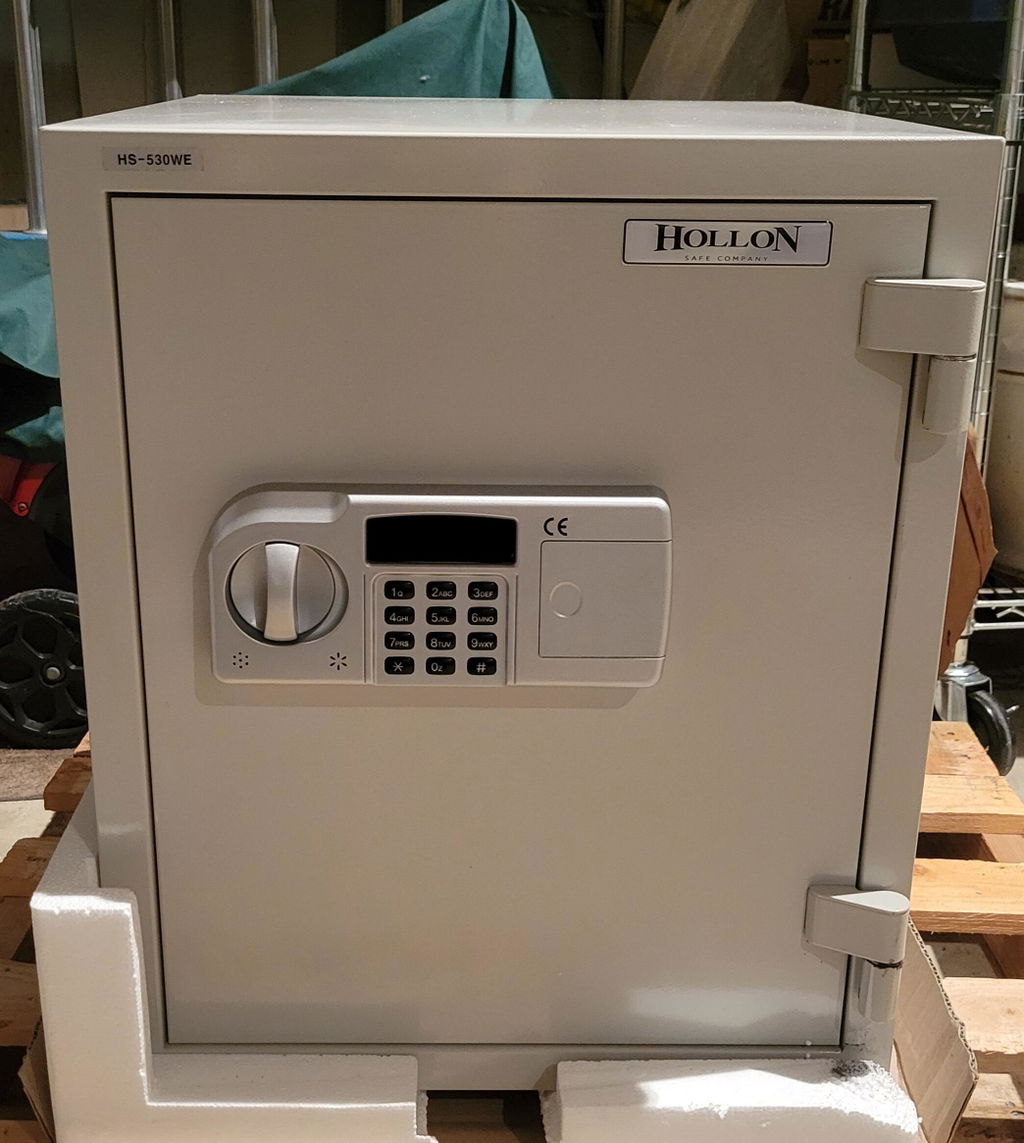
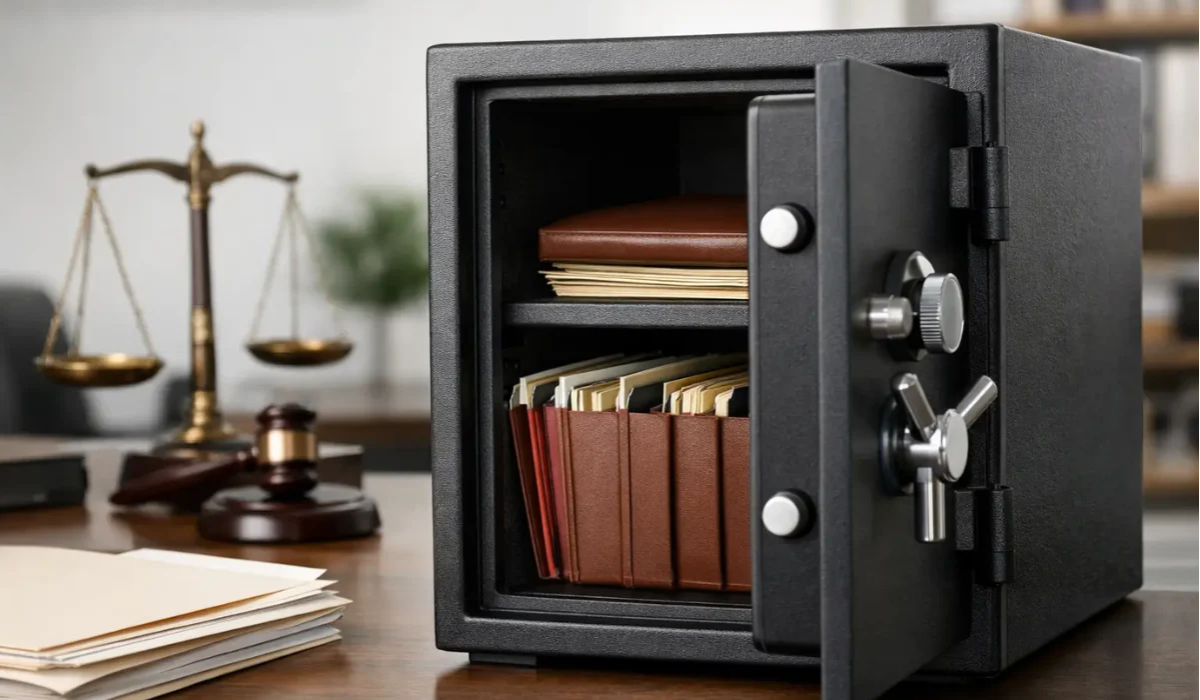
A missing deed, operating agreement, or signed contract usually becomes a problem at the worst possible moment - after a fire, during an audit, or when a bank, court, or insurer wants paperwork fast. That is why choosing the right fireproof safe for legal records is less about buying a box and more about making sure critical documents are still readable when you need them.
Legal records are different from general household papers. Some are hard to replace, some take weeks or months to recover, and some lose value if the originals are damaged. Property deeds, wills, trusts, titles, birth certificates, corporate formation documents, tax files, client agreements, and estate papers all deserve more than a desk drawer or filing cabinet.
What a fireproof safe for legal records needs to do
At a basic level, a document safe should protect paper from heat long enough for a fire to be controlled. But that is only part of the job. It also needs to limit moisture exposure, resist opportunistic theft, and stay organized enough that you can actually retrieve what you need without digging through a stack of folders under stress.
This is where many buyers make the wrong comparison. They see two safes that both say fire rated and assume they offer similar protection. They often do not. Fire protection varies by time, temperature, seal quality, insulation type, and whether the unit is built primarily for documents or for burglary resistance with some added fire protection.
If your main priority is preserving paper records, the best choice is often a purpose-built document safe or fire file rather than a generic home safe. If your records include legal documents plus cash, media, valuables, or backup drives, the answer may be different.
Fire ratings matter more than the word fireproof
The term fireproof safe for legal records is common, but no safe is invincible under every fire condition. What matters is the tested rating. For paper documents, look closely at how long the safe is rated to keep internal temperatures low enough to prevent charring and loss of legibility.
In practical terms, many buyers start by looking at 30-minute, 1-hour, and 2-hour fire ratings. A shorter rating may work for basic home storage in lower-risk settings, but for irreplaceable legal files, longer is usually better. If you are protecting business records, estate documents, or a large volume of archived paperwork, stepping up to a 1-hour or 2-hour rating is often the smarter move.
It also helps to read the fine print on testing temperature. A safe rated for one hour at 1700 degrees Fahrenheit tells you far more than a vague fire resistant claim with no clear standard behind it. That kind of detail is where real value shows up.
Why document protection is different from media protection
Paper records and digital media do not fail at the same temperature. Paper can tolerate more heat than hard drives, flash media, and some electronic storage. So if your legal records include scanned backups on USB drives or external drives, a document-rated safe may not be enough by itself.
That does not mean you need to overcomplicate the purchase. It just means you should match the safe to what you are storing. For paper-only storage, document fire ratings are the priority. For mixed storage, ask whether you need separate media protection inside the safe.
Size mistakes are expensive
Most people underestimate how much space legal paperwork actually takes. They picture a few envelopes, then realize they also want room for binders, closing packets, tax returns, notarized copies, business licenses, insurance files, and family records.
Buying too small leads to bent folders, poor organization, and eventually storing overflow documents somewhere unprotected. Buying too large is not always ideal either, especially if the safe will sit in a closet, office, or under a desk where footprint and weight matter.
A good rule is to buy for the next five to ten years, not just what is on hand today. If you are a homeowner storing personal legal files, a compact document safe may be enough. If you run a business, manage rental properties, handle client contracts, or keep archived financial records, a larger unit or a fire-rated filing cabinet may fit better.
Think in folders, not just cubic feet
Interior dimensions tell the real story. A safe may look roomy from the outside but lose usable space to thick insulation and door design. Check whether it fits letter-size or legal-size folders flat, whether shelves are adjustable, and whether hanging file storage is supported if that matters to you.
For legal records, easy organization is not a luxury. It is part of the protection plan. A safe that keeps documents flat, labeled, and quickly accessible is much more useful than one that technically stores them but turns retrieval into a mess.
Burglary protection still matters
Fire is the headline feature, but theft risk should not be ignored. Legal records can be used for identity theft, fraud, property disputes, and business disruption. A fire-rated safe with thin construction and no anchoring can still be carried away if it is small enough.
That is why you should look at steel construction, lock quality, live locking bolts, relockers where applicable, and anchoring capability. For many homeowners, a well-built fire safe bolted down in a discreet location offers a strong balance of document protection and theft deterrence. For businesses, especially offices with employee traffic or customer access, the bar should be higher.
This is also where trade-offs come in. Some burglary-focused safes offer excellent steel construction but lower fire ratings. Some document-focused fire safes emphasize heat protection more than forced-entry resistance. Neither approach is wrong. It depends on whether your biggest concern is fire loss, smash-and-grab theft, or both.
Lock type should match how you actually use the safe
A legal-records safe is often opened less frequently than a handgun safe or cash safe, so speed is not always the top concern. Reliability is. Mechanical dial locks appeal to buyers who want proven longevity and no batteries. Electronic keypad locks are convenient and easier for many households or office managers to use consistently.
Neither is automatically better. A keypad lock is practical if more than one authorized person needs access or if you open the safe regularly during business hours. A mechanical lock can make sense if you prefer simplicity and long-term durability. What matters most is choosing a quality lock from a reputable manufacturer and having a backup plan for access control.
If multiple people need access to legal records, think beyond convenience. Consider who should know the code, how often it should change, and what happens if a key employee leaves.
Placement affects performance
Even a strong fireproof safe for legal records can be undermined by poor placement. Putting it in a garage, damp basement, or flood-prone area may create moisture issues that paper hates. Storing it where it is easy to see from a front office, delivery area, or home entry point can also raise theft risk.
Indoors, on a stable surface, in a climate-controlled area is usually the better starting point. If the safe can be anchored, do it. If you are considering a heavier fire safe or fire file on an upper floor, check weight load and access path first. Delivery and installation are part of the buying decision, especially with larger units.
For business owners, placement also affects workflow. A safe that is too hidden or too awkward to access may lead staff to leave records out on desks. Security only works when the setup is realistic.
Who needs a fire file instead of a traditional safe?
Some buyers are better served by a fire-rated file cabinet than a swing-door safe. If your legal records are active, numerous, and folder-based, a fire file can make daily use much easier. Law offices, property managers, medical practices, retail operators, and small business owners often prefer this route because it preserves a normal filing workflow.
A traditional safe may be the better fit for families, executives, or small offices storing a tighter set of high-value originals. It can also work well if you want one secure place for legal papers, passports, backup cash, and other sensitive items.
This is one of those decisions where usage pattern matters as much as specs. The strongest model on paper is not the best option if it makes organization harder.
How to choose with confidence
Start with the records themselves. Are you protecting a handful of irreplaceable originals or entire years of business documentation? From there, weigh four things in order: fire rating, usable interior space, burglary resistance, and access method.
If you are stuck between two sizes, the larger usable interior usually wins. If you are stuck between two fire ratings, the longer tested rating is worth serious consideration for legal documents that would be painful to replace. If theft is a real concern, anchoring and steel construction deserve more attention than a marketing label on the door.
A good safe should make you feel settled, not uncertain. The right model protects what matters most, fits the way you organize records, and gives you a clear answer when someone asks, “Where are the originals?”
When you are choosing protection for deeds, wills, contracts, tax files, or business records, think less about buying a safe and more about preserving your ability to prove, claim, file, and move forward when life gets complicated.