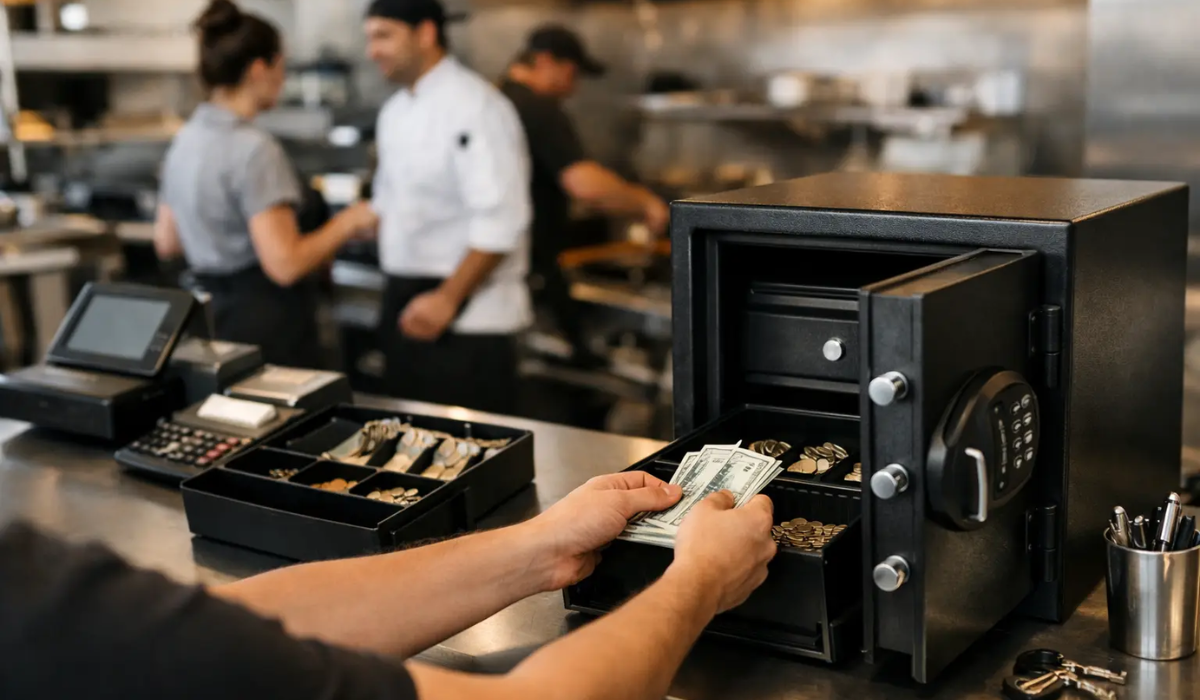
The busiest hour is the worst time to discover that too much cash is sitting in a register. A practical restaurant cash safe setup example starts with one goal: move excess cash out of public-facing drawers quickly, document every handoff, and limit who can access deposits.
For most restaurants, the right answer is not simply buying the heaviest safe available. It is building a cash-control system around the way your team actually works - lunch rushes, bar closeouts, delivery drivers, shift changes, and late-night deposits. The safe is the physical center of that system, but its placement, lock, anchoring, and procedures matter just as much.
A Restaurant Cash Safe Setup Example
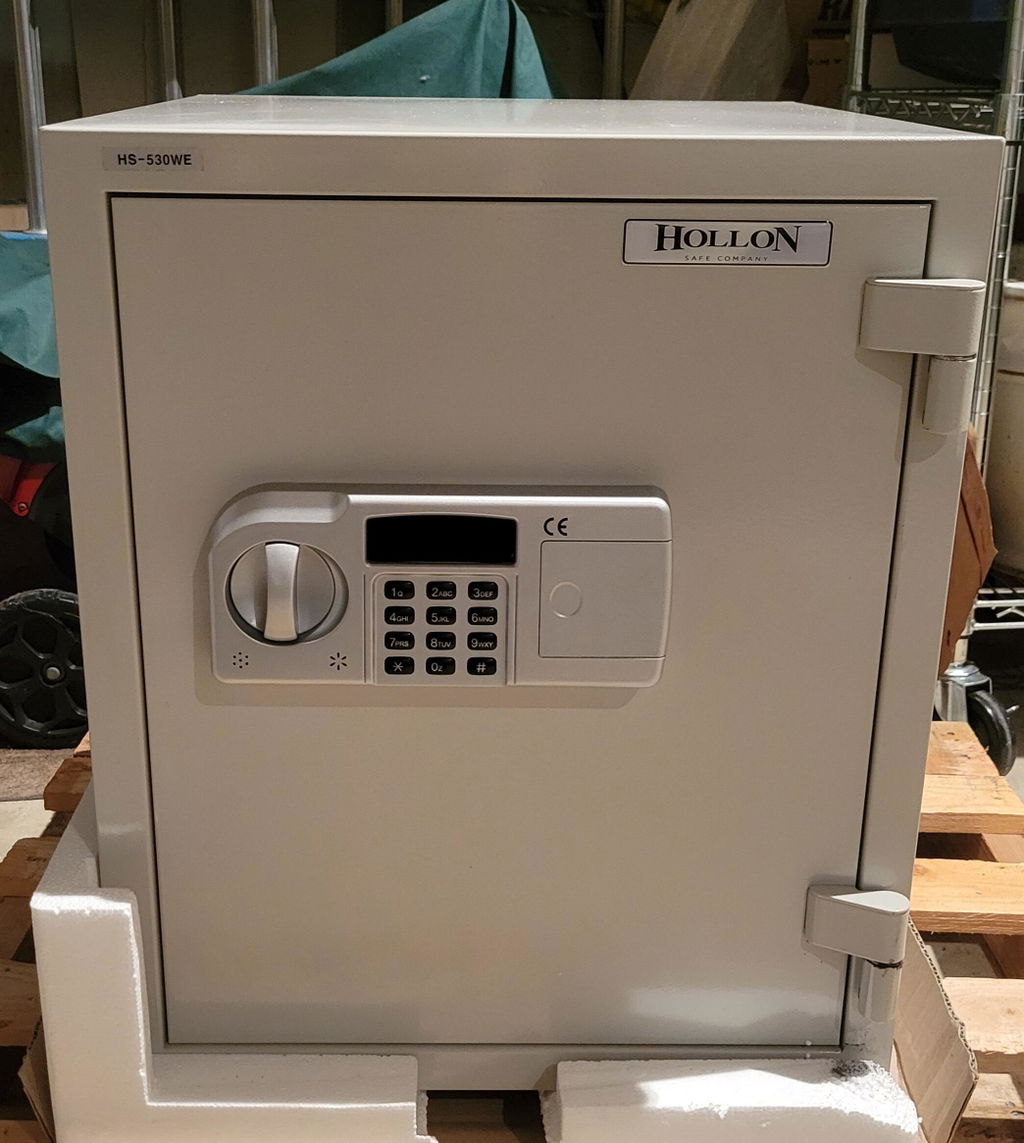
Picture a 90-seat casual restaurant with a bar, two point-of-sale stations, and closing shifts that end after dark. The manager installs a commercial depository safe in a locked back-office area, out of guest view and away from exterior doors. The safe is bolted to the concrete floor and wall according to the manufacturer’s instructions, making a quick removal far more difficult.
The deposit door faces the office entrance, not a window. Employees can place sealed cash-drop envelopes through the deposit slot without opening the main safe compartment. Only the general manager and owner have credentials for the main door. Shift leads can make deposits, but they cannot retrieve the contents.
Each register starts with a fixed bank, such as $150. When a drawer reaches a preset threshold - perhaps $500 during normal service or $350 at a late-night bar - the shift lead removes excess bills with a second employee present. The amount, register number, time, and both employees’ initials go on the deposit envelope and in the POS cash-drop record. The envelope goes straight into the depository safe.
At close, the manager counts the remaining drawer, verifies the day’s drop records against POS reports, and places final deposits in the safe. The owner or authorized manager opens the main compartment on a separate schedule to prepare the bank deposit. That separation prevents a single employee from making an unrecorded deposit and immediately removing it.
This setup will look different for a quick-service counter, food truck, or multi-location operation. The principle remains the same: reduce accessible cash, separate duties when possible, and create a record that can be checked later.
Why a Depository Safe Usually Fits Restaurants
A depository safe is designed for cash to go in without routinely allowing staff to get it back out. Common designs include a front-loading slot, rotary hopper, or drawer-style deposit compartment. For restaurants handling frequent cash drops, that one-way functionality is usually more useful than a standard office safe with a single main door.
A basic cash box or lightweight home safe may deter casual theft, but it is not a strong fit for a restaurant’s daily cash volume and employee access needs. A commercial depository safe generally provides heavier construction, a protected deposit path, and mounting provisions. Those are practical features, not just specifications on a product page.
The security level should match the risk. A small café that makes modest cash deposits during daylight hours may be well served by a quality B-rate or commercial depository safe that is properly anchored. A high-volume restaurant, bar, or location with substantial overnight cash may need a more heavily built model with thicker steel, anti-pry features, relockers, and a higher burglary classification.
For unusually high cash exposure, a TL-rated safe deserves consideration. TL-15 and TL-30 ratings indicate the safe has been tested to resist professional burglary attacks for a defined period. They cost more, weigh much more, and may require careful delivery and floor-load planning. That expense is not necessary for every restaurant, but it can be justified when the safe regularly holds significant cash or sits in a higher-risk location.
Choose the Lock Around Your Access Plan
The best lock is the one that supports accountable access. A commercial electronic lock is often the most practical choice because managers can open it quickly during a busy shift without carrying a physical key. Some models allow multiple user codes, time delay settings, and audit trails that show when the safe was opened.
A time delay can be valuable for restaurants that hold cash overnight. Once activated, it prevents immediate opening for a programmed period. The trade-off is operational: if a manager needs to correct a deposit issue during service, the delay may be frustrating. It works best when your staff understands exactly when the main compartment should and should not be opened.
Mechanical combination locks avoid battery concerns and can be very dependable, but they are slower to operate and harder to manage when staff responsibilities change. Key locks are usually the weakest fit for daily restaurant cash control unless key custody is exceptionally disciplined. Keys can be copied, lost, or passed between employees without a clear record.
Place and Anchor the Safe for Real Protection
A safe in an unlocked office is still exposed. Ideally, place the unit in a staff-only room with a solid locking door, limited windows, and no direct line of sight from the dining room or exterior. Avoid positioning it where a burglar could easily use a vehicle, hand truck, or pry bar without being noticed.
Anchoring is not optional for most restaurant safe installations. A safe that is not secured can be carried out or tipped for leverage, even if it looks heavy. Use the manufacturer-provided anchor holes and hardware requirements, and confirm the floor can support the safe’s weight. A large commercial safe can weigh several hundred pounds before cash, documents, or other contents are added.
Do not install a safe where plumbing, electrical lines, or radiant heating could be damaged by drilling. If there is any uncertainty, use a qualified installer. Proper installation protects the building as well as the safe’s warranty and security performance.
Set Clear Cash-Handling Rules
A good safe cannot correct loose cash procedures. Your written policy should be short enough for staff to follow during a rush and specific enough to be audited later. At a minimum, it should address these four points:
- A cash threshold that triggers a drop for each register or bar drawer.
- Two-person verification for drops above a defined amount.
- Numbered, tamper-evident deposit bags or envelopes tied to POS records.
- A clear list of who may deposit, who may open the main safe, and who reviews reports.
The two-person rule is not always practical for a small operation with one person on duty. In that case, use stronger documentation: a numbered bag, a manager text or call-in confirmation, and camera coverage of the deposit area where permitted by your policies and local requirements. The goal is to make discrepancies traceable, not to burden a lean team with paperwork.
Cash drops should never become a predictable spectacle. Keep the process discreet. Do not count large amounts in front of guests, do not leave envelopes on a desk while answering another task, and do not let employees take cash home for later deposit. The safer procedure is the one that happens every time.
Review the Setup After the First Month
After 30 days, compare your policy with real behavior. Are drawers hitting the threshold too often during Friday dinner? Are managers opening the safe more than expected? Are envelopes missing information because the form is too complicated? Small adjustments can make the system more reliable.
Also review whether the safe’s capacity matches your deposit volume. A compact drop safe can work well for one location with modest bills, while a restaurant with multiple registers and weekend events may need a larger deposit compartment. Overfilling a safe creates sloppy deposits and can interfere with its door or hopper.
A restaurant safe is most effective when it becomes part of the rhythm of service rather than an afterthought at closing. Choose a commercial unit sized for your cash volume, anchor it correctly, restrict access, and give every deposit a paper or digital trail. That combination protects more than the night’s receipts - it gives owners and managers a calmer, more accountable operation.