
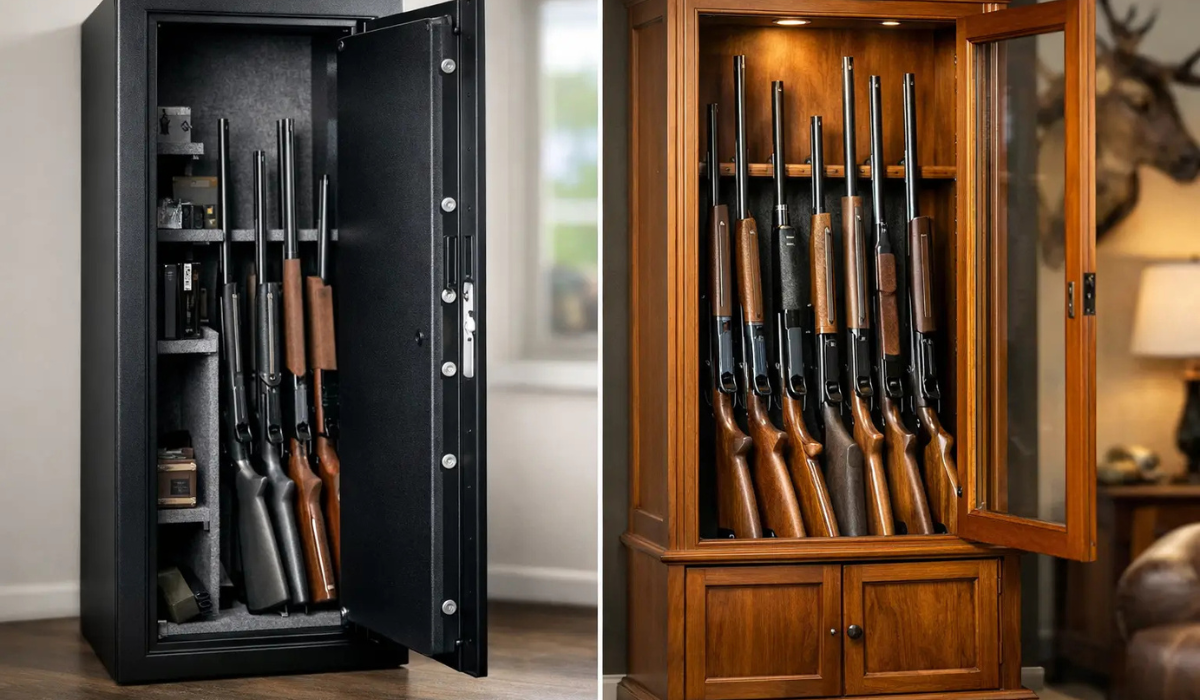
A lot of buyers start in the same place: they know their rifles should not be leaning in a closet or stacked in a corner, but they are not sure whether a rifle safe or cabinet is the smarter move. That question matters more than it sounds, because the right choice depends on what you are protecting against - unauthorized access, theft, fire, moisture, or simply household disorder.
The short answer is this: a cabinet is basic storage with light access control, while a safe is built for real security. But there is a lot of space between those two ideas, and that is where people either buy too little protection or pay for features they do not need.
Rifle safe or cabinet: the core difference
A rifle cabinet is usually made from thinner steel, weighs much less, and is designed to keep firearms organized and out of casual reach. In many cases, it will use a simple key lock or an entry-level electronic lock. Cabinets can absolutely improve safety inside the home, especially compared to leaving guns unsecured, but they are not built to resist a determined break-in for long.
A rifle safe is a different category. It is typically heavier, uses thicker steel, and often includes better locking systems, more secure door construction, and anchoring options. Many safes also add fire protection, door seals, reinforced locking bolts, and internal features that support long-term storage. If your goal is meaningful burglary resistance and protection beyond basic access control, a safe is the better tool.
That does not mean everyone needs the biggest, heaviest gun safe available. It means you should match the product to the risk.
When a rifle cabinet makes sense
A cabinet can be the right answer if your main concern is keeping rifles organized and preventing easy access by children, guests, or service workers. For some households, that alone is a major improvement. It creates a defined storage location, encourages responsible handling, and helps prevent the casual visibility that can lead to problems.
Cabinets also fit buyers with limited space or limited floor load capacity. A second-floor room, a tight closet, or a budget-conscious setup may make a lighter storage option more realistic. If you need to store a few hunting rifles and your home already has strong perimeter security, a cabinet may be enough for your current situation.
The trade-off is straightforward. A cabinet is not usually intended to stop pry attacks, aggressive tool use, or a fast smash-and-grab theft. If someone has time, privacy, and motivation, a cabinet is often easier to compromise or remove entirely if it is not anchored well.
When a rifle safe is the better choice
If you own multiple firearms, higher-value rifles, optics, suppressors where legally owned, or collectible pieces, a safe starts to make much more sense. The same goes for households with children, frequent visitors, or a location where burglary risk is a real concern.
A good rifle safe does more than lock the door. It adds delay time during an attempted break-in, and that delay is critical. Most thieves do not want a loud, time-consuming job. Heavier construction, stronger bolts, hard plates, relockers, and proper anchoring all work together to make theft less attractive.
Fire protection is another major reason buyers move up from a cabinet to a safe. Many rifle safes offer tested or manufacturer-stated fire ratings, such as 30, 60, 90, or 120 minutes at specific temperatures. Those numbers are not all measured the same way across brands, so it helps to compare them carefully, but a cabinet usually offers little to no fire protection at all.
For buyers storing documents, cash, jewelry, or heirlooms alongside firearms, a safe can serve multiple purposes. That can make the higher upfront cost easier to justify.
The biggest mistake buyers make
The most common mistake is shopping by gun count and price alone. A cabinet that says it holds 10 rifles may technically fit them, but that does not mean it will fit scoped rifles comfortably or protect them well. The same issue shows up with safes. A “24-gun safe” often holds fewer than 24 once optics, slings, magazines, and modern rifle shapes enter the picture.
Capacity numbers are marketing numbers. Real-world storage is usually tighter.
The better way to shop is to ask a few practical questions. Are you trying to prevent access by kids? Are you worried about burglary? Do you need fire protection? Will you store only rifles, or also handguns, documents, ammo, and valuables? Once those answers are clear, the cabinet versus safe decision gets easier.
Security features that actually matter
When comparing a rifle safe or cabinet, specs matter more than appearance. Thin steel with a glossy finish may look impressive online, but the real difference is in construction.
Steel thickness is one of the first things to check. In general, thicker steel offers better resistance to forced entry. Weight matters too, because heavier units are harder to move and often indicate more substantial construction. Door design is another big one. A safe with reinforced locking bolts and a better-built door frame has a real advantage over a cabinet with a lighter latch system.
Lock quality matters, but not in isolation. A UL-listed lock, whether mechanical or electronic, is a good sign. Electronic locks offer speed and convenience. Mechanical dial locks are slower but time-tested. Neither can make up for weak steel or poor anchoring.
Anchoring is where even a strong safe can fail if ignored. A cabinet should be anchored whenever possible, and a safe should be anchored almost without exception. An unanchored unit can be tipped, moved, or attacked more easily than most buyers expect.
Fire protection changes the conversation
If your rifles have wood stocks, optics, paperwork, or sentimental value attached to them, fire protection should not be treated as an extra. Cabinets generally do not address this risk. Safes often do, though the quality and credibility of fire ratings vary.
Look beyond a simple sticker. Check the stated duration, temperature, and whether the door uses expanding seals to limit heat and smoke intrusion. Also remember that fire lining and insulation add bulk and weight, which can affect placement inside the home.
If burglary resistance is your top concern and fire is secondary, you may choose a safe that leans more heavily into steel construction than long fire duration. If both matter, a balanced model is often the best fit.
Budget matters, but so does replacement cost
It is reasonable to start with price. Cabinets usually cost much less than safes, and for some buyers that makes them accessible right away. A lower-cost security product that gets used properly is better than waiting too long and leaving firearms unsecured.
Still, it helps to think beyond purchase price. Ask what you would be replacing after a theft or fire. The rifles themselves may be expensive, but optics, accessories, documents, and sentimental items can push the true value much higher. A safe often costs more upfront because it protects against more than one kind of loss.
This is where it pays to be honest about your collection and your future plans. If you already expect to buy more firearms or want one storage solution for guns and valuables, a safe may save money in the long run by preventing an upgrade later.
Placement and daily use matter more than people think
The best storage option is one you will use every time. If the unit is too small, badly placed, or frustrating to access, people cut corners. That is where security starts to fail.
A cabinet may fit more easily in a closet or utility space. A safe may require a first-floor location, a concrete slab, or a planned delivery path because of its weight. Measure doorways, hallways, and the final placement area before you buy. Also think about humidity control, especially if you live in a region where moisture can affect metal and wood over time.
Inside the unit, look for adjustable shelving, barrel rests, and room for scoped rifles. Good organization is not just about convenience. It helps prevent damage and makes it easier to store firearms responsibly.
So which one should you buy?
If your goal is low-cost organization and basic access control, a rifle cabinet can be a practical starting point. It is better than unsecured storage and can serve some households well, especially when properly anchored and used in a lower-risk setting.
If your goal is stronger theft resistance, fire protection, better long-term storage, and broader protection for valuables, a rifle safe is the better investment. For many gun owners, especially those protecting more than a couple of basic rifles, that added protection is worth it.
At Secure Zoned, this is the kind of decision we encourage buyers to think through carefully. Not every home needs the same level of security, but every firearm owner should choose storage that matches the real risks in their space.
The right answer is not the cheaper option or the bigger option. It is the one you trust enough to use every single day.