
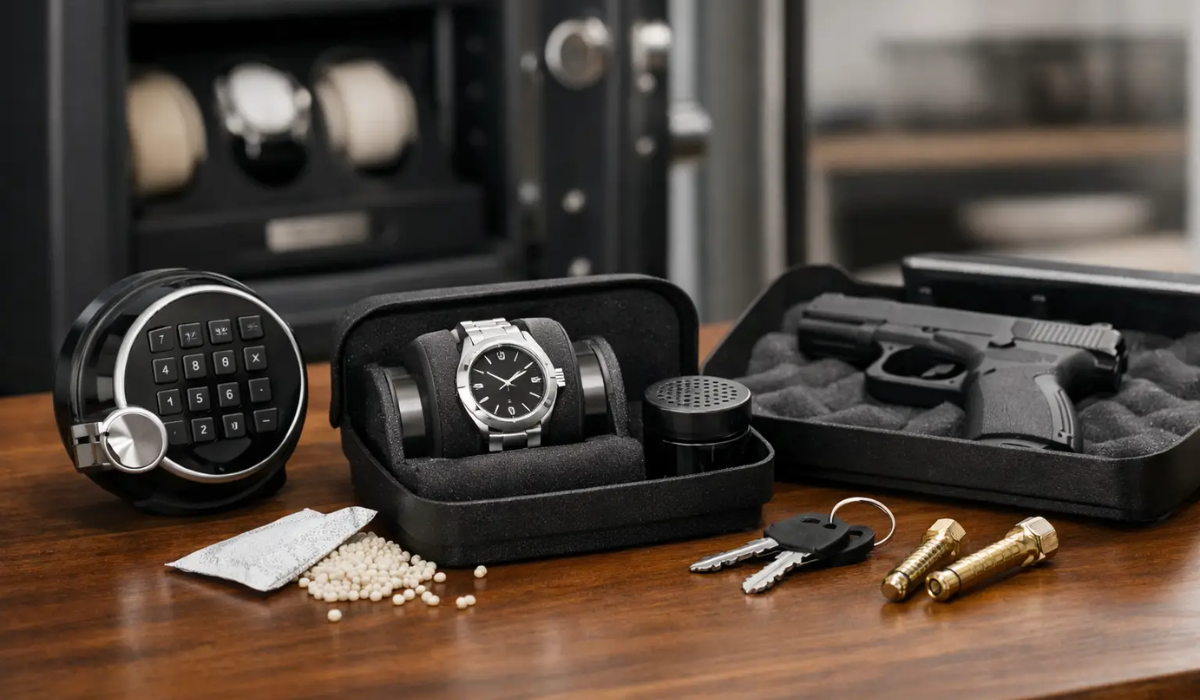
A safe can be perfectly rated on paper and still frustrate you every day if the setup inside does not match what you actually store. That is where a smart safe accessories buyer guide helps. The right accessories do more than make a safe look organized - they can improve access, protect finishes, reduce moisture risk, and help you use the safe the way you intended when you bought it.
Most buyers focus on the box itself first, and that makes sense. Steel thickness, lock type, fire rating, and burglary protection should always come before add-ons. But once you have chosen the right safe, the accessories start to matter a lot. A handgun safe without interior lighting can be harder to use in low light. A gun safe without proper racks or door storage can waste usable space. A document safe without moisture control can leave paper and heirlooms vulnerable over time.
Safe accessories buyer guide: start with the job
The easiest mistake is buying accessories because they sound useful instead of because they solve a real problem. Start by asking what your safe does every day. Is it storing defensive firearms for quick access, preserving important documents, protecting jewelry from theft and fire, or handling cash in a business environment? The answer changes which accessories are worth your money.
For a home gun safe, interior organization and humidity control are often the first upgrades that make sense. For a small business depository safe, anchoring hardware and cash management inserts may matter more. For a fire-resistant home safe, document sleeves, trays, and lighting can improve daily use without overcomplicating the setup.
That is also where trade-offs come in. Accessories can improve convenience, but some reduce usable space or add complexity. A door panel organizer, for example, may create excellent storage for handguns and documents, but on some models it can press into shelf space or limit how bulky your rifle optics can be. The best setup is the one that supports your actual storage habits, not a showroom photo.
The accessories that usually matter most
Interior lighting is one of the most practical upgrades for many safes. If your safe lives in a closet, garage, office corner, or low-light room, being able to see contents clearly matters more than people expect. LED lighting kits are popular because they run cool and are easy to install, but placement matters. You want enough light to identify items quickly without creating glare on stainless finishes, optics, or plastic packaging.
Dehumidifiers are another accessory that often earns its place. Firearms, documents, jewelry, and electronics can all suffer in damp conditions, especially in garages, basements, and humid regions. Some buyers prefer electric dehumidifying rods, while others choose rechargeable desiccants. The better option depends on your safe location and whether power access is available. Electric options are more hands-off, but desiccants can work well where outlets are not practical.
Shelves, bins, and interior organizers make a bigger difference than many first-time buyers expect. Factory interiors are often designed to cover broad use cases, which means they are decent at many things but perfect at few. If you are storing handguns, passports, backup drives, birth certificates, watches, and a little cash all in the same safe, adjustable shelving or modular storage can help prevent stacking and clutter. That improves both access and protection.
For gun safes, rifle rod systems, barrel supports, pistol pouches, and door organizers can expand capacity in a meaningful way. Just be realistic about what “capacity” means. A safe advertised for a certain number of long guns may only fit that many if you are storing slimmer firearms without large optics, bipods, or accessories. Smart organization can help, but it cannot rewrite the physical dimensions of the interior.
Safe accessories buyer guide for gun owners
Gun owners usually benefit most from accessories that improve speed, organization, and protection. If the safe is used for home defense storage, quick identification matters. Interior lights and clearly separated handgun storage can help you avoid fumbling under stress. If the safe is used for long-term storage of rifles, then humidity control and stock-friendly organization rise to the top.
Door panel organizers are popular for a reason. They can hold pistols, magazines, documents, and small valuables without taking up shelf space. Still, they are not automatically a fit for every safe. On shallower models, adding storage to the door can reduce clearance when the door closes. If your long guns already fit tightly, you need to check that extra door storage will not create interference.
Pistol racks are another worthwhile upgrade for buyers who own multiple handguns. A simple rack can turn a messy shelf into a clean, visible setup where each firearm is easier to access and less likely to rub against another. That matters for both convenience and finish protection.
If your gun safe is in a garage or another environment with temperature swings, moisture control stops being optional and starts being part of responsible storage. Firearms and ammunition do not benefit from being kept in a damp, sealed space. A dehumidifier and regular checks are a small investment compared with corrosion damage.
Accessories for document, jewelry, and home safes
For home safes used to protect documents, the best accessories are usually the least flashy. Document trays, file inserts, small bins, and lighting can make the difference between a safe that stays organized and one that becomes a pile of folders and envelopes. Important papers should be easy to locate, not buried under spare cash, passports, and old warranties.
Jewelry storage is more personal. Some buyers need soft-lined compartments and separated trays to prevent scratching, while others need compact storage that leaves room for documents and electronics. If your safe is doing double duty, avoid overcommitting the interior to one category. A beautiful jewelry tray is less useful if it forces everything else into unstable stacks.
You should also think about the way accessories affect fire protection in real life. Fire-rated safes are designed and tested as a system. Accessories inside the safe can improve organization, but they do not add fire resistance unless they are specifically built for that purpose. A plastic organizer may help sort small items, but it should not be mistaken for protective storage in a fire event.
Business safe accessories: security over convenience
For business owners, the priorities shift. A retail, restaurant, hotel, office, or pharmacy safe often needs accessories that support process and control, not just tidy storage. That may mean cash trays, deposit management inserts, audit-friendly compartments, or anchoring hardware that helps prevent removal attempts.
Anchoring deserves special attention. Many safes, especially lighter models, are more secure when properly bolted down. An accessory that improves burglary resistance is usually worth more than one that simply improves appearance. If your safe will hold cash, sensitive records, controlled items, or key assets, secure installation should be part of the buying decision from the start.
The same goes for replacement shelves, lock covers, and organizational inserts. Useful? Absolutely. But they should support the primary job of the safe, which is delaying theft and protecting contents. If budget forces a choice between cosmetic upgrades and better anchoring or a stronger safe body, choose security first.
What to check before you buy any safe accessory
Compatibility comes first. Not every accessory fits every safe, even when the category sounds right. Interior dimensions, door depth, shelf placement, outlet access, and mounting points all matter. Measure first and assume less than the marketing photo suggests.
Material quality matters too. Thin fabric pockets, weak adhesives, or poorly made plastic inserts may not hold up under daily use. A safe is a long-term purchase, and the accessories should match that mindset. Buyers often spend carefully on the safe itself, then cut corners on the items they will handle every week.
You should also consider whether the accessory affects access speed. A packed interior can technically hold more, but if it slows you down every time you open the door, it may not be an upgrade. This is especially important for handgun safes and frequently used office safes.
Finally, think in stages. You do not need every accessory on day one. In fact, most buyers are better off starting with the essentials: anchoring if needed, moisture control if the environment calls for it, lighting if visibility is poor, and organization only after the safe is partially loaded and real habits become clear. That approach usually leads to better choices and fewer unused add-ons.
A good accessory should make your safe safer to use, easier to live with, or better suited to what it protects. If it does not do one of those three things, it is probably not necessary. Protecting what matters most is rarely about buying more - it is about buying the right pieces, in the right order, for the way you actually live and work.