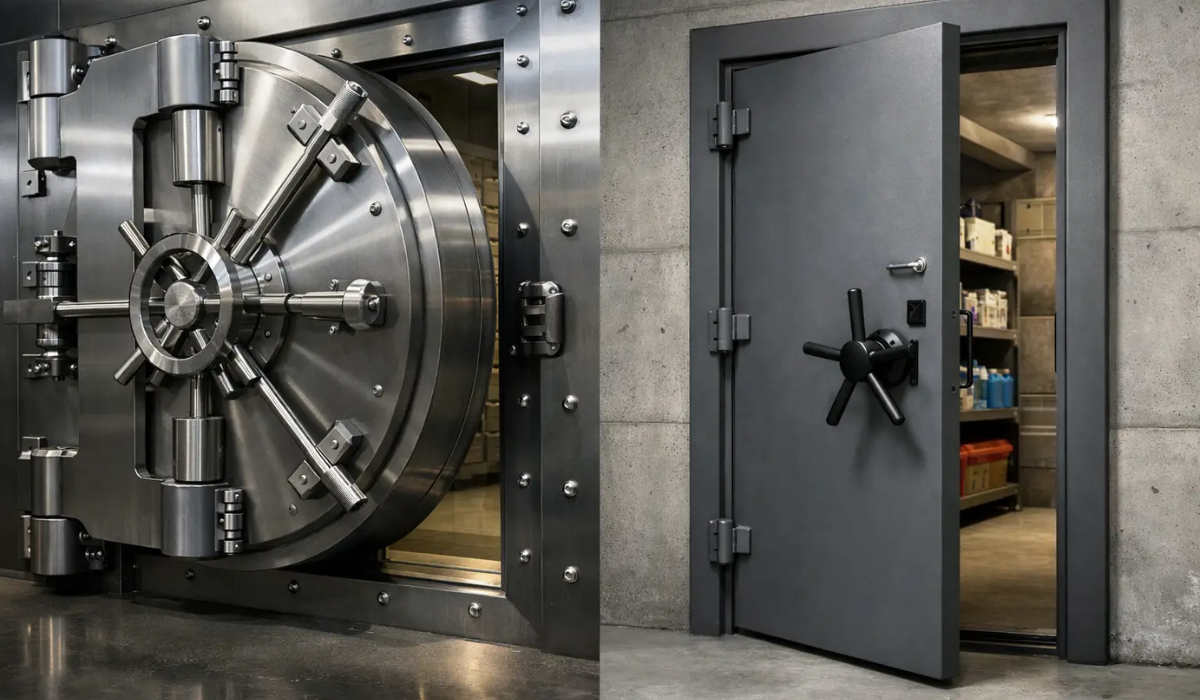
A reinforced room can look like the answer to every security concern, but the door determines what that room is actually built to do. In a vault door vs safe room door comparison, the right choice comes down to the threat you are addressing: burglary, fire, severe weather, forced entry during an emergency, or a combination of those risks.
The names are often used interchangeably, especially in online listings. They should not be. A heavy steel vault door may be an excellent choice for securing firearms, collectibles, documents, and other high-value property. A certified storm safe room door is designed first to protect occupants from extreme wind and flying debris. Some installations can address both goals, but only when the entire system is designed, rated, and installed for both.
Vault Door vs Safe Room Door: The Core Difference
A vault door is a security door that turns a properly built room into a vault. Homeowners may install one at the entrance to a reinforced closet, basement storage room, gun room, or concrete room. Its job is to resist burglary attempts and control access to valuables. Depending on the model, that can include a thick steel door and frame, multiple locking bolts, internal relockers, hard plate protection around the lock, and a high-security mechanical or electronic lock.
A safe room door is part of a life-safety shelter. In the context of severe weather, it is intended to protect people during tornadoes, hurricanes, or violent wind events. Doors and assemblies intended for this use may be tested or designed to standards such as FEMA guidance and ICC 500 requirements. The door, frame, hinges, latch, anchoring, walls, ceiling, and ventilation all matter. A strong-looking door alone does not make a room a certified storm shelter.
That distinction matters because burglary resistance and impact resistance are different engineering problems. A vault door can be difficult to pry, drill, or manipulate, yet not be rated to withstand windborne debris. Conversely, a storm shelter door may protect occupants during a weather event but offer limited burglary protection compared with a purpose-built vault door.
When a Vault Door Is the Better Fit
Choose a vault door when the room's primary purpose is securing property. This is often the more practical approach for gun owners who want to organize a collection in a dedicated room rather than work around the capacity limits of a large gun safe. It can also make sense for collectors, households with valuable jewelry or heirlooms, and business owners who need controlled access to sensitive inventory or records.
The benefit is usable space. A well-planned vault room can hold long guns, handguns, ammunition, documents, jewelry, and other valuables with room for shelving, lighting, and inventory organization. It also avoids the delivery and placement challenges that come with exceptionally heavy freestanding safes.
Look beyond the exterior appearance when comparing doors. Ask about the thickness of the door and frame, the number and design of locking bolts, the lock type, drill resistance, relockers, and how the frame anchors to the structure. A UL-listed lock is a meaningful trust signal, but it is only one component of the system. The wall construction and installation quality are just as relevant. A vault door installed in a weak wood-framed opening can become the strongest part of an otherwise vulnerable room.
Fire protection needs an equally careful look. Some vault doors include fire-resistant materials or seals, but a door cannot give a room a meaningful fire rating by itself. If paper records, family photographs, or digital media are central to the plan, consider how the walls, ceiling, ventilation penetrations, and contents will perform in a fire. Fire-rated document storage inside the room may still be the sensible extra layer.
When a Safe Room Door Is the Better Fit
A safe room door is the clear choice when your first priority is getting family members or employees to a protected location during severe weather. For homes in tornado-prone regions, a properly engineered shelter can offer critical protection when there is not enough time to travel elsewhere.
The installation has to be treated as a complete shelter project, not a door replacement. A door tested for tornado debris impact needs the correct frame, hardware, fasteners, and wall system to perform as intended. The room must also have adequate space for occupants, a plan for communications, and a way to manage basic needs while sheltering. If you are building new or remodeling, involve a qualified contractor or engineer familiar with the applicable local requirements.
Daily access is another consideration. A vault door may be opened regularly to retrieve firearms or documents. A safe room door needs to be easy to secure quickly from inside during an emergency while still allowing normal access at other times. Make sure everyone who may use the room understands the locking procedure, including older children, caregivers, or key staff members.
Can One Room Do Both Jobs?
Sometimes, but do not assume that buying the heaviest door solves every concern. A dual-purpose room needs a deliberate design that accounts for security, storm sheltering, fire protection, ventilation, and escape considerations. The cost is usually higher than building for one purpose, but the result may be worthwhile for a homeowner who wants a gun vault that also provides a protected storm shelter.
Start by deciding which threat has the highest consequence. If severe weather is the immediate concern, begin with a compliant safe room design and then evaluate added security features. If burglary protection for firearms and valuables is the main goal, begin with a vault design and determine whether the room can also meet safe-room requirements. This order keeps the project focused on the outcome that matters most.
Avoid modifying a tested storm shelter door with unapproved hardware, extra lockwork, or aftermarket components without confirming that the change will not compromise its performance. Likewise, do not assume a vault door's impressive boltwork qualifies it for storm shelter use. Manufacturer documentation and professional installation guidance should drive the decision.
How to Compare Doors Without Getting Lost in Specs
Before shopping, measure the clear opening, wall thickness, swing direction, and path for delivery. A vault door can be extremely heavy, and its frame may require substantial structural preparation. For a safe room door, confirm the required wall and frame design before choosing a size or configuration.
Then compare the specifications that match your purpose. For vault security, prioritize steel construction, locking bolt design, lock quality, relockers, hard plate protection, and anchoring details. For storm protection, prioritize documented testing or compliance for the full door assembly and shelter system. For either use, consider interior release, hinge placement, maintenance requirements, and whether the door will interfere with normal traffic patterns.
Be realistic about what you are protecting. A family gun collection may justify a vault room with controlled access and organized storage. A few essential documents may be better served by a fire-rated safe placed inside a closet or secure room. A retail business handling daily cash deposits may need a burglary-rated depository safe rather than a room-sized installation. The right solution should fit the risk, the structure, and the way you actually live or work.
The Decision That Protects What Matters
A vault door protects a room built for valuables. A safe room door protects people in a room built for severe weather. There is overlap in materials and appearance, but the performance claims, installation requirements, and stakes are different.
If your goal is a dedicated gun room or secure storage area, focus on a vault door and the construction around it. If your goal is tornado or hurricane sheltering, start with a properly designed safe room system. And if you need both, treat it as a specialized project where documented ratings and professional planning matter more than a door's weight or marketing language. Protect what matters most by choosing for the threat you truly need to solve.