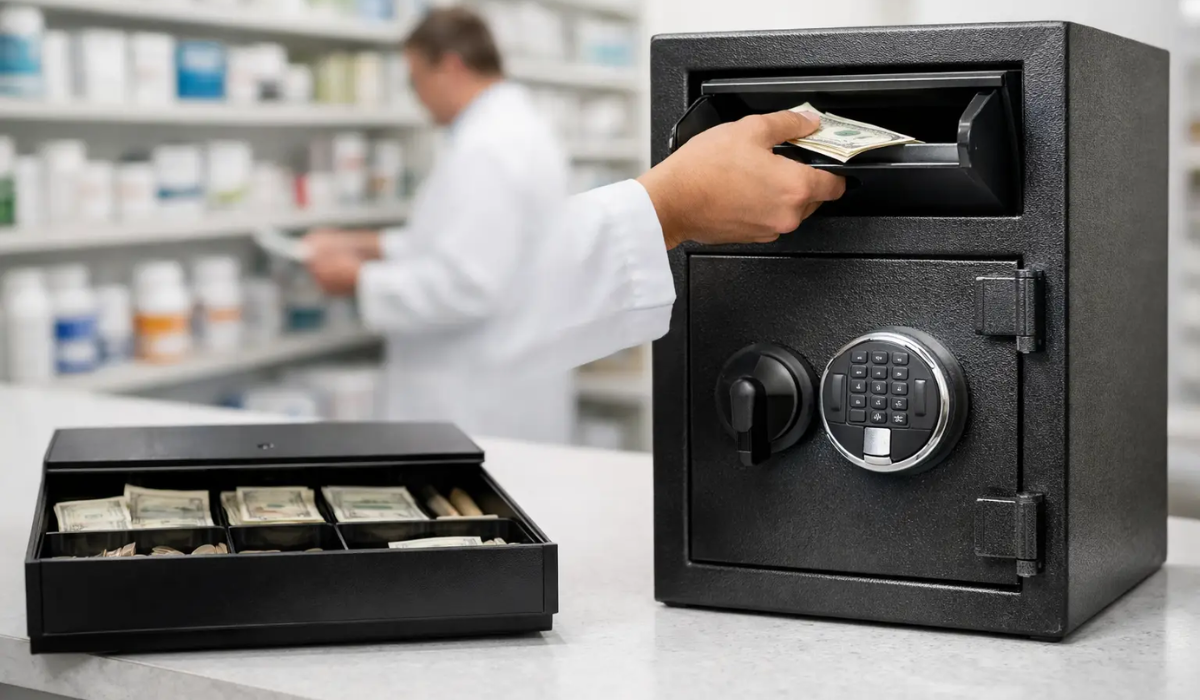
A pharmacy safe has to do more than hold cash after closing. It needs to let staff make deposits quickly without giving every employee access to stored funds, all while fitting the pace and floor plan of a working pharmacy. The best pharmacy drop safes balance deposit convenience with real burglary resistance, helping owners reduce cash exposure at the register and maintain stronger accountability from shift to shift.
For most independent pharmacies, the right choice is a commercial depository safe with a secure drop compartment, a burglary-resistant body, and a lock system that matches who should have access. The details matter. A wide envelope slot may be perfect for daily paperwork and cash bags, while a rotary hopper may be a better fit when staff deposit loose bills or small bundles frequently.
What Makes the Best Pharmacy Drop Safes?
A drop safe separates depositing from retrieval. Employees can place cash, checks, receipts, or other approved materials into the safe, but cannot open the main storage area. That separation is the point: it limits temptation, reduces the amount of money exposed at the counter, and keeps opening authority with the owner, pharmacist-in-charge, manager, or armored pickup service.
The best pharmacy drop safes are not necessarily the largest or heaviest models. They are the models that address the pharmacy's actual deposit routine and threat level. A busy store with several registers may need a larger hopper and more interior capacity. A small neighborhood pharmacy that makes one end-of-day deposit may be better served by a compact under-counter unit with a secure front slot.
Look first at construction. Solid steel bodies and doors, continuous or heavy-duty hinges, substantial locking bolts, and an anchoring provision should be baseline expectations for a commercial safe. Door thickness alone does not tell the whole story, but it is a useful comparison point when paired with body steel, boltwork, and the quality of the lock.
For locations facing a higher burglary risk, consider a burglary-rated safe rather than relying only on thick-looking steel. A TL-15 or TL-30 rated safe has been independently tested for resistance to forced entry by common burglary tools for the stated period. These models cost more and weigh significantly more, but they offer a different level of protection for higher cash volumes or sites with a history of break-ins.
Deposit style should match the workflow
A front deposit slot is simple, compact, and well suited to sealed cash envelopes, deposit bags, checks, and paperwork. The slot must be large enough for what staff actually deposit, but not so large that it compromises security. A slot with anti-fishing features is especially valuable because it makes reaching back into the deposit path far more difficult.
A rotary hopper or drum is often the better choice for frequent cash drops. Staff place the deposit into the hopper, rotate the handle, and the contents fall into the protected compartment. This design can accommodate thicker bundles than a narrow slot and generally provides stronger protection against fishing attempts. It does require adequate clearance in front of the safe and should be tested with the deposit bags your team uses.
For pharmacies using a back-office cash room, a rear-load depository safe can also make sense. Staff deposit from the sales floor side, while authorized personnel retrieve deposits from the protected rear side. This can improve cash-control procedures, although it requires planning during construction or renovation.
Size the Safe for Deposits, Not Just Cash
Interior capacity is easy to underestimate. Deposits take up more room than loose currency once you include bags, receipts, register reports, and sealed envelopes. If the safe will be opened only once or twice per week, select enough capacity to avoid overfilling the compartment. An overloaded drop area can jam, interfere with the door, or encourage employees to leave deposits unsecured until someone can clear the safe.
Measure the installation area before shopping. Include the safe's exterior dimensions, door swing, hopper clearance, and the route from the delivery point to the final location. Commercial depository safes can be heavy enough that stairs, narrow hallways, raised thresholds, and weak flooring become genuine installation issues.
Placement deserves just as much thought. A safe behind the counter may make immediate deposits convenient, but it can also be visible to customers and more accessible during a robbery. A back-office location offers more discretion, though it may create a gap between receiving cash and securing it. Many pharmacies choose a practical middle ground: a staff-only area close to the register, outside public view, with clear sightlines and limited access.
Choose Access Controls That Fit Your Team
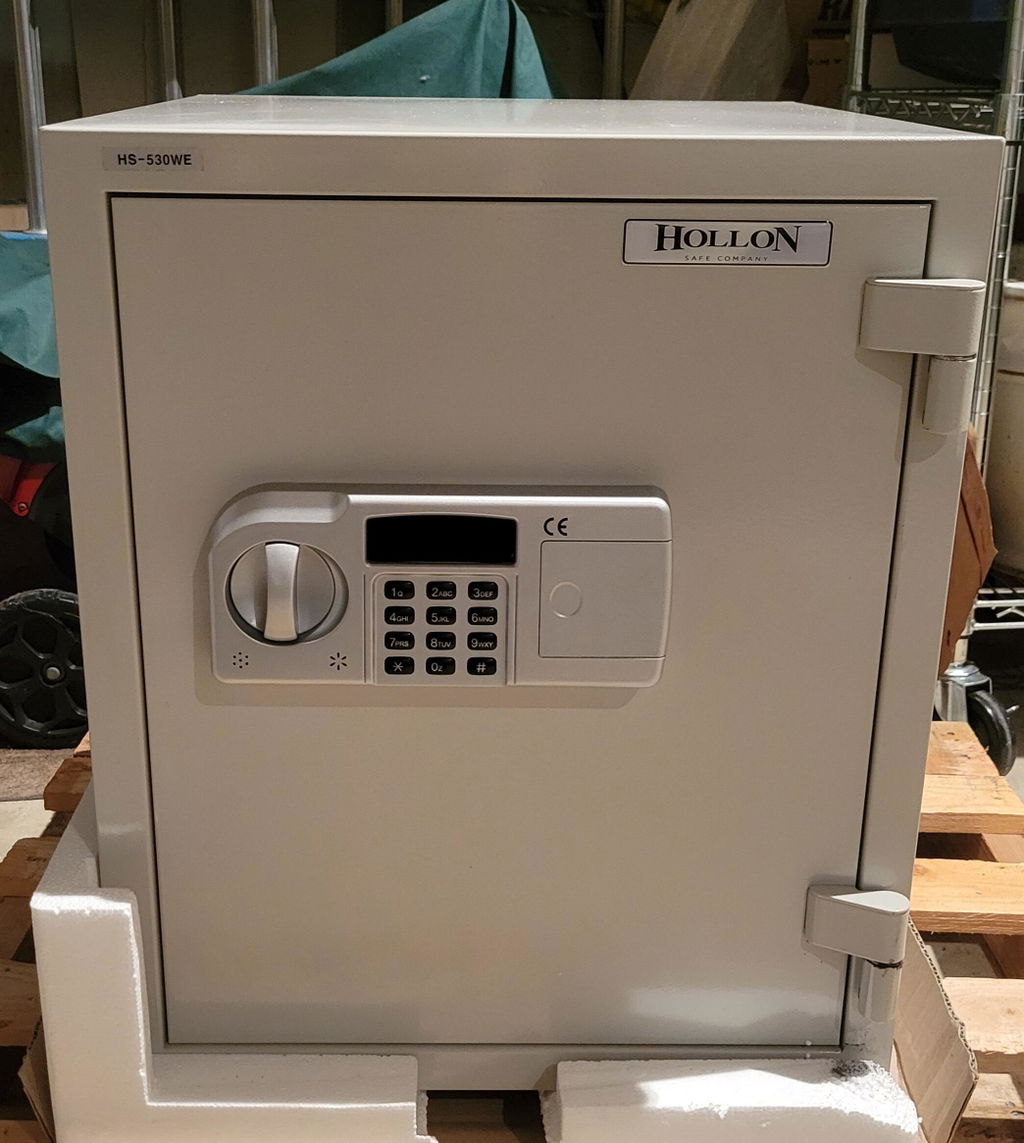
A safe is only as secure as its access process. For a pharmacy owner or small management team, a UL-listed electronic lock is often the most practical choice. It allows fast entry by authorized users, avoids the daily inconvenience of carrying a key, and can support regular code changes when staffing changes.
Some electronic locks offer audit trails, time delay, multiple user codes, or dual-control features. Audit capability can be useful when several managers access the safe, since it creates a record of openings. Time delay is particularly helpful for robbery deterrence because staff cannot immediately open the safe under pressure. The trade-off is operational: a time delay can be frustrating when a legitimate emergency requires access, so it should be paired with a clear management process.
Mechanical combination locks remain dependable and do not require batteries, but they are slower to operate and offer less visibility into who accessed the safe. Key locks are generally better suited as a secondary lock or for low-risk applications, since physical keys can be copied or misplaced.
For higher-risk operations, dual locks can require two authorized people to be present before the main compartment opens. That adds accountability, but it may not be realistic for a single-manager pharmacy. The right lock setup depends on staff size, operating hours, cash volume, and who is available to respond when access is needed.
Do Not Treat Anchoring as Optional
Even a heavy safe can be removed with enough time, equipment, and determination. Properly anchoring a safe to a concrete slab is one of the most meaningful security upgrades a pharmacy can make. A safe that is difficult to pry open is still vulnerable if thieves can load it onto a dolly and work on it elsewhere.
Most commercial drop safes include pre-drilled anchor holes. The anchoring hardware and method should match the floor construction and safe manufacturer's requirements. If the safe will sit on tile, wood flooring, a raised platform, or a second-story floor, get professional guidance before installation. Drilling through the wrong surface can create damage, weaken the installation, or void a warranty.
Anchoring is only one part of the physical security picture. Alarm coverage, camera placement, restricted key control, staff training, and well-lit employee areas all complement the safe. A depository safe reduces the amount available during a theft, but it should support a broader pharmacy security plan rather than replace one.
Keep Cash Security Separate From Medication Security
A pharmacy drop safe is designed primarily for cash, checks, deposits, and business documents. It should not automatically be assumed to meet requirements for controlled substances, patient records, or high-value medication inventory. Those items may be subject to separate federal, state, insurer, wholesaler, or company policies.
If you need one safe for controlled medications or sensitive records, confirm the applicable requirements before purchasing. Fire protection, access logging, interior configuration, and theft-resistance needs may be different from those of a cash depository safe. In many cases, separating cash handling from medication storage creates clearer procedures and better access control.
A Practical Buying Checklist for Pharmacy Owners
Before selecting a model, document what goes into the safe, how often deposits occur, who can retrieve them, and where the safe will be anchored. Then compare models using the specifications that affect daily use and real protection:
- Deposit type and opening size for envelopes, cash bags, checks, and paperwork
- Steel construction, boltwork, anti-fishing protection, and burglary rating
- Interior capacity based on the number of days between openings
- Lock type, audit features, time delay, and number of authorized users
- Safe weight, exterior dimensions, door swing, and anchoring requirements
- Delivery path and whether professional installation is needed
Free shipping can be valuable on a heavy commercial safe, but it does not always include moving it inside, placing it in the back office, or bolting it down. Confirm delivery and installation expectations before the safe arrives. Secure Zoned can help buyers compare depository safe options based on deposit style, security level, and the realities of the installation site.
The right pharmacy drop safe should make the secure choice the easy choice for your staff. When every deposit has a fast, defined path from the register to protected storage, cash handling becomes less dependent on memory, trust, and end-of-shift workarounds.