
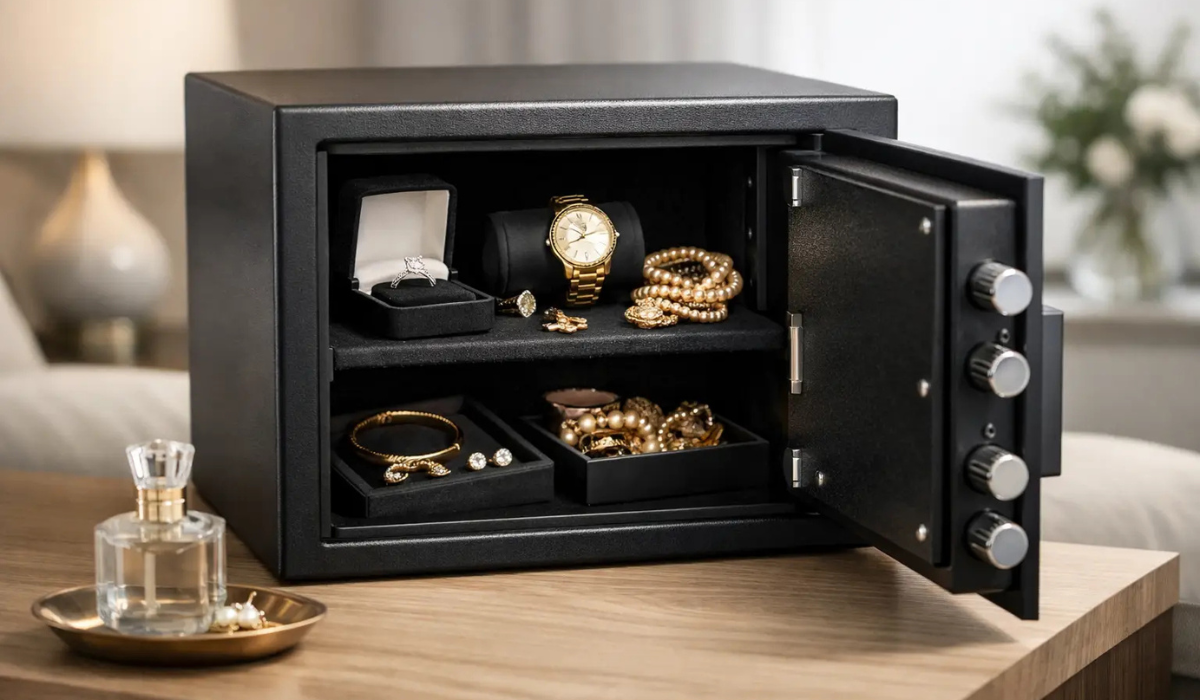
A jewelry box in the dresser is convenient. It is also one of the first places a burglar checks.
If you are looking for the best safe for jewelry at home, the right answer usually is not the smallest "jewelry safe" you can find. It is a properly rated home safe that matches the value of what you own, protects against both theft and fire, and can be anchored so it cannot be carried out in two minutes. For most homeowners, that means thinking beyond velvet-lined interiors and focusing on steel, lock quality, weight, and placement.
What makes the best safe for jewelry at home?
Jewelry creates a specific storage problem. It is compact, high value, and easy to resell. A burglar does not need a truck to steal it. They need a few minutes and a weak container.
That is why the best safe for jewelry at home needs to do three jobs well. First, it needs real burglary resistance, not just a lockable box. Second, it needs enough interior organization to keep small items separated and easy to access. Third, it should offer fire protection if your collection includes heirloom pieces, watches, documents, or insured inventory records stored together.
There is no single perfect model for every household. A homeowner storing a few rings and passports has a different need than a collector storing high-value watches, estate jewelry, and cash. The trade-off is straightforward - higher security usually means more weight, more cost, and more planning around installation.
Start with burglary protection, not appearance
A lot of safes marketed for valuables look refined but offer limited resistance to forced entry. For jewelry, appearance should be secondary.
Look closely at body construction, door thickness, lock quality, and relocking features. A safe with solid steel construction, hardplate protection for the lock area, and an internal relocker gives you a much better chance against pry attacks and tool attacks than a basic residential security container. If the jewelry value is significant, stepping up to a burglary-rated safe can make sense.
For many homes, a quality burglary safe or high-security home safe is the practical middle ground. It gives better protection than a fire box without moving all the way into commercial-grade TL-rated territory. But if you are storing a serious collection, the higher tier matters. Expensive jewelry can justify a TL-15 or TL-30 safe, especially if you want a stronger defense against concentrated attacks.
This is also where weight matters. Lightweight safes are easier to hide, but they are also easier to remove. A safe that can be carried away is not doing the whole job. Anchoring is critical, and heavier construction adds time and difficulty for any thief.
Fire protection still matters for jewelry storage
People often assume jewelry itself does not need fire protection because metals and gemstones can survive heat. That is only partly true.
Certain stones can be damaged by extreme temperatures or sudden cooling. Watches, settings, adhesives, packaging, appraisals, certificates, and insurance paperwork are more vulnerable. If your safe will also hold documents, family records, or backup media, fire protection becomes even more important.
A good home jewelry safe should have a verified fire rating that matches realistic residential risk. One hour of fire protection is a strong starting point for many homes. Two hours may be worth paying for if the safe is storing heirlooms or sits farther from likely fire department response. Just keep in mind that some fire-rated models emphasize heat protection more than burglary resistance, so you need to weigh both sides together.
The best type of safe for most jewelry owners
For most households, the best fit is usually one of three categories.
High-security home safes
This is the sweet spot for many buyers. A high-security home safe typically combines meaningful burglary resistance with fire protection and home-friendly sizing. It works well if you want to secure jewelry, cash, passports, and small valuables in one place without moving into a very heavy commercial unit.
These safes often include adjustable shelving, interior lighting options, and electronic or dial lock choices. Add a jewelry insert, tray system, or small lockbox inside, and they become much more functional for rings, bracelets, and watches.
Wall safes and floor safes
A wall safe can work for modest jewelry storage if concealment is your top priority and the collection is not extremely valuable. Installed behind a mirror, artwork, or within a closet wall, it stays out of sight and gives quick access. The limitation is obvious - wall safes are constrained by stud depth and are usually smaller and lighter than freestanding models.
Floor safes offer better concealment and can be very effective against smash-and-grab burglary when properly installed in concrete. They are a stronger choice than wall safes if you want hidden placement with more meaningful resistance. The trade-off is convenience. They are less flexible once installed, and organization for delicate pieces may take extra planning.
Burglary-rated and TL-rated safes
If your jewelry collection value is high enough that insurance, appraisal, or estate planning is part of the conversation, this category deserves a look. Burglary-rated safes and TL-rated safes are built for more serious attacks using common hand tools and, depending on the rating, more aggressive methods.
They are heavier, more expensive, and less forgiving when it comes to delivery and placement. But for luxury watches, inherited diamonds, or a concentrated collection with five-figure or six-figure value, this is often the right level of protection. In that situation, buying below the risk level usually becomes the costly choice.
Lock type matters, but not the way people think
Buyers often start by asking whether an electronic lock or dial lock is better. The honest answer is that both can be good if they are high quality.
Electronic locks are popular for home jewelry storage because they offer faster access and simple user management. If more than one person needs access, they are convenient. A UL-listed electronic lock from a reputable manufacturer is a solid choice.
Mechanical dial locks appeal to buyers who want proven long-term reliability without batteries or keypad electronics. They are slower to open, but some owners prefer that simplicity.
Biometric access is less common on heavier jewelry safes, and that is usually fine. For this application, security rating and lock quality matter more than novelty. The lock should support the safe's overall security design, not just speed.
Size your safe for the collection you will have, not the one you have now
Jewelry collections tend to grow. So do the supporting items you decide to store with them.
A safe that seems roomy on day one can feel cramped once you add watch boxes, appraisals, family documents, or holiday pieces that rotate in and out. Small safes also make organization harder, and poor organization increases the chance of scratching or tangling delicate items.
Choose a safe with enough interior space for trays, shelves, and separation. Interior customization matters more for jewelry than for many other valuables. A bare steel cavity may be secure, but it is not ideal for storing chains, earrings, and watches in a way that protects their condition.
Installation is part of the security level
The best safe can underperform if it is installed poorly. That is especially true with jewelry because burglars target it quickly and leave quickly.
A home jewelry safe should be anchored whenever the design allows it. Concrete anchoring is often strongest, but wood-floor anchoring can also add important theft resistance depending on the safe and location. Placement matters too. A master bedroom closet is common, but it is also predictable. A less obvious area with structural support and limited visibility is often the better move.
Think about privacy during delivery and installation as well. Large safes are not an impulse item, and planning ahead helps. Measure doorways, flooring, stair access, and final placement before purchase. If you are moving into a heavier burglary safe or TL-rated model, professional placement is usually worth it.
Features worth paying for and features you can skip
For jewelry storage, there are a few features that genuinely improve day-to-day use. Soft interior shelving, drawer inserts, motion-sensor lighting, and adjustable compartments help prevent damage and make access easier. Anchor hardware, relockers, drill-resistant hardplate, and a real fire seal are worth prioritizing.
Some cosmetic upgrades matter less than buyers think. Fancy interiors are nice, but they do not replace steel thickness or a better lock. App-based extras can be useful, but they should never distract from the fundamentals of burglary resistance and fire protection.
If you are unsure where to draw the line, start with protection level first, then add convenience features second.
How to choose with confidence
The best safe for jewelry at home is the one that matches your actual risk. If you need basic protection for a few valuable pieces, a quality high-security home safe may be more than enough. If you are protecting a collection with serious replacement value, a burglary-rated or TL-rated safe is the more responsible choice.
Focus on five things: burglary resistance, fire rating, lock quality, anchor capability, and interior organization. Those specifications tell you more than marketing labels ever will. If you want help matching a model to your collection value, room layout, and installation options, Secure Zoned can help narrow the field without turning the process into guesswork.
Protecting jewelry at home is not about hiding it better. It is about making theft harder, fire damage less likely, and access more controlled - so the pieces that matter to your family stay that way.