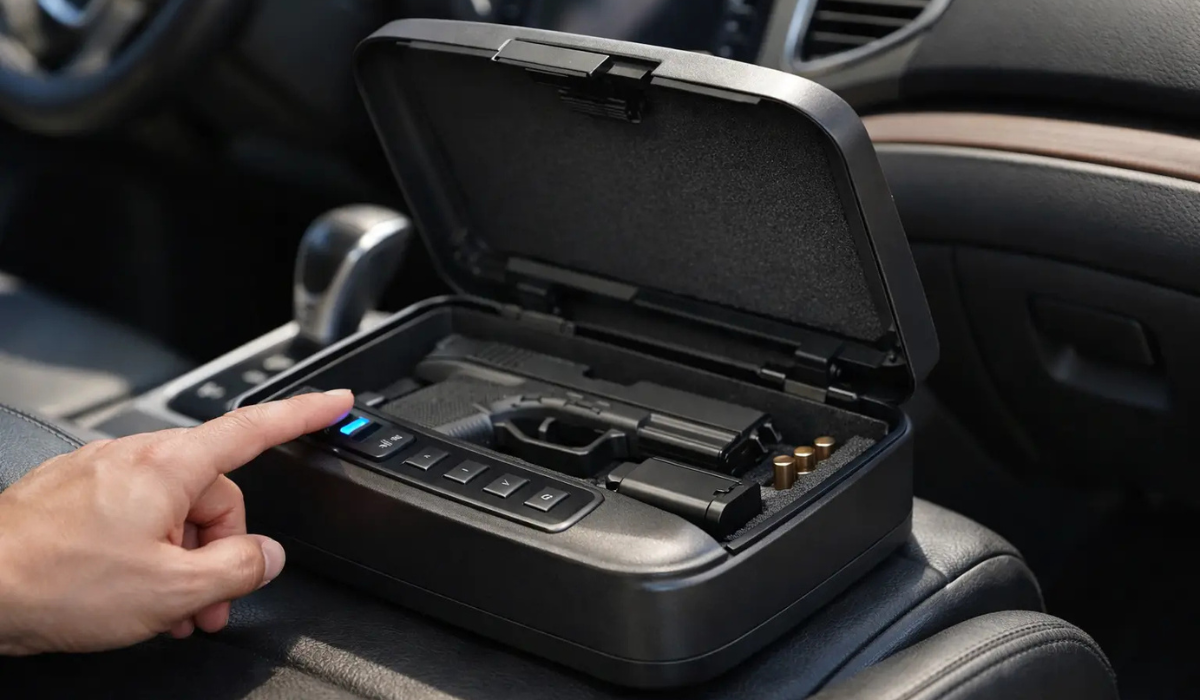
A car safe sounds simple until you try to live with one. The wrong unit is too bulky under a seat, too slow when you need access, or too easy to pry loose if it is only looped to a seat frame. If you are shopping for the best biometric pistol safe for car use, the real question is not just which model opens with a fingerprint. It is which one fits your vehicle, your handgun, and your daily routine without creating new security problems.
What makes the best biometric pistol safe for car use?
For vehicle storage, quick access matters, but it is not the only factor. A good car pistol safe needs compact dimensions, a low-profile shape, dependable biometric performance, and a mounting method that does more than look secure in a product photo. In a home setting, a bedside biometric safe can be larger and heavier. In a vehicle, every inch and every pound affect placement, concealment, and day-to-day usability.
That is why the best biometric pistol safe for car buyers is usually not the one with the longest feature list. It is the one that balances four priorities well: access speed, physical security, fitment, and power reliability. If one of those is weak, the whole setup becomes less useful.
Biometric access is only as good as the backup entry
Fingerprint entry is convenient, especially if you are getting in and out of the vehicle regularly. But car interiors are tough environments for electronics. Heat, cold, dust, and vibration all affect performance over time. Even a quality biometric reader can fail to recognize a finger that is sweaty, dirty, or positioned poorly.
That is why backup access matters. The better vehicle-ready biometric pistol safes include a keypad, key override, or both. A fingerprint reader should be your primary method, not your only method. If a safe relies too heavily on biometrics without a practical backup, that is a risk worth taking seriously.
Steel construction matters more than marketing language
A car safe is not a vault, and buyers should be realistic about that. Most portable handgun safes are designed to delay theft and limit unauthorized access, not to withstand a full attack with time and tools. Still, build quality varies a lot.
Look closely at steel thickness, lid design, hinge protection, and locking points. Thin steel bodies and weak lids can flex under force. A recessed door, reinforced latch area, and solid internal lock engagement all matter more than flashy branding. If the safe is going in a vehicle, it should also feel substantial enough that it cannot be bent open quickly once removed.
Size and placement decide whether you will actually use it
The most common buying mistake is choosing a safe based on the handgun only. Buyers measure the pistol, maybe add room for a spare magazine, and stop there. In a vehicle, placement is the harder issue.
Under-seat storage sounds ideal, but many safes that look compact online end up interfering with seat tracks, floor vents, or wiring. Center-console fit can be cleaner, but only if the safe is made specifically for that space or compact enough to sit securely inside it. A larger vehicle gives you more options. A smaller sedan usually does not.
Before you choose a model, measure the exact location where the safe will live. Check height clearance under the seat with the seat fully adjusted. Check whether the lid can open enough for a clean draw. A safe that technically fits but forces an awkward access angle is not a good fit.
Foam layout and handgun compatibility
Interior dimensions matter just as much as exterior dimensions. Some compact biometric safes work well for a subcompact handgun but become cramped with a full-size pistol, mounted light, or optic. Others have enough length but not enough height for modern slide-mounted red dots.
Foam can help protect the firearm and reduce rattling, but poorly cut foam can slow access. If you carry with an optic or weapon light, treat that as a required specification, not a nice bonus. A safe that requires you to remove accessories or jam the gun into place will not serve you well.
Mounting is the difference between storage and real retention
A biometric lock controls access. It does not keep the whole safe from being stolen. That part comes down to mounting.
Many entry-level vehicle safes use a security cable. Cables are better than no attachment at all, but they are still the minimum standard. In a smash-and-grab theft, a cable may slow someone down. Against basic cutting tools, it is a limited barrier. If your vehicle setup allows it, a hard-mounted safe is the stronger choice.
Bolt-down mounting to a solid surface gives you better retention and usually a more stable access position. The trade-off is installation effort and less flexibility if you switch vehicles. For some buyers, especially renters or anyone who changes vehicles often, a cable-secured model may still make sense. Just go in with clear expectations. A tethered safe is a convenience-security option. A bolted safe is closer to a dedicated vehicle security solution.
Check local law before choosing your setup
Vehicle firearm storage rules vary by state and sometimes by specific use case, such as parking at work, entering restricted locations, or transporting a loaded handgun. That legal side affects what type of safe makes sense and where it should be installed.
Some buyers need a fast-access solution for short-term vehicle storage. Others need a more compliant lockbox for regular transport. If legal compliance is part of your goal, buy for that requirement first and convenience second.
Power, heat, and daily reliability
Cars are hard on batteries. Summer heat and winter cold shorten battery life and expose weaknesses fast. A biometric safe that works perfectly in a climate-controlled room may behave differently after months inside a parked vehicle.
Choose a model with a straightforward battery compartment and easy battery replacement. Low-battery warning features are useful, but they do not replace routine checks. If your safe uses rechargeable power, think carefully about whether that is practical in your vehicle routine. For most buyers, standard replaceable batteries are still the simpler and more dependable choice.
It also helps to test your enrolled fingerprints more than once. Store multiple prints from both hands if the safe allows it. A reader that performs well during setup should also be tested after the safe is mounted, after the batteries have been in use for a while, and under less-than-perfect conditions.
Features that are actually worth paying for
Some upgrades improve real-world performance. Others mostly raise the price.
A spring-assisted lid can make access quicker, especially in tight vehicle spaces. Interior lighting can help if you are opening the safe at night. Silent mode can also be useful in a vehicle, where audible beeps may draw attention. Those are practical features.
On the other hand, app connectivity is often less valuable in a car safe than it sounds. For a home safe, activity logs or remote alerts may be appealing. In a vehicle application, added electronics can also mean added points of failure. If the choice is between stronger construction and extra smart features, stronger construction is usually the better investment.
How to compare the best biometric pistol safe for car options
When comparing models, keep your focus on use case rather than brand hype. Ask whether the safe opens consistently, fits your exact handgun setup, and can be secured in a way that matches your threat level. If you leave your vehicle parked in public areas often, physical retention should move higher on your list. If your main concern is temporary storage during short stops, compact size and fast access may matter more.
This is also where recognized safe and security retailers can help narrow the field. A support-driven seller such as Secure Zoned can help you compare lock type, dimensions, mounting options, and brand quality without forcing a one-size-fits-all answer.
A few trade-offs to accept upfront
No biometric car safe is perfect. Smaller models conceal better but usually give up interior flexibility. Faster-opening designs may offer less pry resistance than heavier, slower-opening boxes. Hard mounting improves theft resistance but limits portability. And fingerprint access is convenient, but only when paired with a backup entry method you trust.
That does not mean the category falls short. It means the right purchase starts with honest priorities. If you want the most discreet option, expect tighter fitment. If you want the strongest steel and best retention, expect more weight and more installation work.
The best choice is the safe you can access reliably, mount responsibly, and keep using every day. Buy for your vehicle, your handgun, and your risk level - not for the product claim that sounds biggest on the box.