A safe that is easy to see, easy to carry out, or impossible to use when you need it is not doing its full job. So, where should a safe go? The best location balances concealment, structural support, access, and protection from fire, water, and theft. The answer changes depending on whether you are securing a handgun, a rifle collection, family documents, jewelry, or business cash.
A good safe location is rarely the most obvious one. Bedrooms, home offices, closets, basements, and garages can all work in the right circumstances, but each has trade-offs. Before delivery day, think beyond the available square footage. Consider what is beneath the safe, whether it can be anchored, how it will get through the door, and who needs reliable access.
Where Should a Safe Go for the Best Security?
Start by choosing a location away from casual view and away from the paths a burglar is most likely to check first. The primary bedroom closet, bedside area, home office, and garage are common targets because they are common storage spots. That does not automatically rule them out, especially when convenience matters, but it does mean the safe should be properly anchored and matched to the risk.
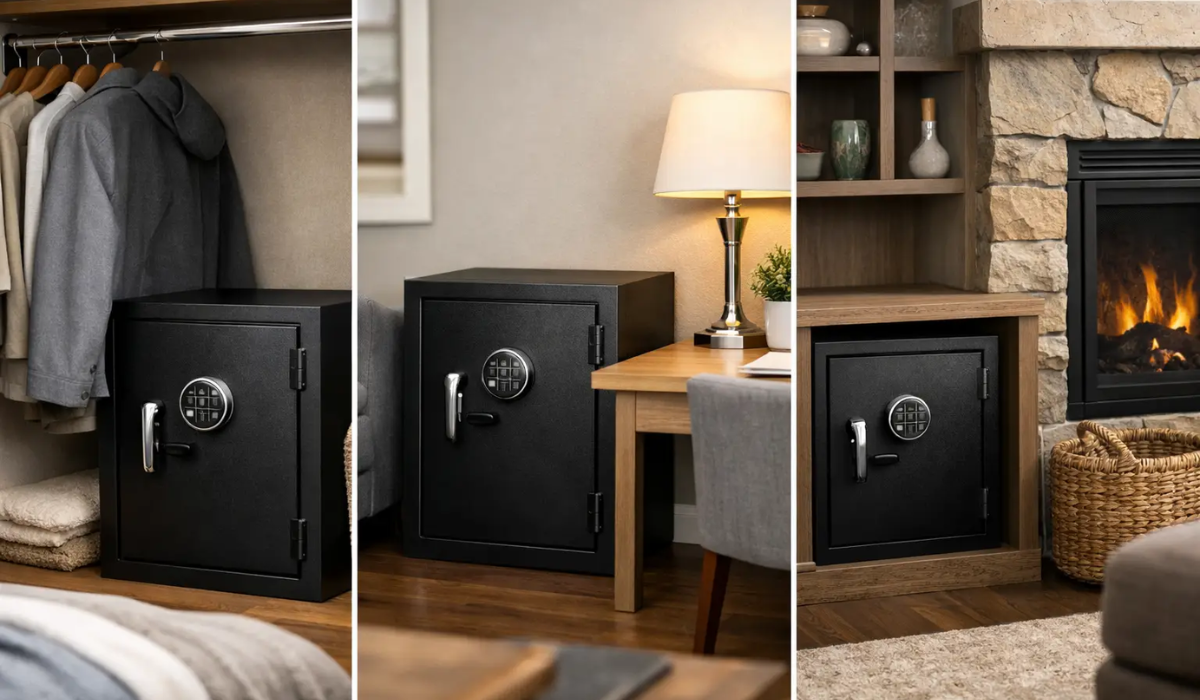
For many homeowners, an interior closet on the ground floor is a practical compromise. It keeps the safe out of sight, offers some protection from exterior walls and weather, and can often be anchored into a concrete slab or floor joists. A closet also makes a full-size gun safe less visually prominent without making it difficult for an authorized adult to reach.
Avoid placing a safe where a thief can work on it privately for a long time. A detached garage, isolated shed, or rarely used basement room may feel hidden, but it can give an intruder the time and space to attack the safe. If a garage is your only realistic option, select a safe with appropriate burglary protection, anchor it correctly, and make sure moisture and temperature swings will not damage the contents or lock over time.
The best placement also depends on the safe itself. A compact quick-access handgun safe belongs near the place where lawful, responsible access is needed, such as a bedside, desk, or secured closet shelf. A heavy gun safe or TL-rated burglary safe needs a location planned around its weight and installation requirements, not just convenience.
Match the Location to What You Are Protecting
A safe for paperwork has different needs than a safe for firearms or cash. Placing every type of safe in the same part of the house can create avoidable problems.
Fireproof document safes
Paper records, passports, deeds, backup drives, and family photos benefit from an interior location with lower exposure to weather and extreme temperature changes. A ground-floor closet or home office is often preferable to an attic, where heat can build up, or a damp basement, where humidity may affect paper and electronics.
A fire rating is valuable, but it is not a substitute for smart placement. Fire can reach every room, and safes perform according to specific tested conditions and time periods. Keep in mind that standard fire protection for paper does not necessarily mean the interior stays cool enough for hard drives, USB drives, or other media. Those items may need additional media protection.
Gun safes and handgun safes
Responsible firearm storage means preventing unauthorized access while preserving access for the owner when appropriate. For a full-size gun safe, an interior ground-floor closet, dedicated room, or reinforced garage location may work well. The right choice depends on safe weight, floor structure, humidity, and whether the location supports secure anchoring.
For a bedside handgun safe, speed matters, but so does retention. Choose a location that is accessible to you but not visible or reachable by children, visitors, or unauthorized adults. A biometric or electronic quick-access safe can be useful, but test the opening method regularly and maintain backup access according to the manufacturer’s instructions. Do not rely on a nightstand drawer alone when a purpose-built locking safe is available.
Jewelry and heirloom safes
Jewelry safes are often best located in a closet, dressing area, or home office where they fit naturally into a daily routine without being on display. An in-wall safe can add concealment, but its security depends heavily on the wall construction and installation. It should not be treated as equivalent to a heavy, anchored burglary safe simply because it is hidden.
For irreplaceable heirlooms, consider both burglary and fire protection. A safe with a stronger body, quality lock, relockers, and a verified burglary rating may be worth the additional investment when the contents cannot be replaced.
Business and cash-handling safes
In a retail store, restaurant, office, hotel, or pharmacy, the safest location is typically controlled by workflow. A depository safe should be accessible enough for authorized staff to make drops without opening the main safe compartment, but it should remain out of public view and securely anchored. Avoid placing it where customers can observe daily cash-handling routines.
A manager’s office can work, though a back-room location with limited access is often better. The placement should support written cash procedures, camera coverage where appropriate, and a clear key or code-control policy. A safe is strongest when it is part of a larger security process.
Check the Floor Before You Choose the Room
One of the most overlooked questions is whether the floor can safely support the safe. A small document safe may weigh under 100 pounds, while a large gun safe, commercial safe, or TL-30 safe can weigh several hundred to several thousand pounds before you add firearms, ammunition, cash drawers, or valuables.
Concrete slabs are generally the simplest foundation for heavy safes. They provide dependable support and make anchoring more straightforward when the safe includes mounting holes. Upper floors can still be suitable, but the load must be considered carefully. A heavy safe placed across multiple floor joists near a load-bearing wall is generally better than one placed in the middle of a long span.
For very heavy safes, consult a qualified installer or structural professional before making assumptions. Delivery access matters as much as final placement. Measure doorways, hallways, stair turns, elevator limits, and the path from the curb to the room. A safe that fits on paper may not make a tight corner without specialized equipment.
Anchor the Safe Whenever the Design Allows
A safe that is not anchored may be vulnerable to removal, even when it is heavy. Burglars do not always attack a safe in place. If they can load it onto a dolly or into a vehicle, they can take more time elsewhere.
Most quality safes include pre-drilled mounting holes or specific instructions for anchoring. On concrete, proper anchors can secure the safe directly to the slab. On wood flooring, anchoring should connect to sound structural framing rather than only the finished floor. Follow the manufacturer’s installation guidance, and do not compromise fire seals or safe construction by drilling unauthorized holes.
Anchoring is especially valuable for smaller safes, floor safes, compact handgun safes, and safes located in garages or ground-level rooms. It is also a practical deterrent for a larger safe that might otherwise be tipped or moved during an attack.
Think About Fire, Water, and Humidity
An exterior wall may seem convenient, but it can expose a safe to more temperature fluctuation, moisture, and potential water intrusion. Basements raise a different concern: flooding. If your area is prone to water issues, avoid placing a safe directly on a basement floor without considering elevation, drainage, and the safe’s water-resistance rating.
Garages and outbuildings can be hard on firearms, paper, leather, and electronics because of humidity and seasonal temperature shifts. A dehumidifier rod or desiccant can help inside a gun safe, but it does not solve a persistently damp environment. Inspect the safe regularly for corrosion, moisture, and worn door seals.
Fire protection also has a practical placement component. An interior location may be less exposed than a garage or exterior wall, but no room is guaranteed safe in a severe fire. Choose a safe with a fire rating appropriate for the contents, then place it where it remains accessible and securely anchored.
Do Not Let Concealment Defeat Access
The most hidden location is not always the right one. If you need emergency access to a defensive handgun, placing it behind boxes in a distant storage room creates a different kind of risk. If you regularly use business cash, placing a depository safe where employees must cross a public area may undermine daily security practices.
The goal is controlled access, not inconvenience. Keep lock codes, override keys, and backup credentials managed carefully. Limit access to people who truly need it, and avoid discussing the safe’s location casually with contractors, guests, or online audiences.
A well-placed safe should feel like a permanent part of your security plan: supported by the structure, anchored against removal, protected from avoidable environmental damage, and reachable by the right person at the right time. If you are choosing between two locations, the better option is usually the one that lets you install and use the safe correctly for years, not simply the one that hides it best.