A safe that slows down your morning cash drop, frustrates your staff, or fails an insurance requirement is not the right safe - even if it looked great on paper. For most business owners, a commercial safe selection guide needs to do more than explain features. It needs to connect those features to how your business actually runs.
That starts with a simple truth: the best commercial safe is not always the heaviest, most expensive, or highest rated model. It is the one that matches your risk level, your cash flow, your floor plan, and the kinds of items you need to protect.
What a commercial safe selection guide should help you decide
Commercial safes are built for very different jobs. A restaurant handling daily cash drops has different needs than a pharmacy securing controlled substances. A small office protecting paper records and backup drives needs something different from a retail store worried about internal theft during shift changes.
The first decision is not lock type or brand. It is use case. Are you protecting cash, documents, medications, keys, customer data backups, or high-value inventory? Are you more concerned about burglary, employee access control, fire, or all three? Once that is clear, the field narrows fast.
This is where buyers often get stuck. They compare safes by size and price, but the real differentiators are deposit method, burglary rating, fire rating, door construction, lock audit features, and whether the safe can be anchored properly. Specs matter most when they match the threat.
Start with the real threat, not the wishlist
A good safe purchase begins with a short risk assessment. For most businesses, the threat profile falls into one of three categories: smash-and-grab burglary, internal cash loss, or fire damage. Some businesses face all three, but one usually drives the buying decision.
If your main concern is quick forced entry after hours, burglary resistance should come first. That means looking closely at steel thickness, bolt work, hardplate, relockers, and recognized burglary ratings like TL-15 or TL-30 when the value at risk justifies it.
If your biggest issue is cash control during operating hours, a depository safe is usually the better fit. These models let employees drop bills, checks, or deposit bags without opening the main storage compartment. That reduces shrinkage and limits full-access handling.
If paper records, contracts, or legal documents are the priority, fire protection may matter more than burglary resistance. But there is a trade-off here. A safe that is excellent for fire is not automatically strong against burglary, and the reverse is also true. Some businesses need a true balance. Others need to prioritize one risk and accept that no single unit does everything equally well.
Commercial safe types and where they fit best
Depository safes for cash handling
Depository safes are a practical choice for restaurants, convenience stores, gas stations, and retail counters. They are designed for frequent drops and limited access. Common configurations include top-drop hoppers, front-loading slots, and rotary deposit systems.
The biggest advantage is procedural control. Staff can move excess cash off the floor without getting into the main compartment. That helps reduce temptation, improves accountability, and lowers exposure during busy shifts.
The trade-off is storage format. Depository safes are built around deposits, not broad organization. If you need shelves, document storage, or space for bulk valuables, this may not be the right primary safe.
Burglary safes and TL-rated safes
For jewelry, high-value inventory, large cash reserves, or sensitive business assets, burglary protection becomes the main event. Standard commercial safes may offer solid steel bodies and relocking features, but if you are protecting serious value, TL-rated safes are often the benchmark.
A TL-15 or TL-30 rating means the safe has been tested against concentrated tool attacks for a set amount of net working time. That matters for businesses with higher insurance requirements or stronger burglary exposure. Pharmacies, pawn shops, and high-cash operations often land here.
These safes are heavier, more expensive, and harder to install. That is the point. A stronger safe usually means more steel, better composite construction, and more planning for placement and anchoring.
Fire safes and fire file cabinets
If your priority is preserving records, paperwork, or media, a fire-rated unit may make more sense than a burglary-first model. Fire safes and fire file cabinets are common in offices, medical practices, accounting firms, and businesses storing contracts or compliance records.
What matters here is the rating itself. Look at the duration and temperature, and make sure the rating matches what you are storing. Paper, digital media, and some pharmaceuticals do not all tolerate heat the same way.
A common mistake is assuming a generic fire label tells the whole story. It does not. The test standard, duration, and interior temperature threshold all matter.
How to size a business safe correctly
Too small is the usual mistake. Businesses tend to buy for current volume, not growth, and they often underestimate how quickly shelves, cash bags, document boxes, or deposit envelopes add up.
A better approach is to size for at least the next three to five years of use. Think about what will go inside on your busiest day, not your average day. Include room for containers, trays, binders, or till drawers if those are part of your workflow.
External dimensions are only part of the story. Interior layout matters just as much. Thick fire insulation and composite burglary construction can reduce usable space more than expected. If floor space is tight, a tall model may work better than a wide one, but only if your team can access it comfortably.
Lock type matters more than many buyers expect
In a home setting, lock preference can be personal. In a business, it is operational. Your lock affects speed, access control, training, and service needs.
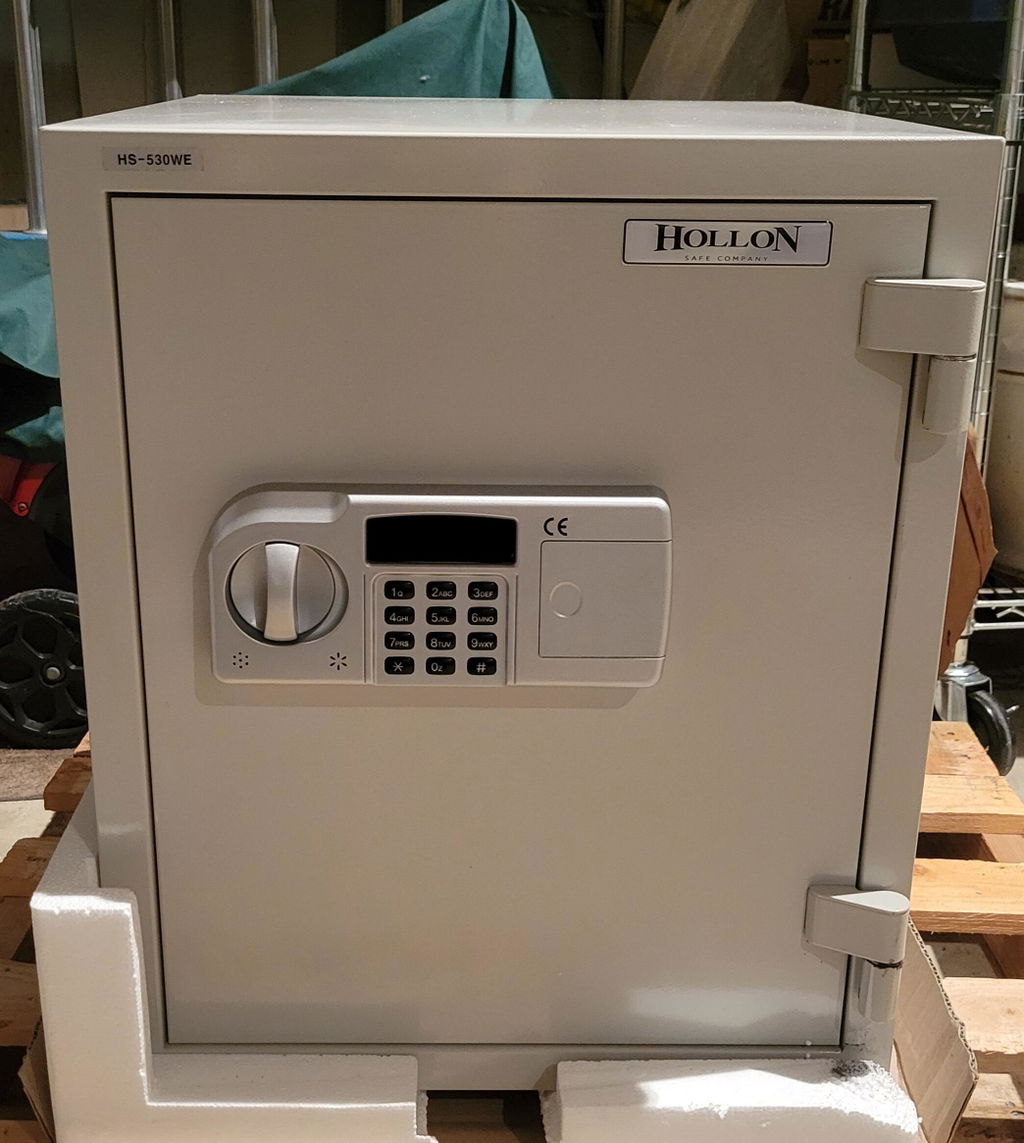
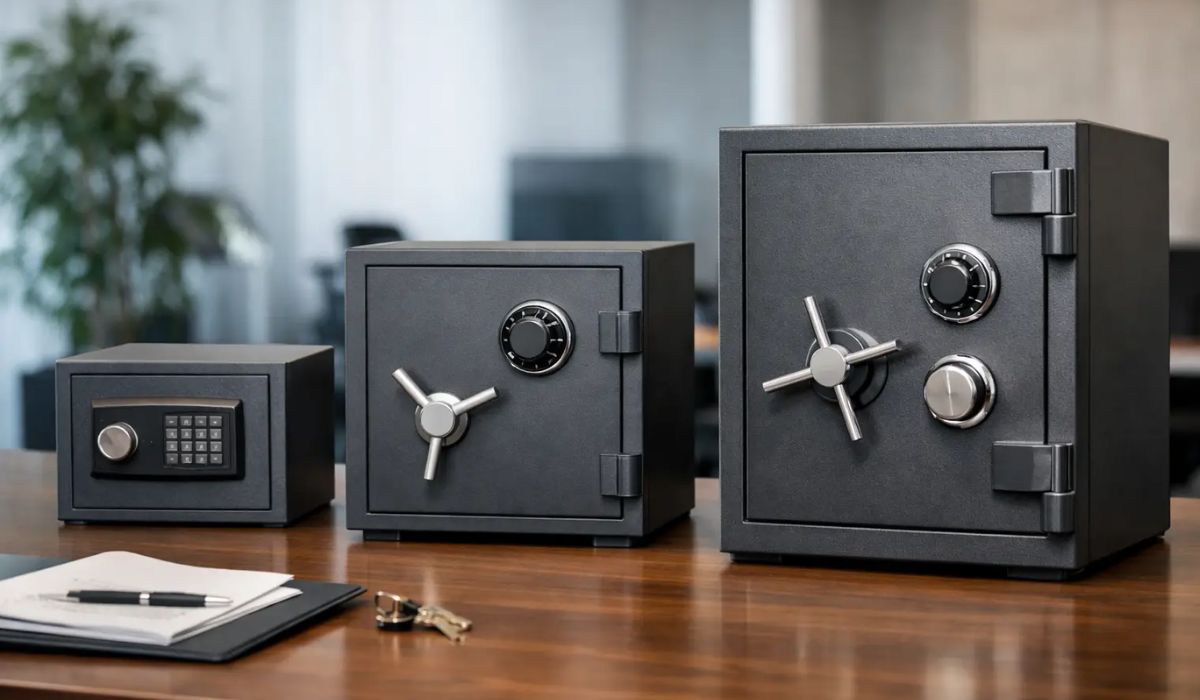
Electronic locks are popular for commercial use because they allow quick entry, easy code changes, and in some cases multiple user codes or audit features. That is valuable when staff turnover is a factor. Manual dial locks have a reputation for long-term reliability, but they are slower and less convenient in fast-moving environments.
Biometric access can make sense in select settings, but for many businesses it is less common than keypad entry. The right answer depends on who needs access, how often, and whether you need to change permissions quickly.
Whatever you choose, look for quality components and proven lock standards. A strong safe body paired with a weak lock setup is not a balanced security plan.
Installation is part of the safe, not an afterthought
A commercial safe that is not anchored properly can become a removal target, especially in smaller sizes. Weight helps, but anchoring is often what turns a difficult theft into an impractical one.
Placement matters too. If possible, install the safe where public visibility is limited, staff access is manageable, and the floor can support the load. This becomes especially important with heavy burglary safes and TL-rated units. You may need to think about delivery path, stairs, slab condition, and whether the safe will sit on wood, tile, or concrete.
For some businesses, concealment adds value. For others, visible placement supports procedure and staff accountability. It depends on whether the safe is used for frequent deposits, controlled access, or long-term storage.
Questions that separate a good buy from a costly mismatch
When comparing commercial safes, ask practical questions before you focus on sale price. How many people need access? Do you need employees to make drops without opening the safe? Will insurance require a certain burglary rating? Are you storing paper, media, cash, narcotics, or mixed contents? Does the safe need to support daily use or mostly stay closed?
Then ask the less exciting but equally important questions. Will it fit through the door? Can your floor support it? Is there enough room for the door to swing fully open? Can it be bolted down where you plan to place it?
These questions are not small details. They are usually what determine whether a safe performs well in the real world.
Choosing with confidence
A strong commercial safe purchase comes down to fit. The right model should match your risk level, support your daily workflow, and give you confidence that cash, records, medications, or valuables are protected the way they should be.
If you are weighing two similar options, lean toward the one that better matches how your staff will actually use it. Security only works when the safe is used consistently, locked properly, and installed the right way. Protect what matters most by choosing the safe that fits your business on its busiest, most vulnerable day - not just the one that looks good in a spec table.