A restaurant rarely loses cash in one dramatic moment. More often, it disappears in small gaps - a till left open too long, a rushed shift change, an unverified drop, a back office safe that too many people can access. That is why restaurant cash handling safe procedures matter so much. Good procedures do more than protect money at closing time. They reduce internal risk, tighten accountability, and make daily operations less stressful for managers and staff.
For most restaurants, the goal is not to turn the building into a bank vault. It is to create a routine where cash moves predictably, access stays limited, and mistakes are easier to catch before they become losses. The safest operation is usually the one that feels boring, consistent, and hard to shortcut.
Why restaurant cash handling safe procedures matter
Cash is still part of the job in full-service restaurants, bars, quick-service counters, delivery-heavy operations, and tip environments. Even when card volume is high, the remaining cash can add up quickly across drawers, tip-outs, and end-of-day deposits. The risk comes from several directions at once.
External theft is the obvious concern, especially during opening, closing, or bank runs. Internal shrink is often less visible but just as costly. Then there is simple human error. A rushed manager may miscount a drawer. A team member may forget to document a safe drop. A combination may be shared too casually and stay in circulation long after turnover. Procedures help because they reduce dependence on memory, trust, and improvisation.
When cash handling is loose, managers spend time chasing shortages and staff disputes. When procedures are clear, cash counts become easier to reconcile, and problems are easier to isolate. That is the operational benefit many owners underestimate.
Start with movement, not just storage
A safe is essential, but the procedure around it matters just as much as the steel. Restaurants should map the full cash path from register to drop to final deposit. If that path has too many touchpoints, too many keyholders, or too many undocumented handoffs, the problem is not solved by buying a heavier safe.
Start by asking simple questions. Who opens tills? Who performs pickups? Who verifies end-of-shift counts? Who can open the safe, and under what circumstances? How often is cash removed from registers during busy shifts? If there is no clear answer, your risk is already higher than it needs to be.
The strongest restaurant cash handling safe procedures create separation between collection, verification, and final access. That does not always require a large team. Even small operations can assign distinct steps and require written or digital confirmation at each stage.
The right safe setup for a restaurant
Not every business safe is ideal for a restaurant. The best fit usually depends on cash volume, shift structure, and whether staff need to make drops without opening the main compartment.
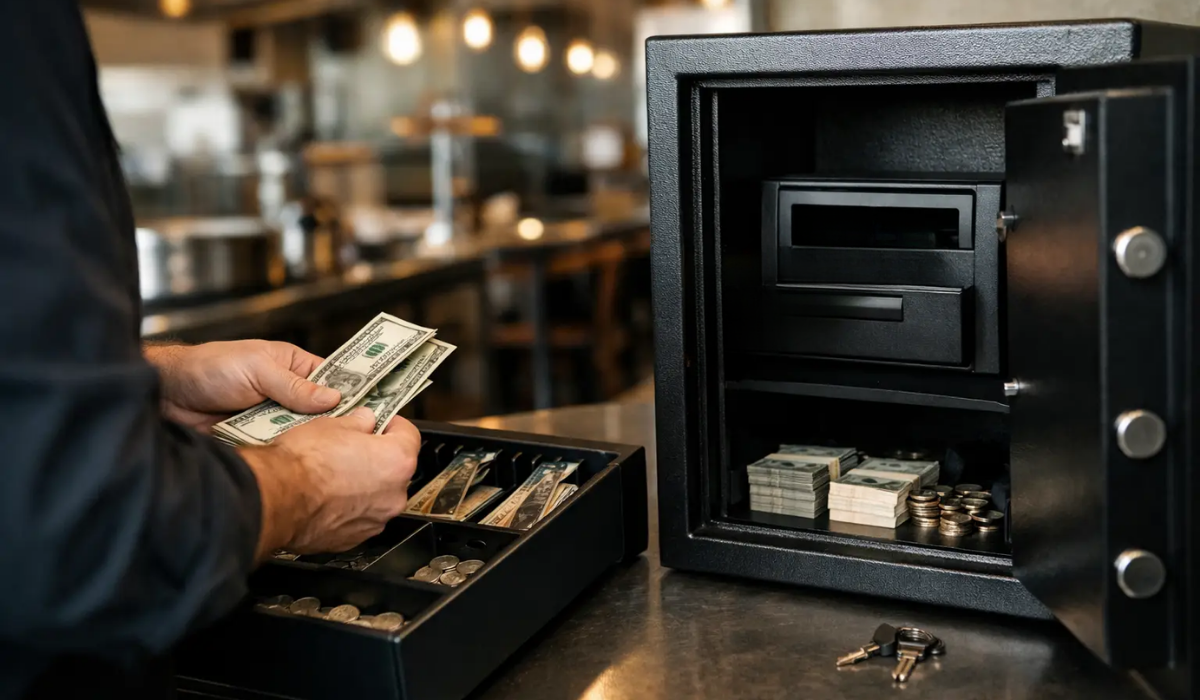
For many restaurants, a depository safe makes the most sense because it allows cash drops through a slot or hopper while limiting direct access to stored contents. That matters on busy nights when managers want excess cash moved out of registers without reopening the safe repeatedly. It also reduces temptation and lowers exposure during a robbery, since front-line staff typically cannot access bulk cash.
A standard office safe may work in a very small operation with low cash volume, but it is usually less efficient for active cash handling. If the safe has to be opened every time money is dropped, access control becomes weaker. A better setup often includes a depository design, a reliable lock type, and anchoring to the floor so removal is not an option.
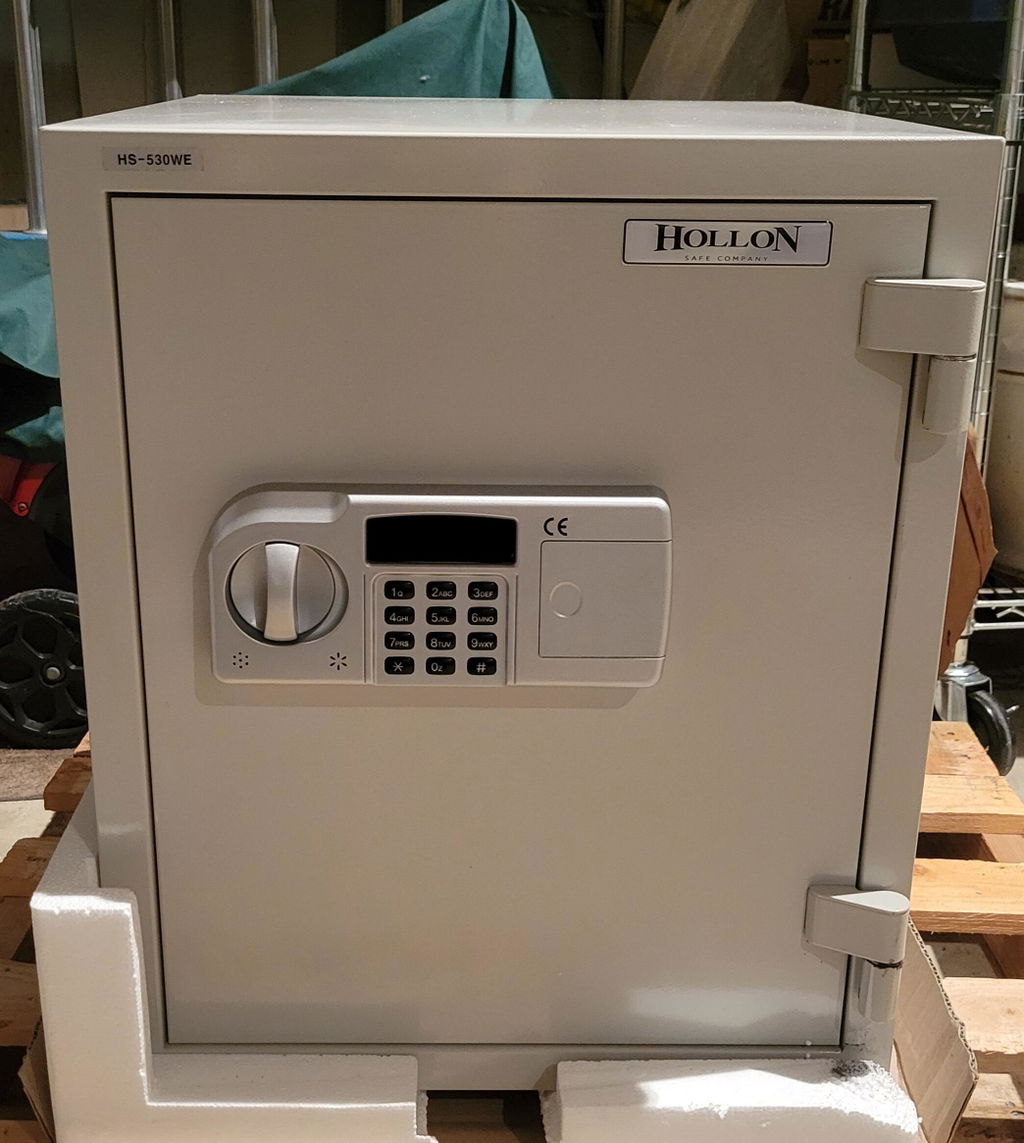
Lock choice matters too. Electronic keypad locks are common because they are fast and practical for manager use. Mechanical dials can be dependable but slower in a high-turnover environment. If multiple managers need access, make sure code changes are easy enough to perform regularly. Convenience is not a minor detail here. If changing access is a hassle, it often gets delayed.
Limit access harder than you think you need to
One of the most common weak points is broad safe access. Restaurants often start with good intentions, then gradually share codes with assistant managers, shift leads, or long-tenured staff because it feels practical. Over time, no one is fully sure who knows what.
A safe should be accessible only to people who truly need it, and that group should stay small. If multiple managers require access, each should have a unique code when the lock supports it, or there should be a documented process for code changes whenever staffing changes. Shared combinations are easy in the moment and expensive later.
This is also where key control becomes serious. If your safe or cash drawer process involves physical keys, spare keys need their own restricted storage and sign-out procedure. A hidden backup key in the office is not a system. It is an exposure point.
Build procedures around the busiest moments
Cash controls tend to fail when the restaurant is under pressure. A lunch rush, a packed Friday night, or a late close creates exactly the kind of environment where staff skip steps. So your process should be designed for the busiest hour, not the calmest one.
That usually means scheduled cash pickups from registers before drawers become overfilled. Keeping only the working bank in each till lowers loss exposure and can make employees feel safer. It also means requiring immediate documentation for each drop. A delayed log entry invites confusion, and confusion is where shortages hide.
Shift changes deserve special attention. Drawer counts should be verified at handoff, not fixed later. If a discrepancy appears three hours after the fact, it becomes much harder to identify whether it came from a counting error, a register mistake, or something intentional.
Documentation should be simple enough to survive real life
The best procedure is the one your team will actually follow during a slammed dinner service. That is why overcomplicated logs and approvals often fail. Restaurants need documentation that is short, repeatable, and easy to audit.
At minimum, each cash event should show who handled it, when it happened, what amount was counted or dropped, and who verified it when verification is required. Some operations use printed logs, while others use POS-linked reporting and manager signoff. Either can work if the system is consistent.
The trade-off is straightforward. Paper logs are easy to launch and inexpensive, but they rely on legible handwriting and disciplined storage. Digital systems can improve tracking and reporting, but they are only helpful if the team is trained to use them correctly. The format matters less than the consistency.
Training is where procedures become real
Many restaurants have a cash policy in a handbook and assume that is enough. It rarely is. Staff need practical training that shows not just the rule, but the reason behind it. When employees understand that a safe drop protects them from being blamed for shortages, compliance usually improves.
Training should cover drawer limits, drop timing, count verification, discrepancy reporting, safe access restrictions, and what to do during a robbery. It should also include what not to do, like discussing safe routines in public areas or counting cash where guests or delivery drivers can observe.
Refresher training matters just as much as onboarding. Procedures drift over time, especially in restaurants with turnover or multiple locations. A short, regular review can prevent bad habits from becoming normal.
Closing and deposit procedures need extra control
Opening and closing are high-risk windows because fewer people are present and routines can become rushed. Closing managers should follow a fixed sequence every time: reconcile drawers, verify drops, secure funds in the safe, prepare the deposit, and document anything unusual before leaving.
If deposits are taken to the bank, vary timing when possible and avoid predictable solo runs with large amounts of cash. Some restaurants prefer next-business-day deposits from a secured safe rather than late-night transport. That can be safer, but only if the safe is rated and installed appropriately for overnight cash storage.
This is where product selection becomes practical, not theoretical. Steel construction, lock reliability, deposit design, and anchoring features directly affect whether your procedure holds up under real use. For restaurants evaluating options, Secure Zoned often helps business owners compare depository and commercial safe setups based on cash volume and daily workflow, not just exterior size.
Audits should feel routine, not accusatory
Cash controls work better when review is regular and unemotional. Spot checks, count verification, and periodic code updates should be treated as standard operating procedure, not as a sign that management distrusts the team. A system that never gets checked is a system that gradually weakens.
Audits also help uncover process problems that are not theft-related. If one shift consistently has counting errors, the issue may be training or timing, not dishonesty. That distinction matters. Strong procedures should protect the business while still being fair to employees.
A restaurant does not need a complicated security program to handle cash well. It needs a safe that matches the job, access that stays tightly controlled, and procedures simple enough to follow on the busiest night of the week. When cash handling becomes disciplined and predictable, you are not just protecting deposits. You are creating a calmer, more accountable operation from open to close.