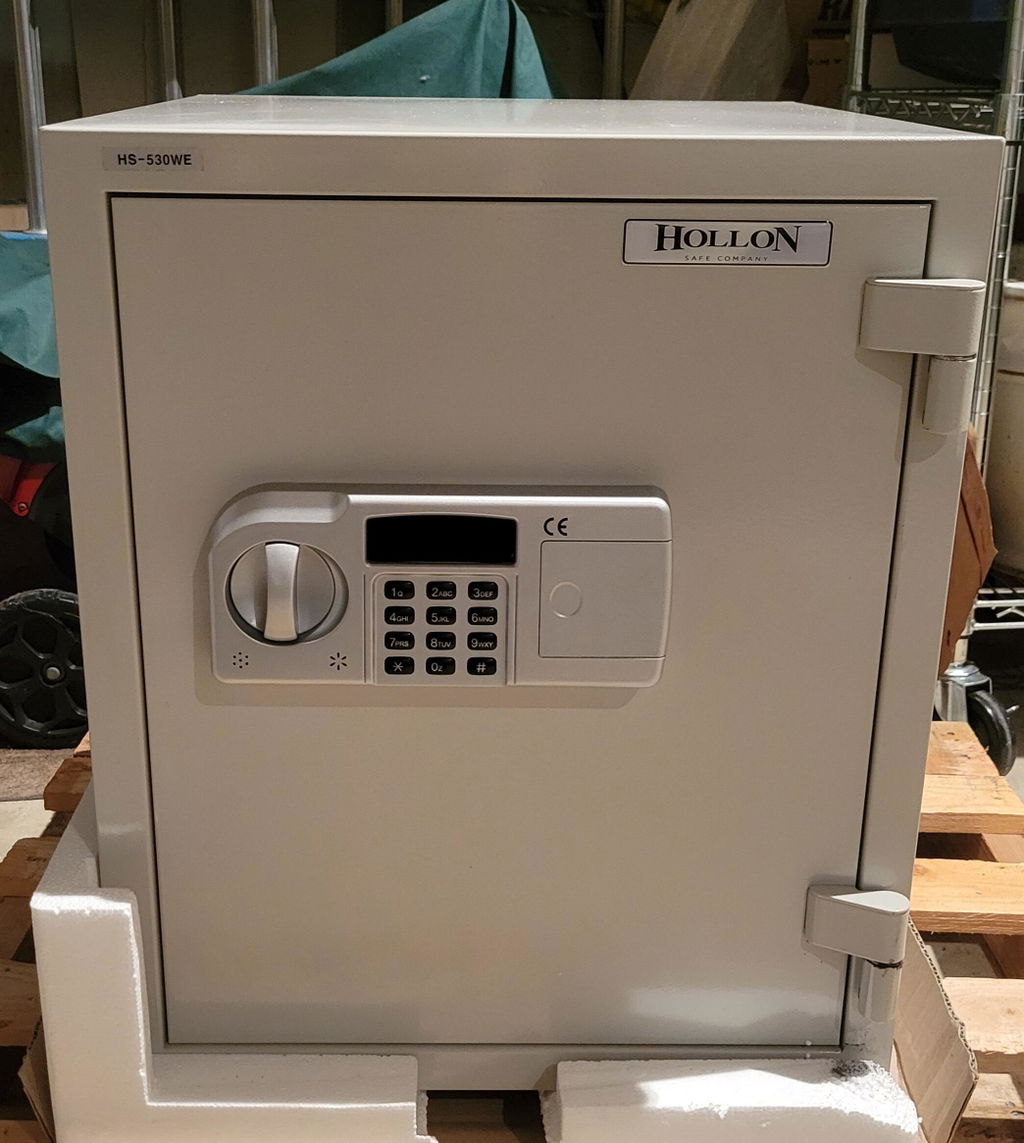
A safe labeled 30 minutes at 1,200°F and another rated 2 hours at 1,850°F might look similar on a product page, but they are built for very different risks. This guide to safe fire ratings is here to make those numbers easier to judge, so you can buy with a clear sense of what you are actually protecting and how much fire resistance you really need.
What safe fire ratings actually mean
A fire rating is a manufacturer's or testing agency's estimate of how long the interior of a safe can stay below a certain temperature while the outside is exposed to extreme heat. That matters because paper, digital media, firearms components, jewelry, and cash all react differently to heat.
For most homeowners and business buyers, the key point is simple: a fire rating is not just about how hot the fire gets. It is about time, temperature, and the maximum internal temperature the safe is designed to hold below during testing. Those three factors work together.
Paper documents usually need the inside of the safe to remain below about 350°F. That is why many standard fire-rated safes are designed around document protection. But if you are storing digital media like hard drives, backup drives, or some electronic records, the heat tolerance is much lower. A safe that does a decent job protecting paper may still not be the right fit for electronics.
A practical guide to safe fire ratings by use case
The biggest mistake shoppers make is treating every fire rating as equal. A 30-minute fire rating may be enough for one home and completely inadequate for another. It depends on what you are storing, how quickly local fire response typically arrives, and whether the safe will be placed in a garage, office, closet, or a more exposed area of the building.
If you need to protect birth certificates, passports, wills, and similar paperwork, a lighter-duty fire rating can sometimes make sense. If your main goal is protecting family heirlooms, collectible firearms, expensive watches, or business records that would be difficult to replace, stepping up to 60, 90, or 120 minutes is usually the safer move.
Gun owners should be especially careful here. Fire ratings on gun safes are often a major selling point, but not all ratings are tested the same way. A longer fire rating can help protect wood stocks, optics, documents, and accessories, but it does not mean every item inside will come out unharmed after a severe structure fire. Firearms can survive conditions that would destroy paper, but finishes, optics, grips, and ammunition can still be affected by intense heat and moisture.
For businesses, the question is less about marketing language and more about downtime. If a restaurant, retail store, office, or pharmacy loses records, cash, or critical paperwork in a fire, the cost is not only the damaged contents. It is also lost time, interrupted operations, and the hassle of replacing essential documents.
How fire ratings are tested
This is where safe shopping gets more nuanced. Some fire ratings come from independent testing agencies. Others are based on manufacturer testing. That does not automatically make one useless and the other trustworthy, but it does mean you should read the details carefully.
Independent certifications, such as certain UL fire tests, generally carry more weight because they follow a published testing protocol. Manufacturer-tested ratings can still be meaningful, especially from established safe brands with a good reputation, but the exact test method matters. Was the safe tested at a stated external temperature? For how long? What internal temperature threshold was maintained? Was there a cool-down period included?
That last point gets overlooked a lot. In a real fire, damage does not stop the moment flames are out. Heat can remain trapped inside a burned structure, and a safe can continue absorbing heat after the active fire phase. Some of the better fire tests account for this with a furnace cool-down process. That tends to give a more realistic picture of performance.
Why the same fire rating can mean different things
Two safes can both claim a 60-minute fire rating and still offer different levels of protection. One may have thicker steel, more fireboard layers, tighter door seals, and better overall construction. The other may technically meet its test standard but with less margin for real-world variables.
This is why specs should be read as a group, not one at a time. Fire rating matters, but so do body construction, door thickness, locking mechanism, seal design, and total weight. A heavier safe is not always better, but fire-resistant materials and solid construction usually add mass for a reason.
You should also watch for the temperature attached to the time rating. Sixty minutes at one external temperature is not the same as sixty minutes at a much higher one. Higher heat tests can indicate a more demanding standard, though the full testing method still matters.
What fire rating do you actually need?
For basic home document storage, 30 to 60 minutes may be enough if the safe is in a lower-risk area and your goal is protecting replaceable but important papers. For many homeowners, though, 60 to 90 minutes is a more comfortable middle ground because it provides better protection without pushing into the size and cost of heavier specialty units.
If you are protecting irreplaceable family records, jewelry, or firearms with valuable accessories, 90 to 120 minutes is often worth considering. The higher rating gives you more breathing room in a serious house fire, especially in larger homes where a fire may burn longer before full control is achieved.
For commercial use, the right answer depends on the contents and the cost of interruption. A small office storing paper files may be fine with a moderate fire rating. A business handling sensitive records, cash deposits, or mission-critical paperwork may want stronger fire protection and, in some cases, a more specialized fire safe or fire file cabinet.
Fire protection vs. burglary protection
One trade-off buyers should understand is that fire protection and burglary protection are not identical goals. Some safes lean heavily toward fire resistance, using insulation and layered materials to slow heat transfer. Others focus more on resisting forced entry with thicker steel, hard plates, relockers, and advanced boltwork.
The best choice depends on your actual risk. If you live in an area where wildfire or house fire is your bigger concern, a stronger fire rating may deserve priority. If you are storing cash, jewelry, or controlled items in a location with elevated theft risk, burglary resistance may matter just as much or more.
In many cases, shoppers want both. That is reasonable, but it usually means moving up in budget and weight. There is no free lunch in safe construction. Better materials, stronger locks, higher ratings, and more substantial bodies cost more and weigh more.
Common mistakes when reading fire ratings
One of the most common mistakes is assuming the word fireproof means absolute protection. In practice, fireproof is often used loosely in marketing. A safe is better understood as fire-rated, meaning it has a tested or claimed level of resistance for a defined time and temperature.
Another mistake is ignoring placement. Even a good fire-rated safe can perform differently depending on where it is installed. A safe on a concrete slab in a conditioned interior space may face different conditions than one on an upper floor, in a garage, or near flammable materials. Placement will not change the official rating, but it can affect real-world outcomes.
Buyers also sometimes focus only on the longest number they can afford. Longer fire ratings are attractive, but they should fit the use case. If a safe is oversized, too heavy for the planned location, or beyond budget, you may end up delaying the purchase or compromising on installation. A properly placed and anchored safe you buy now is better than the perfect one you never order.
How to shop smarter using this guide to safe fire ratings
Start with the contents, not the safe. Think about whether you are protecting paper records, firearms, cash, jewelry, digital media, or a mix. Then consider how hard those items would be to replace and what kind of fire exposure is realistic for your home or business.
Next, read the fire rating in full context. Look for the duration, the test temperature, and whether the rating is independently verified or manufacturer-tested. If the product details are vague, that is a sign to ask questions before buying.
Finally, balance fire resistance with security, size, lock preference, and installation reality. A safe that fits your space, your budget, and your actual risks is almost always a better choice than one selected on a single headline spec. At Secure Zoned, that is usually the difference between a safe that looks good on paper and one that truly protects what matters most.
The right fire rating is not the highest number you can find. It is the one that matches the loss you cannot afford.