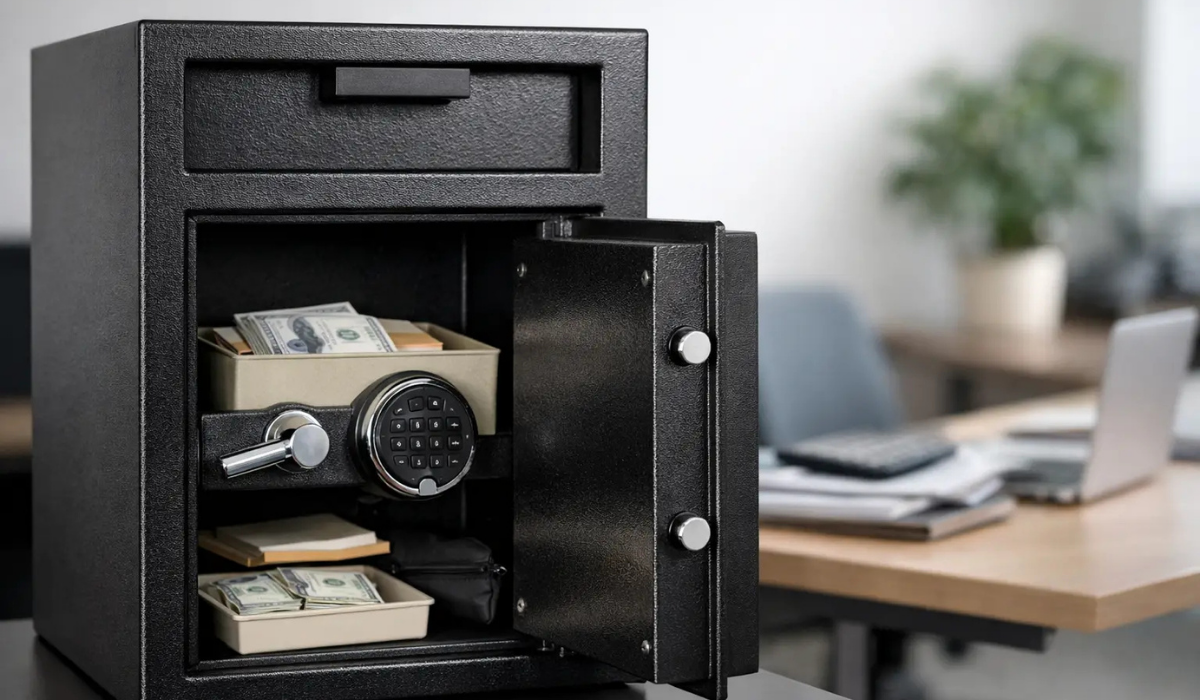
If you run a restaurant, retail shop, dispensary, or front-desk operation, the weak point usually is not the safe itself - it is the handoff. Cash moves fast, shifts change, and deposits need to happen without giving multiple employees full access to the day’s intake. That is exactly where a Mesa depository safe review matters: these safes are built to let staff drop cash in quickly while limiting access to the secured compartment below.
Mesa has a strong reputation in the business-safe category because it tends to balance practical security features with models that are still realistic for small and mid-sized operators. You are not usually looking at a high-security TL-rated cash room replacement here. You are looking at a purpose-built depository safe that helps reduce internal risk, improves cash handling, and gives owners more control over daily deposits.
Mesa depository safe review: what stands out
The first thing Mesa generally gets right is the design priority. These safes are made for repeated daily use, not occasional home storage. That means you will usually see deposit hoppers or front-loading drop doors designed to accept envelopes, till bags, checks, and stacks of bills without forcing employees to fumble with the opening.
The second strength is anti-fish protection. On a depository safe, that feature matters more than many first-time buyers realize. A drop slot without proper internal baffling can create an opportunity for someone to retrieve contents through the opening. Mesa models commonly include anti-fish mechanisms intended to make that far more difficult. It is a basic feature on paper, but in the real world it is one of the reasons to choose a true depository safe rather than repurposing a standard office safe.
Build quality is typically solid for this class. Mesa depository safes often use all-steel construction, heavy door plates, and boltwork that is appropriate for commercial cash-drop use. The overall feel is usually closer to business equipment than a light-duty lockbox. That distinction matters when the safe is being opened and closed constantly by managers and leaned on by staff during a rush.
What Mesa depository safes do well
For most business owners, the core value is controlled access. Staff can make deposits during a shift, but only a manager or owner can open the main compartment. That setup reduces temptation, limits who can handle cash, and creates a cleaner process at closeout.
Mesa also tends to offer useful lock choices, commonly electronic locks and, on some models, combinations or dual-control arrangements depending on the specific unit. An electronic lock is often the best fit for a busy operation because code changes are easier when staffing changes. If you have ever had to replace keys after employee turnover, you already know why that matters.
Another practical advantage is model variety. Mesa has depository safes in several sizes, which is important because businesses often either overshoot or undershoot their needs. A coffee shop making frequent small drops may need something compact near the register area. A higher-volume retail operation may need a larger body with enough interior capacity for deposit bags across multiple shifts.
Mesa products also tend to make sense for businesses that want better security without stepping all the way into specialty burglary ratings that cost much more and weigh much more. That middle ground is where many small businesses live. They need a serious safe, not the biggest one on the market.
Where a Mesa depository safe has trade-offs
No honest Mesa depository safe review should pretend these units are one-size-fits-all. A depository safe solves a specific cash-control problem. It does not automatically solve every security problem in your business.
For one, many depository safes are designed around burglary deterrence and deposit management more than fire protection. If your main concern is preserving critical records, backup drives, or paper documents through a fire, you may need a separate fire-rated safe or file cabinet. Some buyers assume all safes cover both risks equally. They do not.
It is also worth being realistic about ratings and threat level. If your business has high cash volume, elevated break-in risk, or compliance-driven requirements, a standard depository safe may not be enough by itself. In some situations, it makes more sense to step up to a higher-security burglary-rated unit, reinforce the room, improve surveillance coverage, or rethink where deposits are staged.
Then there is size and installation. A larger Mesa safe can be heavy, which is good for security, but that also means you need to think through placement, floor load, swing clearance, and anchoring. Buying the right safe and then placing it where the door cannot open fully is a frustrating and expensive mistake.
Build details that matter more than marketing
When comparing Mesa depository models, look past brand familiarity and focus on the details that affect daily use.
Steel construction matters, but so does the door design and the quality of the locking system. A safe that looks substantial from the outside can still be annoying to use if the deposit opening is awkward or too small for the way your staff actually handles cash. If you drop bank bags, check dimensions carefully. If you mostly drop envelopes and loose bills, the opening shape may matter more than raw interior volume.
Boltwork and relocker features also deserve attention. On many quality business safes, relockers add another layer of resistance if someone attacks the lock. It is the kind of feature owners rarely ask about until after a break-in in the area. Better to evaluate it before you buy.
Anchoring is another big one. Even a heavy safe should be anchored whenever the installation allows it. A depository safe that can be tipped, pried at from odd angles, or removed for later attack is less secure than its specifications suggest. Good placement plus proper anchoring is part of the safe system, not an optional extra.
Who should buy a Mesa depository safe
Mesa is a strong fit for small to mid-sized businesses that need dependable drop security and straightforward operation. Think convenience stores, liquor stores, restaurants, hotels, property management offices, and retailers with multiple employees handling payments during the day.
It is especially useful when the business owner wants to separate deposit access from general staff access. That is often the real reason people buy one. Yes, the steel and lock matter. But the bigger benefit is process control. The safe helps create discipline around who handles money and when.
A Mesa unit can also make sense for organizations collecting checks, rent payments, or envelopes after hours. In that case, the depository function is not just about theft prevention. It is about creating a secure intake point without requiring full safe access every time something is dropped off.
Who may need something else
If your top priority is fire protection for documents, go look carefully at fire ratings rather than assuming a depository safe covers that need. If your operation handles very high cash totals or sits in a location with serious burglary exposure, you may need to look beyond a standard drop safe and consider higher-rated burglary protection.
And if your workflow does not actually involve multiple staff making deposits throughout the day, a depository model may be unnecessary. Some buyers are better served by a traditional business safe with stronger general-purpose storage features. It depends on whether the problem is deposit control or simply secure storage.
Buying advice before you choose a Mesa model
Measure the items you plan to deposit, not just the space where the safe will sit. Deposit slot and hopper dimensions can make or break usability. A safe that technically fits your office is not helpful if your deposit bags do not fit the opening.
Think through access hierarchy, too. Do you want one manager code, multiple user codes, or stricter control over who can retrieve contents? The right lock setup depends on turnover, shift structure, and whether ownership is onsite daily.
Finally, match the safe to your actual cash routine. If deposits are frequent and small, prioritize fast operation and convenient placement. If deposits are larger and less frequent, interior capacity and compartment layout may matter more. This is one of those purchases where the safest-looking option is not always the best option if it slows down compliance from your staff.
A Mesa depository safe is usually a smart buy when your main goal is simple: let people drop money in, keep them out of the main compartment, and make theft harder both inside and outside the business. Pick the right size, anchor it properly, and it can do exactly what a good business safe should do - protect what matters most without slowing down the workday.