Short answer: for most homes, the best fireproof safe is a compact 2-hour safe such as the Hollon HS-500E ($460), rated for 2 hours at 1,850°F. On a tight budget, the Sanctuary SA-ONYX3 ($299.99) gives you 45 minutes at 1,800°F. If you also need real theft protection, step up to the Hollon FB-685E fire and burglary safe.
Every safe below is one we sell, and every rating comes from the manufacturer's published specifications. Prices are current at time of writing. You can compare the full range in our fireproof safes collection.
The best fireproof safes at a glance
| Pick | Safe | Fire rating | Size | Price |
|---|---|---|---|---|
| Best overall | Hollon HS-500E | 2 hours at 1,850°F | 0.94 cu ft | $460 |
| Best value 2-hour | Steelwater SWBS-500D-C | 2 hours at 1,850°F | Compact | $355.50 |
| Best budget | Sanctuary SA-ONYX3 | 45 minutes at 1,800°F | Compact | $299.99 |
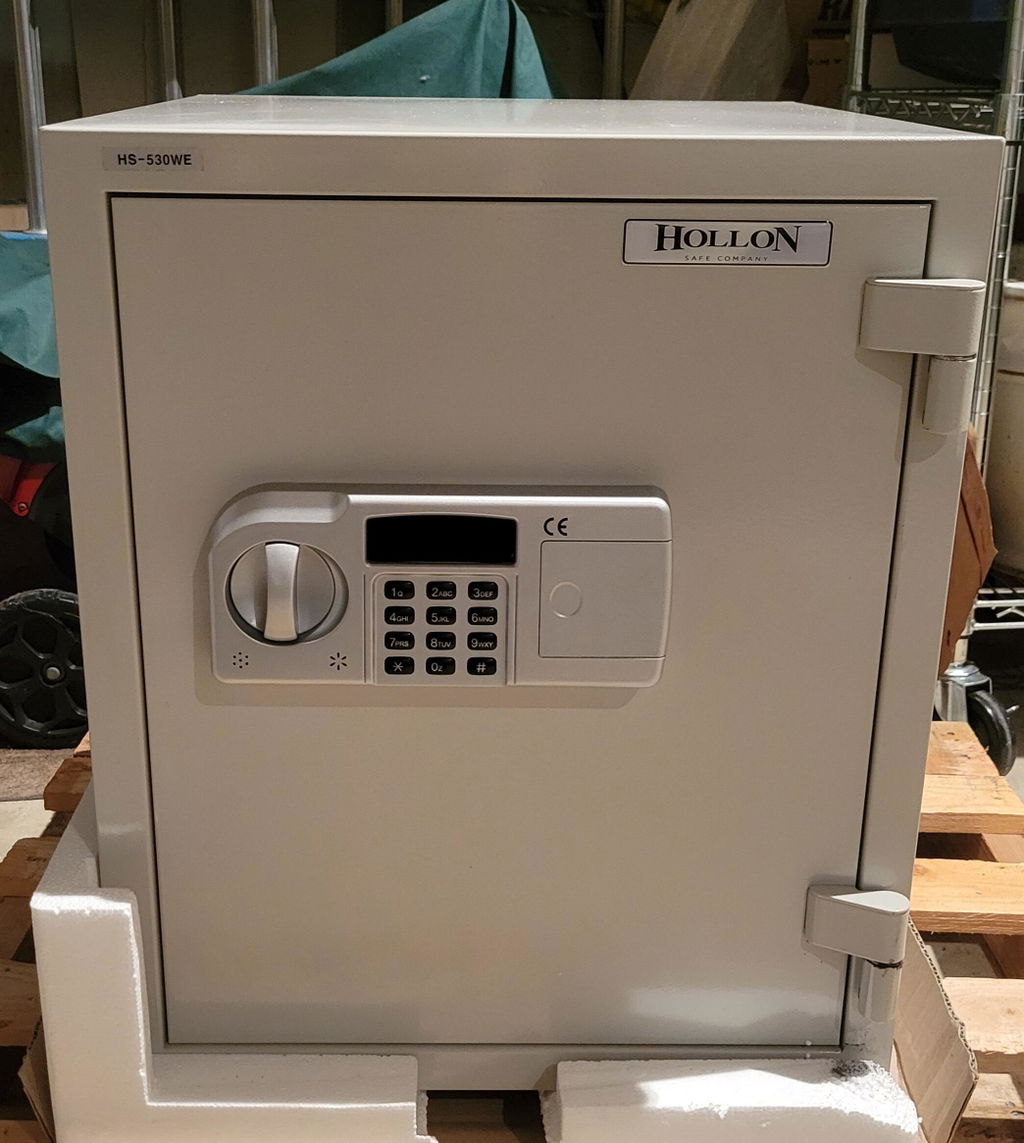
| Best 2-hour with more room | Hollon HS-530WE | 2 hours at 1,850°F | 1.25 cu ft | $659 |
| Best 1-hour | Hayman FlameVault FV-137E | 1 hour at 1,850°F | Compact, 115 lb | $460 |
| Best fire and burglary | Hollon FB-685E | 2 hours at 1,700°F (independently tested) | 2.36 cu ft, 345 lb | $1,463 |
| Best for records | Gardall SS1913-G-CK | 2-hour fire label, tested to 1,832°F | 1.30 cu ft | $1,481.25 |
1. Best overall: Hollon HS-500E
The Hollon HS-500E packs a 2-hour fire rating, tested at up to 1,850°F, into a 0.94 cubic foot safe that fits on a closet shelf or under a desk. It has active locking bolts on the opening side, fixed bolts on the hinge side to resist prying, an electronic lock and an anchor hole for bolting it down. For passports, titles, wills and cash, it is the best balance of fire protection, size and price we carry. Prefer a dial? The HS-500D is the same safe with a combination lock.
2. Best value 2-hour safe: Steelwater SWBS-500D-C
The Steelwater SWBS-500D-C matches the 2-hour, 1,850°F rating at $355.50. It uses two active rectangular locking bolts plus two stationary bolts on the hinge side, with a combination dial and a backup key lock. If you only need room for documents and a few valuables, this is the most fire protection per dollar in our lineup.
3. Best budget fireproof safe: Sanctuary SA-ONYX3
At $299.99, the Sanctuary SA-ONYX3 is rated for 45 minutes at up to 1,800°F, with 5 mm steel active and dead plates to resist pry attacks, California DOJ approval and a lifetime warranty. It is a sensible first safe for an apartment or a ground-floor closet in town, where fire response is fast. For less, the RPNB RPEFS50 offers 1.29 cubic feet with a 30-minute rating.
4. Best 2-hour safe with more room: Hollon HS-530WE
Need more space than a compact safe? The Hollon HS-530WE keeps the interior below 350°F for two hours at outside temperatures up to 1,850°F, with 1.25 cubic feet for passports, deeds, wills and jewelry. A dial version, the HS-530WD, is also available.
5. Best 1-hour fire safe: Hayman FlameVault FV-137E
The Hayman FlameVault FV-137E is rated for 60 minutes at 1,850°F. At 115 pounds, it is heavy enough to discourage a quick grab, and the pre-drilled floor hole lets you anchor it. Hayman is clear that FlameVault is a fire safe, not a burglary-rated safe, which makes it a good fit for documents in a low-theft-risk home.
6. Best fire and burglary safe: Hollon FB-685E
If you store jewelry or cash as well as papers, you want burglary protection too. The Hollon FB-685E Oyster Series is independently tested for 2 hours at 1,700°F and adds three solid steel live locking bolts, a full-length vertical locking bar and an S&G UL Listed Type 1 electronic lock. It weighs 345 pounds with 2.36 cubic feet inside.
7. Best for important records: Gardall SS1913-G-CK
The Gardall SS1913-G-CK is a dedicated record safe with a 2-hour fire label, tested at furnace temperatures up to 1,832°F while holding the interior below 350°F. Its extra-heavy door swings a full 180 degrees and closes into an interlocking tongue. It is a strong choice for deeds, tax records and business paperwork.
How to choose a fireproof safe
Read both numbers in the fire rating
A fire rating has a duration and a test temperature, such as "2 hours at 1,850°F." Paper chars at around 400°F, so the safe's job is to keep the inside below about 350°F for the stated time. Compare both numbers; a higher test temperature is the tougher test. Our fireproof safes list both for every model.
Match the rating to your home
A 30 to 45 minute rating is a reasonable minimum for a ground-floor room in town. Choose 1 to 2 hours for rural homes, garages, upstairs rooms or anything irreplaceable.
Decide whether you need burglary protection
Many fire safes use thin steel, because their job is insulation, not stopping tools. If you are storing jewelry, cash or firearms, look for a fire and burglary safe with solid locking bolts and a hard plate, and bolt it down.
Keep digital media separate
USB drives and hard drives fail at much lower temperatures than paper. If you store backups, use a data media safe.
Size it for what you store
Measure your largest folders and passport wallets against the interior dimensions. For a compact home safe, see our small fireproof safes; for firearms, see our fireproof gun safes.
Frequently asked questions
What is the best fireproof safe for home?
For most homes, a compact 2-hour safe such as the Hollon HS-500E or Steelwater SWBS-500D-C is the best balance of protection, size and price. Both are rated for 2 hours at 1,850°F.
How long should a fireproof safe last in a fire?
At least 30 to 45 minutes for a ground-floor room in town, and 1 to 2 hours for rural homes, garages, upper floors or irreplaceable contents.
Are fireproof safes also waterproof?
Not always. A fire rating does not guarantee water protection, so check each model's specifications if water resistance matters to you.
Do fireproof safes protect against theft?
Basic fire safes offer limited theft protection. If theft is a concern, choose a fire and burglary safe such as the Hollon FB-685E and bolt it to the floor.
Where should I put a fireproof safe?
A main-floor interior room, bolted to concrete or framing, is usually best. Avoid garages and areas near fuel sources, and keep it off the floor of a basement that could flood.