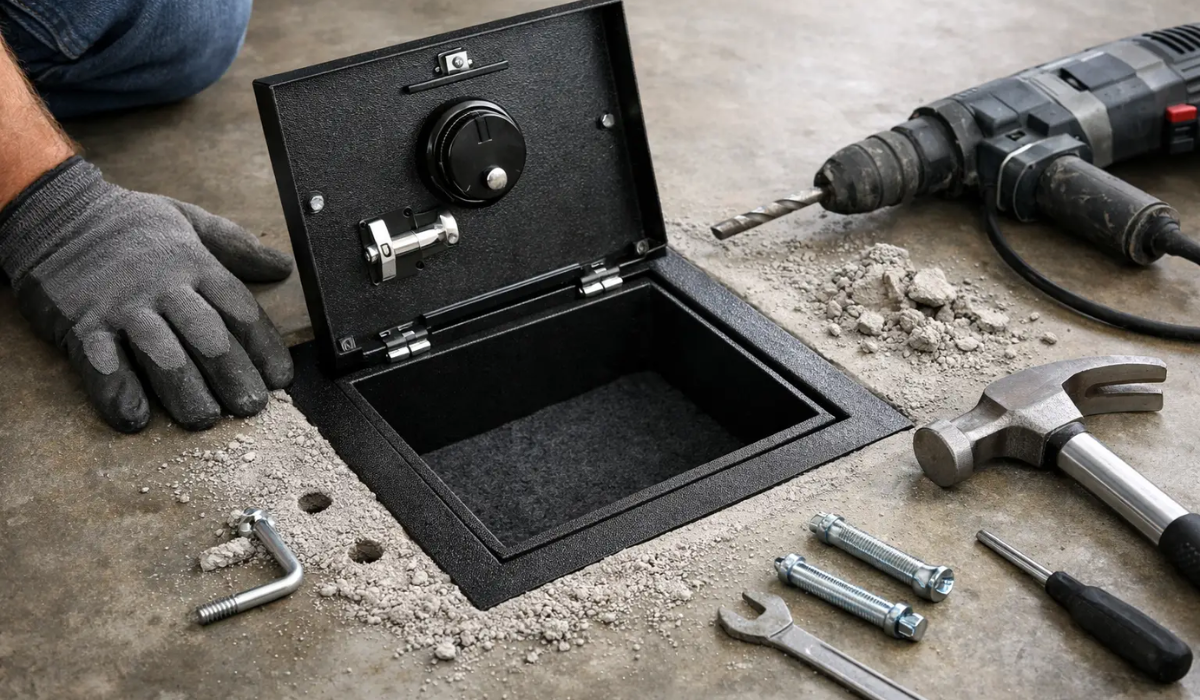
A floor safe only delivers its intended protection when the installation is as secure as the safe itself. Learning how to mount floor safes means understanding one key distinction: a true floor safe is set into and surrounded by concrete. It is not simply placed on a floor and secured with a few bolts. Done correctly, the safe becomes part of the structure, making removal far more difficult and keeping valuables discreetly protected.
Start With the Right Type of Safe
Before planning the installation, confirm that you have a true in-floor safe. These models are designed with a body that sits below the finished floor and a door that rests flush, or nearly flush, with the surface. Their security comes largely from the concrete that encases the safe body.
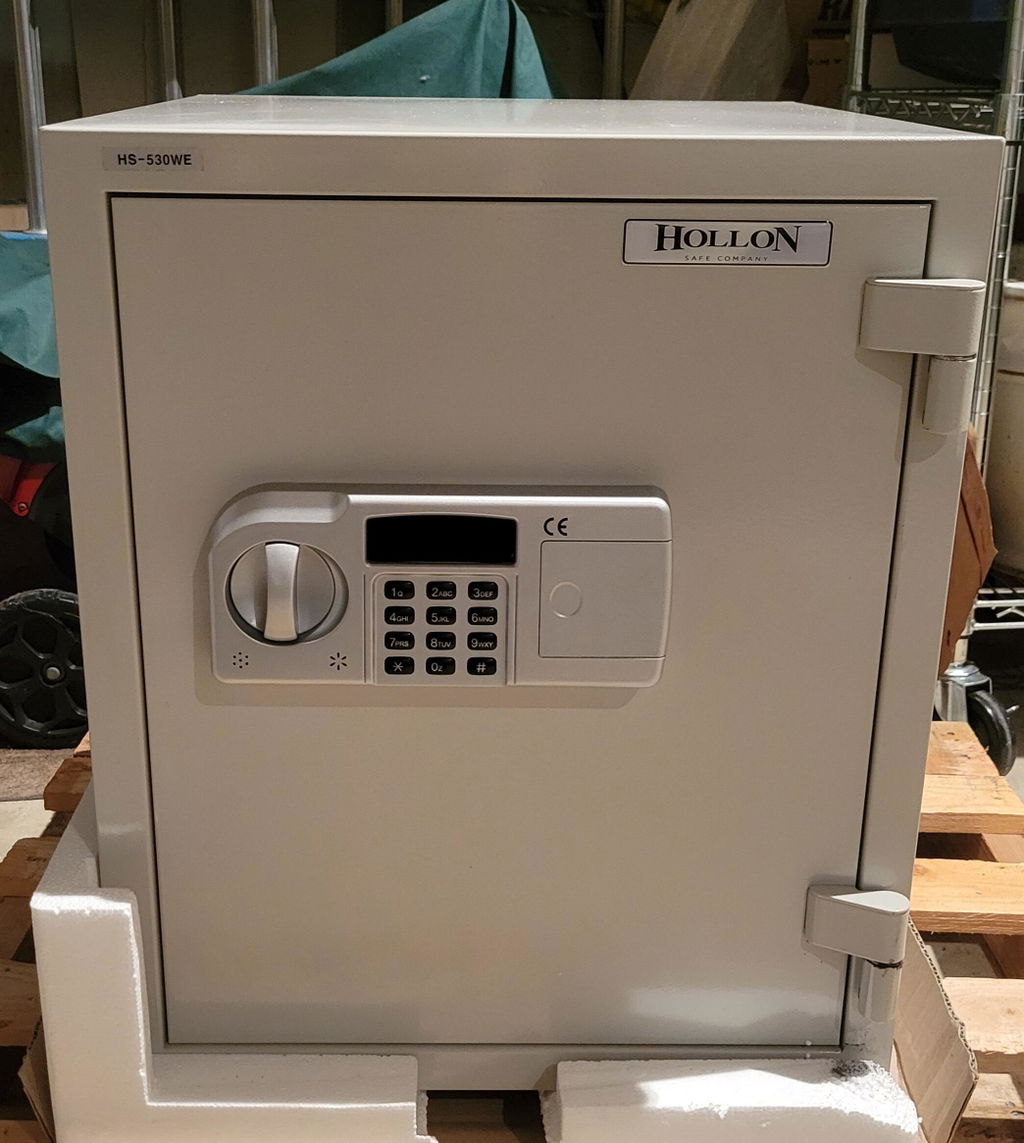
A floor-mounted safe is different. It sits above the slab and uses mounting holes and anchor bolts to attach to concrete or another approved surface. Both can be useful, but they require different installation methods. Attempting to bury a floor-mounted safe, or treating a floor safe like a bolt-down model, can compromise access, protection, and warranty coverage.
Review the manufacturer's installation instructions before choosing a location. Pay attention to the required rough opening, concrete clearance around the safe body, door swing, and any recommendations for moisture protection. A safe that fits physically may still be a poor fit if its door cannot open fully or if the installation leaves its lock exposed to water.
Choose the Location Carefully Before Cutting Concrete
The best location balances concealment, convenience, and structural safety. A closet floor, home office, bedroom, or a low-traffic area of a business can work well. In retail settings, a floor safe may be useful for keeping backup cash, sensitive records, or small high-value items out of sight. It is generally not ideal for frequent cash drops, since employees must open the floor cover and access the safe at ground level.
Avoid locations near exterior doors, garage doors, drain lines, or areas with a history of moisture. Also think about what sits above the safe. A heavy dresser can offer discreet cover, but you should not need to move large furniture every time you need access to important documents, jewelry, cash, or a defensive firearm.
Most importantly, never cut into a concrete slab until you know what is inside or beneath it. Residential slabs may contain electrical conduit, plumbing, radiant heating lines, or post-tension cables. Cutting a post-tension cable can cause serious injury and expensive structural damage. If you are unsure, hire a qualified concrete contractor or use a utility locating service to evaluate the area first.
Consider slab depth and site conditions
Floor safes need enough depth for the safe body plus a proper concrete surround. A shallow slab may not accommodate the safe without excavation below the slab, which adds complexity. Homes with crawlspaces, basements, or unusual foundation designs need a closer assessment than a standard slab-on-grade home.
Soil conditions matter as well. A safe installed below grade can be exposed to moisture pressure, seasonal water movement, and humidity. In areas with a high water table or recurring foundation moisture, an in-floor safe may require additional waterproofing or may not be the best choice. A quality fireproof home safe or burglary-rated safe anchored in a dry interior location can be the more practical solution.
Plan the Opening and Protect the Safe From Moisture
Once the location is approved, mark the opening based on the safe manufacturer's dimensions, not just the outside width and length of the safe. You need room around the body for concrete to flow and cure properly. The exact clearance varies by model, so the product documentation should control the layout.
A professional typically uses a concrete saw to make clean perimeter cuts, then removes the concrete with a demolition hammer. The opening should be deep enough that the safe door will finish level with the floor or at the height specified by the manufacturer. Check the door swing before any concrete is poured. A safe lid that catches on tile, hardwood, or a floor transition becomes frustrating fast.
Moisture is the long-term concern many buyers overlook. Concrete can transmit moisture, and a buried steel safe can rust from the outside over time if it is not protected. Depending on the installation environment and manufacturer guidance, the safe body may need a waterproof membrane, protective coating, or moisture barrier. Use a desiccant inside the safe as well, especially for documents, jewelry, collectibles, and firearms.
Do not assume a fire rating makes a floor safe waterproof. Fire resistance and water resistance are separate performance features. A floor safe can be an excellent place for important papers, but only if the installation environment is dry and the safe's specifications match what you intend to store.
Set the Safe Level and Encased in Concrete
The safe must sit level before concrete is placed. If it is tilted, the door may bind, locking bolts may not operate smoothly, and the finished cover may not sit properly. Use a level across the top of the safe and check it in both directions. Temporary bracing can hold the unit in position while the concrete is placed.
For a true floor safe, the goal is to fully encase the body in concrete according to the manufacturer's instructions. This surrounding mass is what resists prying and removal. Do not leave voids around the sides, and do not use loose fill, wood shims, or foam as a substitute for a proper concrete installation.
Use an appropriate concrete mix for the project and place it carefully around the safe. Work in stages so the safe does not shift. Consolidate the concrete enough to remove air pockets, but avoid aggressive vibration that could move the safe out of level. Keep wet concrete away from the door seal, lock, hinges, and boltwork. Cover exposed opening areas as needed during the pour.
If the safe includes a removable door, many installers prefer to remove it before setting the body. This reduces weight and helps protect the lock and hinges. Follow the safe manufacturer's directions closely, since removing a door incorrectly can affect alignment or create a safety hazard.
Let the concrete cure before loading the safe
Concrete gains strength over time. While the surface may feel firm within a day or two, it does not reach full design strength immediately. Follow the concrete product instructions and your installer's recommendation before placing heavy contents in the safe or putting furniture over the location.
After curing, test the door repeatedly. Confirm that the lock opens reliably, the bolts extend and retract without rubbing, and the door sits properly in its frame. It is much easier to identify an issue before the safe is filled with family heirlooms, important records, or business assets.
Finish the Floor Without Advertising the Safe
A floor safe should be accessible to the owner without being obvious to everyone else. The finished surface may use a rug, removable panel, low-profile furniture, or a purpose-built cover box. Whatever you choose, it should not trap moisture against the safe door or make emergency access difficult.
Avoid permanently covering the safe with flooring materials. The door needs to open freely, and the lock needs clear access for battery replacement, key override, or servicing. If the safe has an electronic lock, record the lock model, keep override keys in a separate secure location, and replace batteries on a schedule rather than waiting for a low-battery warning.
For businesses, limit knowledge of the safe's location and access code to authorized personnel. A floor safe is most effective when it is part of a broader cash-handling and security plan, not the only measure protecting daily receipts.
Know When to Hire a Professional
A skilled DIY homeowner may be able to manage a straightforward installation in an approved concrete slab. Still, professional installation is the better call when the slab may contain utilities, the safe is especially heavy, the home has post-tension construction, or excavation is required below the existing slab.
This is also a sensible choice for high-security safes and commercial applications. The value of a proper installation is not just a clean finished appearance. It protects the safe's function, preserves the building structure, and helps ensure your security investment performs as intended.
A floor safe can offer outstanding concealment and strong burglary resistance when it is sized for your valuables, installed in a dry location, and fully encased in concrete. Take the extra time to plan the installation well. Protecting what matters most is worth more than a quick shortcut under the floor.