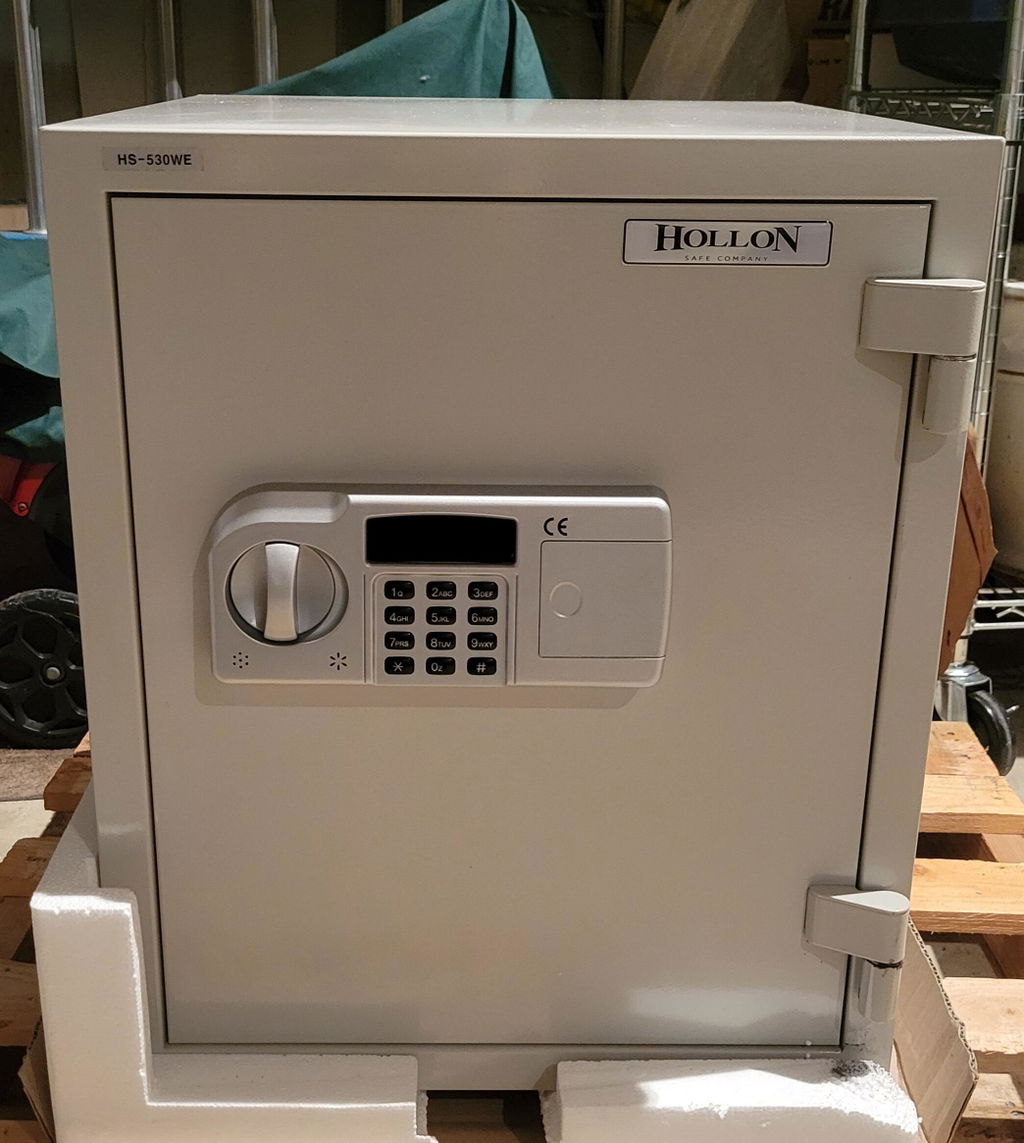

Short answer: empty the safe, wrap it in moving blankets, strap it to a dolly rated well above its weight, and keep it upright. If it weighs more than about 500 lbs, has to go up or down stairs, or has to fit through tight turns, hire a safe-moving crew. Gun safes are heavier than most people expect. The ones we sell range from about 290 lbs to more than 1,600 lbs empty.
How much does your safe weigh?
Weight decides everything: how many people you need, what equipment you need, and whether a DIY move makes sense at all. Here are the published weights of popular safes we sell:
| Safe | Weight (empty) | DIY realistic? |
|---|---|---|
| Hollon HGS-11E Hunter Series | 290 lbs | Yes, flat ground with 2–3 people |
| Steelwater 16 Long Gun Safe | 330 lbs | Yes, flat ground with 3 people |
| Barska AX12220 | 491 lbs | Flat ground only, 3–4 people |
| Hollon CS-24E Crescent Shield | 500 lbs | Flat ground only, 3–4 people |
| Sports Afield SA5940P Preserve | 510 lbs | Professionals recommended |
| Winchester Ranger 26 | 594 lbs | Professionals recommended |
| Mesa MBF6032E | 665 lbs | Professionals recommended |
| Hollon RG-39 Republic | 925 lbs | Professionals only |
| Winchester Big Daddy | 956 lbs | Professionals only |
| AMSEC BFX6030 | 1,081 lbs | Professionals only |
| Winchester Legacy 53 | 1,634 lbs | Professionals only |
Not sure what yours weighs? Check the label inside the door or the manufacturer’s spec sheet. Our guide on how heavy a safe should be explains why weight matters for security too.
DIY or hire safe movers? A quick rule of thumb
- Under 300 lbs, flat ground, no stairs: a careful DIY move with a rated dolly and 2–3 adults is realistic.
- 300 to 500 lbs: doable on flat ground with the right dolly and 3–4 strong adults, but one slip can crack tile, gouge hardwood or injure someone.
- Over 500 lbs, any stairs, tight turns or a long walk from the truck: hire professionals. Crews bring stair-climbing dollies, floor protection and the experience to keep the safe upright.
What equipment you need
- A dolly rated well above the safe’s weight. A standard appliance dolly is often rated for 600–800 lbs; a safe-rated or heavy-duty appliance dolly is safer for anything over 500 lbs.
- Ratchet straps to lock the safe to the dolly, plus extra straps for the truck.
- Moving blankets and stretch wrap to protect the finish, door and keypad.
- Plywood or hardboard sheets to protect floors and spread the weight on soft surfaces.
- Gloves and closed-toe boots for everyone helping.
Step by step: moving a safe on flat ground
- Empty it completely. Remove firearms, ammunition, documents, shelves and door organizers. They add weight and can shift and damage the interior.
- Unbolt it. If the safe is anchored, remove the bolts from inside before you try to tip it.
- Close and lock the door. A swinging door throws off the balance and can be damaged.
- Never use the handle, dial or keypad as a grip. Many handles are designed to slip or break under force. Lift and tilt from the body only.
- Wrap the safe in moving blankets and stretch wrap, paying extra attention to the keypad and hinges.
- Lay down a path of plywood or hardboard over finished floors.
- Tilt slightly, slide the dolly under, strap it tight. One person tilts, one slides the dolly, others steady the safe.
- Move slowly and keep it upright. Assign one person to lead and call out stops and turns.
Moving a safe up or down stairs
Stairs are where most injuries and damage happen. On a staircase, much of a safe’s weight shifts onto whoever is on the downhill side, and once it starts to slide it is very hard to stop. Professional crews use powered stair-climbing dollies or track systems and check that the staircase can take the load. If your safe has to go up or down even one flight, we strongly recommend a professional crew.
Can you lay a gun safe on its back?
Keep the safe upright whenever you can. If it has to be tipped for transport, lay it on its back on thick padding with the door locked and the whole length supported. Never lay it on the door side, which can bend the hinges and throw off the boltwork.
Moving a safe in a pickup truck or trailer
- Use a liftgate or a heavy-duty ramp rated for the weight, with at least three people guiding it.
- Position the safe close to the cab or over the axle, not at the tailgate.
- Strap it at two heights with ratchet straps to anchor points on the truck bed.
- Drive slowly and avoid hard braking. A 700 lb safe that shifts can damage the truck bed or go through the tailgate.
How much does professional safe moving cost?
Pricing depends on weight, stairs, access and distance from the truck. These are the typical ranges from our white-glove delivery service (estimates only; your local provider sets the final price):
| Safe weight | Ground floor | Up one flight |
|---|---|---|
| Up to 300 lbs | $250–$400 | $350–$500 |
| 301–500 lbs | $400–$600 | $550–$750 |
| 501–700 lbs | $550–$750 | Quote required |
| 701–1,000 lbs | $700–$950 | Quote required |
| 1,001–1,500 lbs | $900–$1,200 | Quote required |
| 1,501 lbs and up | Custom quote | Custom quote |
Buying a new safe? Skip the heavy lifting
Every safe we sell ships with free curbside delivery, and you can upgrade to garage delivery, white-glove inside delivery or full installation with bolt-down. The crew carries it to the room you choose, removes the packaging and positions it. See our gun safes, home safes and fire and burglary safes, or read our guide to anchoring a safe in a closet.
Frequently asked questions
How many people does it take to move a 400 lb safe?
On flat ground with a properly rated dolly, plan on at least three adults: one to tilt, one to place the dolly, and one to steady and guide. Add a fourth for long distances or ramps. For any stairs, hire a professional crew.
How do you move a 700 lb safe?
Treat anything around 700 lbs as a professional job. It needs a heavy-duty or stair-climbing dolly, floor protection and an experienced crew. Our white-glove estimates for 501–700 lbs start at about $550–$750 for ground-floor placement.
What is the best tool for moving a safe?
A dolly rated well above the safe’s weight, combined with ratchet straps and moving blankets. For stairs, professionals use powered stair-climbing dollies.
Should I take the shelves out before moving a gun safe?
Yes. Remove shelves, door organizers and everything inside. It reduces weight and prevents loose parts from damaging the interior.
Can I move a safe with the door open?
No. Close and lock the door so it can’t swing, throw off the balance or bend the hinges.