A cash drawer that gets too full during a busy shift is more than a nuisance. It signals risk. If your team handles bills, checks, envelopes, or till bags, knowing how to use a depository safe the right way can reduce internal loss, limit robbery exposure, and keep daily cash handling much more controlled.
A depository safe is built for one job above all: letting authorized staff make quick drops without giving them full access to the safe’s contents. That sounds simple, but the way you set it up, use it, and manage access makes a big difference. A poorly used depository safe can create bottlenecks, counting errors, or a false sense of security. A well-run one becomes part of a tighter cash-control routine.
How to use a depository safe in daily operations
In most businesses, the process starts long before the first drop. The safe should be installed in a discreet location, anchored properly to concrete when possible, and positioned so employees can access the deposit slot or hopper without putting the unit on display. A depository safe works best when it is easy for staff to use but not easy for customers, delivery drivers, or opportunistic thieves to study.
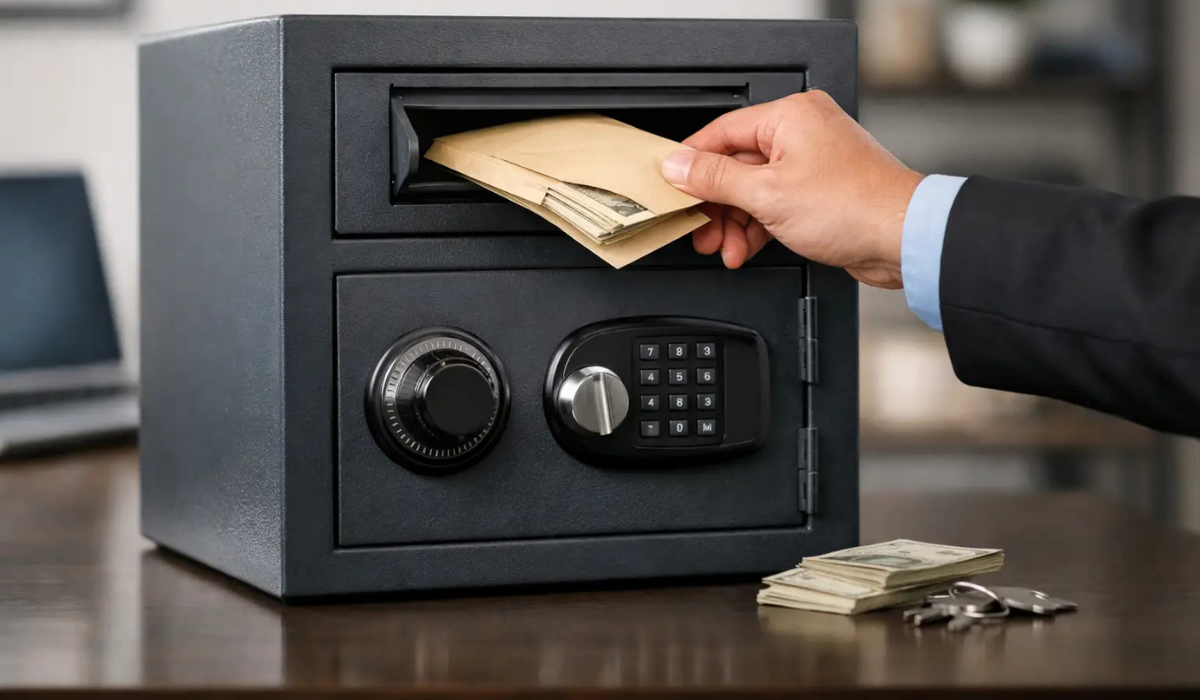
Before the shift begins, decide exactly what goes into the safe and how. Some businesses deposit loose bills through a rotary hopper. Others use cash bags, deposit envelopes, or till boxes. The method matters because not every depository safe handles bulk drops the same way. A front-load rotary hopper is excellent for quick bill drops and harder to fish through, while a mailbox-style drop door may be better for envelopes, receipts, or checks. If your team tries to force oversized deposit bags into a slot that was designed for flat envelopes, you will end up with jams and bad habits.
Once the safe is in use, train employees to make deposits at set thresholds instead of waiting until the register is overloaded. For example, some businesses require a drop once the till exceeds a certain dollar amount. Others use timed drops every hour or at shift changes. Either method can work. The better choice depends on your traffic, average ticket size, staffing level, and whether one person or several people share a register.
The key is consistency. Random deposits are easy to forget and hard to audit later.
What should go into the safe
A depository safe is usually meant for temporary secure storage during the business day, not long-term storage of high-value assets. Cash, checks, credit card batch receipts, money orders, and sealed deposit bags are common. In some operations, pharmacy records, hotel envelopes, or restaurant till resets may also be part of the routine.
That said, not every item belongs in every depository safe. If you need fire protection for paper records, you need to check the safe’s fire rating rather than assuming all safes protect contents from heat. If you are storing larger cash bags overnight, interior capacity and door clearance matter more than many buyers expect. And if this safe is part of a high-risk business environment, burglary ratings, steel thickness, relockers, and lock quality deserve closer attention than the drop feature alone.
Set clear access rules before anyone uses it
The whole point of a depository safe is controlled access. Staff who make drops should not automatically have the code or key to open the main compartment. In many businesses, only the owner, general manager, or a small number of trusted supervisors should be able to retrieve contents.
This is where a lot of cash-handling procedures break down. If everyone knows the combination, the safe becomes little more than a heavy metal box. Limiting opening access creates accountability and reduces the chance of both casual misuse and internal theft.
If your safe uses an electronic lock, assign user codes carefully and change them anytime staffing changes. If it uses dual custody or time delay features, decide whether those functions fit your operation. A time delay can improve security in higher-risk environments, but it may frustrate teams that need fast end-of-day access. It depends on your balance between convenience and control.
Opening and retrieving deposits
Retrieval should happen on a schedule, not just whenever someone remembers. For many businesses, that means at close, during shift handoff, or before a bank run. When the safe is opened, one person should remove contents and another should verify the count if your staffing allows it. That extra step can save a lot of trouble when a deposit total does not match register reports.
Have employees document each drop with the register number, amount if required, date, time, and initials. Some businesses include bag numbers or envelope numbers for a cleaner paper trail. If a deposit is disputed later, that record matters.
Common mistakes when using a depository safe
The biggest mistake is treating the safe like a cure-all. A depository safe reduces risk, but it does not replace sound procedures. If staff leave the main door open during counting, share access codes, or announce cash-drop routines in front of customers, the equipment can only do so much.
Another common issue is choosing the wrong drop style for the business. Restaurants and convenience stores often benefit from rotary hoppers because they support quick, repeated drops. Offices that handle checks and paperwork may prefer a drop slot or mailbox-style design. If the opening does not fit what your team actually deposits, they will work around it, and workarounds usually mean weaker security.
Poor anchoring is another preventable problem. Even a heavy safe should be bolted down when the design allows it. A thief may not have time to attack a safe on site, but removing it entirely is a different risk. Anchoring turns a grab-and-go problem into a much harder job.
Then there is visibility. A depository safe should be convenient for staff, but not placed where customers can watch every deposit. Repeatedly exposing the location and rhythm of your cash drops gives away too much information.
How to train employees to use a depository safe
Training should be short, direct, and repeated. Show employees exactly how to place deposits into the hopper or slot, what to do if a bag catches, and what never to do, such as reaching into the drop opening or leaving deposit envelopes unsealed. If the safe has an anti-fish baffle or rotary mechanism, explain why that feature matters. People tend to follow procedures better when they understand the reason behind them.
Walk through common scenarios. What happens if the register hits the cash limit during a rush? Who makes the drop? Where is the envelope stored before the drop? Who is notified if the lock beeps, jams, or shows a low-battery warning? These are small details until they are not.
It also helps to separate drop access from retrieval authority in your written procedure. Staff should know that making a drop is routine, but opening the safe is restricted. That distinction supports both security and trust.
Choosing the right setup for your business
If you are still evaluating options, think beyond capacity alone. The right depository safe depends on what you deposit, how often you deposit it, and who needs access. A small retail shop with occasional bill drops has different needs than a restaurant closing multiple tills or a hotel receiving envelope drops around the clock.
Look at deposit opening size, lock type, steel construction, anchor holes, and whether the interior layout fits deposit bags or cash trays. If overnight protection is a major concern, pay close attention to burglary features and not just the convenience of the drop door. If records or paper receipts matter, consider whether fire protection should be part of the equation.
At Secure Zoned, this is usually where the right questions make the difference. The best model is not always the biggest one or the cheapest one. It is the one that matches your actual cash-handling routine without creating shortcuts.
A depository safe works best as part of a system
The strongest results come when the safe supports a broader routine: limited till amounts, documented drops, restricted opening access, regular code changes, and consistent end-of-day reconciliation. The safe helps control risk, but your process is what gives it real value.
Used properly, a depository safe does two things at once. It protects cash already collected, and it lowers the amount of exposed cash still sitting at the register. That is good for loss prevention, good for staff safety, and good for running a tighter operation when the day gets busy.
If you want one practical rule to remember, it is this: make deposits easy, make retrieval limited, and make every drop traceable. That is how a depository safe earns its place in your business.