
Rust usually starts quietly - a fingerprint on blued steel, a damp basement corner, a foam case that held moisture longer than expected. By the time you see orange spots, the damage has already begun. If you're wondering how to keep guns from rusting, the answer is less about one magic product and more about a reliable routine: clean metal, controlled humidity, and storage that works with your environment instead of against it.
For most gun owners, rust prevention comes down to managing moisture and residue. Steel, salts from your hands, powder fouling, and humid air are a bad combination. The good news is that preventing corrosion is straightforward once you know where guns are most vulnerable and how your storage setup affects them.
Why guns rust faster than people expect
Firearms are built to handle hard use, but many finishes are more protective than people assume, not invincible. Bluing, parkerizing, and even some coated finishes still need maintenance. Stainless steel helps, but it is rust resistant, not rust proof. Small parts, screws, springs, sights, and edges can still corrode.
The bigger issue is that rust often has less to do with shooting and more to do with storage. A rifle wiped down after range day can still rust if it goes into a soft case in a garage. A handgun carried daily can develop surface corrosion simply from sweat and body oils, especially in hot climates. The finish matters, but storage conditions matter just as much.
How to keep guns from rusting in storage
If your firearm spends more time stored than used, your safe setup matters. The goal is to keep relative humidity in a safe range, generally around 45 to 50 percent. Too much moisture encourages corrosion. Too little can dry out wood stocks over time. This is one of those areas where balance matters.
A quality gun safe helps because it creates a more controlled environment than a closet or case, but a safe alone does not remove moisture. If you live in a humid region, store firearms in a basement, or open the safe often, you should expect to add humidity control.
Use the right dehumidifier for your safe
There are two common options: electric dehumidifiers and desiccants. Electric rods gently raise the temperature inside the safe to reduce condensation. They are low maintenance and work well for larger safes with power access. Desiccant packs absorb moisture and are useful in smaller spaces or where power is not practical, but they need to be recharged or replaced.
Neither option is universally better. An electric rod is easier for long-term use, while desiccants are flexible and affordable. Many gun owners use both, especially in larger safes or humid homes.
Avoid storage materials that trap moisture
One of the most common mistakes is leaving a firearm in a soft case, hard case, or foam-lined box for long-term storage. These materials can hold moisture close to metal surfaces. They are fine for transport, but they are a poor choice for months of storage.
If you use a safe, make sure the interior is clean and dry, and avoid letting gun socks, cases, or other fabric stay damp inside. Silicone-treated gun socks can help protect from dust and light contact, but they should not replace humidity control.
Cleaning is rust prevention, not just appearance
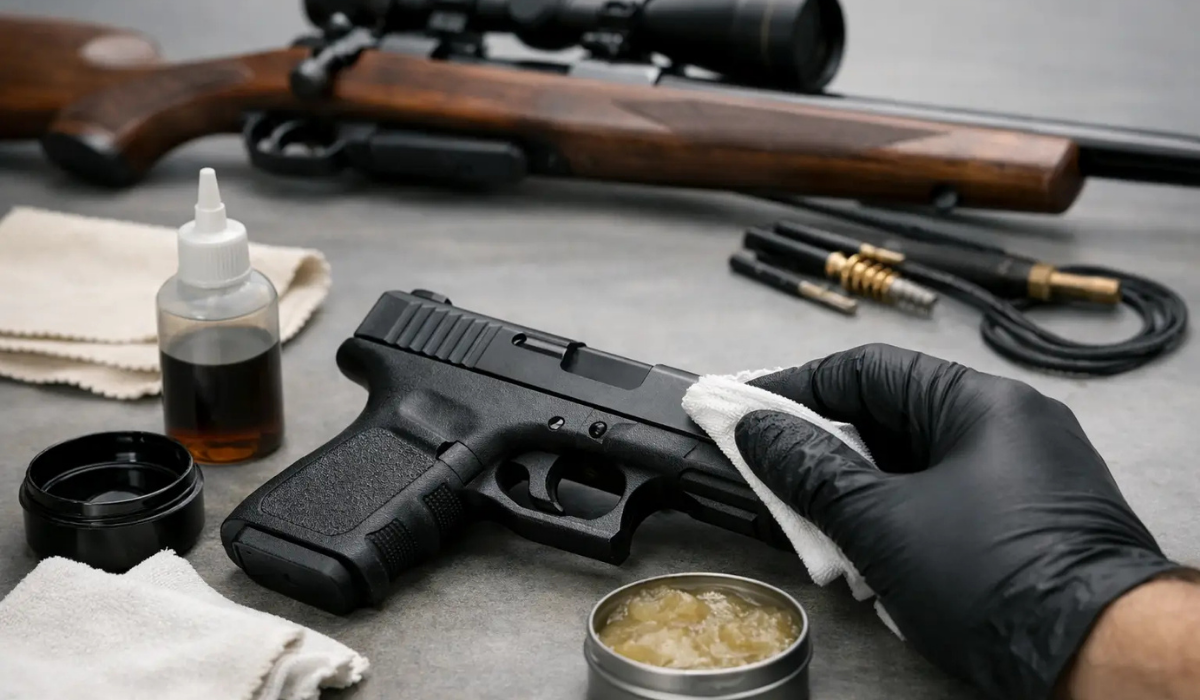
A dirty gun is more vulnerable to rust because fouling and residue attract and hold moisture. After handling or shooting, wipe the metal surfaces down before storage. That simple step prevents a lot of corrosion, especially on blued firearms.
You do not need an elaborate bench routine every time, but you do need consistency. After range use, remove fouling, clean the bore as needed, and lightly protect exposed metal. After daily carry, even if you did not shoot, wipe down the outside of the handgun. Sweat is rough on finishes.
Use a light protective oil, not too much
A thin coat of gun oil or corrosion protectant creates a barrier between steel and humid air. The key word is thin. Over-oiling can attract dust, seep into stocks, and gum up parts over time. On carry guns, excess oil can also migrate where you do not want it.
Focus on exterior metal, especially high-contact areas like slides, frames, barrels, and magazine bodies. For long guns, check around sling studs, sight bases, and muzzle areas where moisture can collect. If a firearm is going into long-term storage, a dedicated rust preventive may make more sense than your everyday lubricant.
Watch the high-risk environments
Some locations make rust far more likely. Basements, garages, lake houses, coastal homes, and any room with poor climate control can challenge even a well-maintained firearm. If that is your environment, the usual advice to "just keep it oiled" is not enough.
A garage safe, for example, may face large temperature swings that create condensation. A basement can stay damp even when it feels cool. In those spaces, a heavier-duty rust prevention plan is worth it: sealed safe, active dehumidification, regular humidity checks, and more frequent inspections.
This is where safe selection matters too. A well-built gun safe with good door seals, solid steel construction, and enough interior space for airflow gives you a better foundation than cramped storage. If you are protecting multiple firearms, optics, documents, or valuables in one place, the right setup does more than organize - it reduces avoidable exposure to moisture.
Don’t overlook your hands, holsters, and cases
A lot of surface rust starts between cleanings. Handling a firearm with bare hands leaves behind salts and oils. That is normal, but it means your maintenance interval should match your use. If you frequently handle a collectible rifle or carry the same pistol every day, wipe-downs should be part of the routine, not an occasional fix.
Holsters matter too. Leather can hold moisture against metal, and some synthetic holsters trap sweat and lint in ways owners do not notice until they see wear or corrosion. If a carry pistol comes off at the end of the day, inspect it before it goes back into storage.
Cases deserve the same caution. They protect during travel, but for long-term storage they often create the exact stale, enclosed environment rust likes. Once you get home, take the firearm out, let it acclimate if needed, wipe it down, and store it properly.
Check problem spots before rust spreads
Rust rarely shows up everywhere at once. It starts in places owners miss: under grips, around screws, inside the trigger guard, along the muzzle, under optics mounts, and on magazine springs or baseplates. Wood-to-metal contact points can also hide moisture.
A quick monthly inspection is usually enough for most safes in controlled indoor spaces. In humid conditions, every couple of weeks may be smarter. You are not looking for a full teardown every time. You are looking for early warning signs - dull orange haze, discoloration, pitting, or roughness where the finish used to feel smooth.
If you catch surface rust early, it is much easier to address without lasting damage. If corrosion has already pitted the metal, the fix becomes more involved and often more expensive.
Long-term storage takes a different approach
If a firearm will sit for months, treat it differently than one you shoot every weekend. Clean it thoroughly, apply an appropriate protective film, confirm the safe's humidity control is working, and avoid storing it in any case or packaging that traps moisture.
For collectible or heirloom firearms, that extra care matters even more. Rust is not only a maintenance issue - it affects value, appearance, and in some cases function. The same goes for spare magazines and accessories. They need protection too, especially if they are stored loaded or tucked into corners of a safe where air does not move much.
If you own several firearms, organization helps. Crowding guns tightly together can limit airflow and increase contact wear. A safe with enough room for proper spacing, shelves, and accessory storage makes rust prevention easier because you can actually see and inspect what you own.
The best rust prevention plan is the one you’ll keep doing
There is no shortage of oils, socks, desiccants, and coatings on the market. Some work better than others, but the biggest difference usually comes from habit. A decent protectant used regularly beats a perfect product used once and forgotten.
For most owners, a practical plan looks like this: wipe firearms down after handling, clean them after use, store them in a dry safe instead of a case, control humidity inside the safe, and inspect them on a schedule that matches your climate. If you live somewhere humid, or your safe is in a tougher environment, step up your dehumidification and check more often.
That is the real answer to how to keep guns from rusting. Build a storage system that protects your investment, supports safe ownership, and gives moisture fewer chances to win. A firearm you count on - whether for defense, sport, or collection value - deserves that level of care.
Protecting firearms is rarely about one dramatic fix. It is usually a series of smart, quiet decisions that keep small problems from becoming permanent ones.