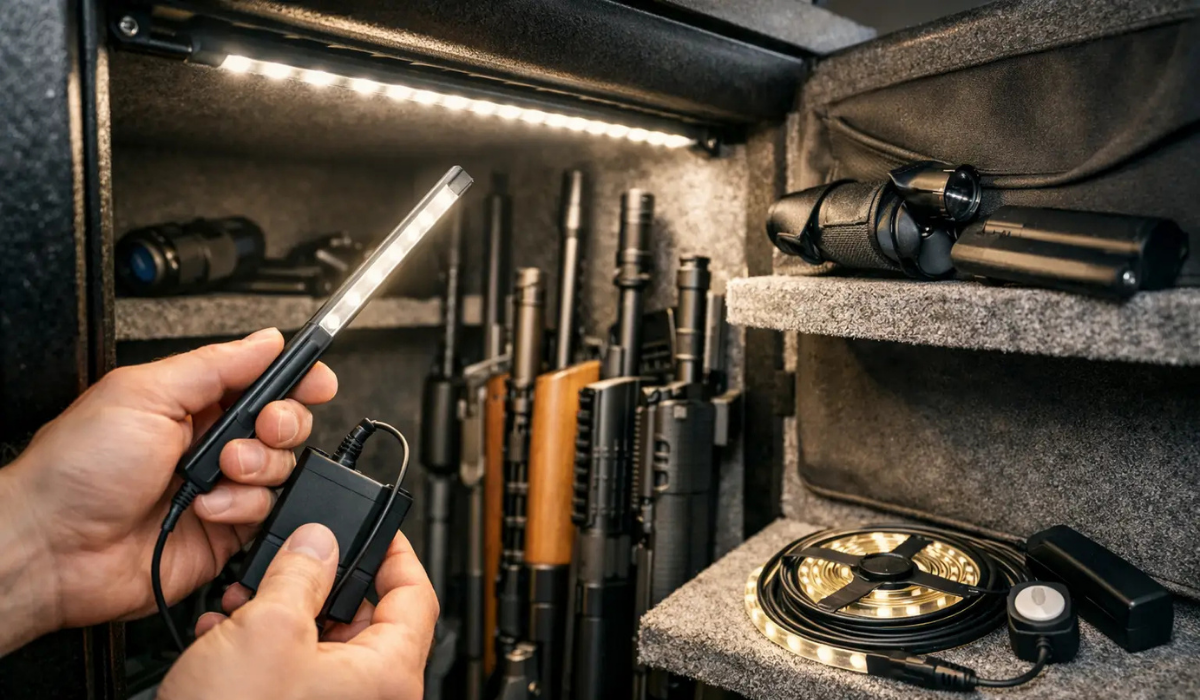
Open a packed gun safe in a dim room and the problem shows up fast. You know the item is in there, but the shelf shadows, barrel shadows, and dark corners turn a simple grab into a frustrating search. A good gun safe interior lighting kit fixes that, but not every kit fits every safe, and brightness alone does not tell you much.
If you are shopping for one, the right choice usually comes down to four things: the size and layout of your safe, how you access it, the type of power you want, and whether you care more about visibility, convenience, or a clean install. Lighting is a small upgrade, but it has a real effect on how usable your safe feels every day.
What a gun safe interior lighting kit should actually do
The best lighting kits are not just there to make the interior look better. They help you identify firearms, documents, handguns, magazines, jewelry boxes, and shelf contents quickly without moving things around. That matters for convenience, but it also matters for safe handling. If you are reaching into a crowded safe, better visibility helps reduce fumbling and unnecessary shifting of stored items.
A solid kit should spread light evenly, not create one harsh hotspot in the center. It should also fit around shelves, barrel racks, door organizers, and interior corners without peeling off or getting in the way. In other words, a kit that looks bright on paper can still be a poor fit if your safe has a more complex interior.
This is where buyer expectations matter. If you have a smaller safe with a simple open cavity, a basic strip light may be enough. If you have a larger gun safe with multiple long-gun slots, upper shelves, and a door panel organizer, you will usually want more coverage and better placement flexibility.
Start with your safe’s interior layout
Before comparing light kits, look at the inside of your safe the same way you would evaluate shelving or door storage. Width and height matter, but so does where the shadows fall.
A tall gun safe often needs vertical lighting along both sides so the lower section and back wall stay visible. A wider safe with adjustable shelving may do better with a combination of side strips and a top strip. If your safe has carpeted or upholstered interior panels, that can also affect how adhesive-backed lights hold over time.
Door organizers change the equation too. They improve storage, but they can block overhead light from reaching the main compartment. In that setup, side-mounted lighting usually performs better than relying on a single light at the top.
This is why there is no one-size-fits-all answer. A compact handgun safe, a 24-gun safe, and a large collector safe all need different lighting coverage. The more customized your interior, the more important flexible strip placement becomes.
Wired vs. battery-powered kits
One of the first choices is power source. Both options can work well, but each has trade-offs.
Battery-powered kits are easier to install and usually appeal to buyers who want a quick upgrade without routing cords. They are especially practical if your safe is placed where outlet access is limited. The downside is maintenance. Batteries eventually die, and that tends to happen at the worst time - when you open the safe and expect everything to be visible.
Wired kits are usually better for consistent long-term use. If your safe location allows clean power access, they can provide more dependable lighting with less upkeep. They also make more sense for larger safes that need multiple light strips or brighter output. The trade-off is installation. You need to think through cord routing, outlet proximity, and how clean you want the finished setup to look.
For many buyers, the real question is not which is better overall, but which is better for where the safe sits. If your safe is in a garage, closet, office, or dedicated gun room with nearby power, wired may be the better long-term choice. If the safe is tucked into a location where cord management is a hassle, battery power may be worth the convenience.
Motion sensor, door activation, or manual switch?
How the lights turn on matters more than people expect. Manual switches are simple and reliable, but they are one extra step every time you open the safe. That may not bother you if access is occasional. If you use the safe regularly, it can get old fast.
Motion-sensor and door-activated systems are more convenient because the lights come on automatically when you open the door or reach inside. For a home gun safe, that often feels like the most natural setup. You open the safe, everything is visible, and you do not have to think about it.
Still, convenience can come with a few quirks. Some motion sensors are too sensitive, while others do not trigger consistently depending on placement. Door-activated systems can be cleaner in use, but they depend on proper alignment. If your safe interior is tightly packed or has added accessories, make sure the sensor or activation point will still work as intended.
Brightness and color temperature matter
More brightness is not always better. A very bright light in a reflective or light-colored interior can create glare, especially on metal finishes, optics, and packaged valuables. What you really want is enough output to clearly identify contents at every level of the safe.
Color temperature also affects visibility. A cool white light tends to make details easier to see and usually works well in gun safes, especially for black firearms or dark interior fabrics. Warmer light can feel softer, but it may not provide the same contrast in deeper compartments.
This is one of those areas where practical use beats marketing language. A kit should help you distinguish items quickly, read labels, and see into corners. If it looks impressive in photos but leaves lower shelves dim, it is not doing the job.
Installation quality makes a big difference
A gun safe interior lighting kit can have solid components and still disappoint if it does not stay mounted. Adhesive strength matters, especially in safes with fabric-lined interiors, textured surfaces, or temperature swings in garages and utility spaces.
Look closely at how the lights attach and whether the kit gives you enough mounting flexibility. Corner connectors, extra clips, or alternative mounting options can make the difference between a clean install and a setup that starts sagging after a few months.
Cable management matters too. Loose wires inside a safe are annoying at best. At worst, they get caught on rifles, shelves, or stored gear. The goal is a lighting system that feels integrated, not like an afterthought.
Don’t ignore safe size and use frequency
A casual user with a modest-capacity safe may be perfectly happy with a basic light strip and a simple switch. Someone who opens a larger safe often, rotates firearms, stores documents, or uses door panel storage heavily will usually notice the limits of a bare-bones kit much faster.
That is why the best buying decision depends on how you use the safe, not just what size it is. If the safe stores one defensive handgun and a few documents, your needs are different from a collector organizing long guns, ammo, optics, paperwork, and valuables across multiple shelves.
Frequent access tends to justify better activation, better coverage, and better power reliability. Occasional access gives you more room to prioritize easy installation or lower cost.
When a light kit is worth the upgrade
Not every safe accessory is essential. Lighting is one of the upgrades that often proves its value once it is installed. It improves access, helps you keep contents organized, and makes the safe easier to use as storage grows more complex.
It is especially worthwhile if you already invested in a quality safe with features like fire protection, reinforced steel construction, or organized shelving. Once you are protecting firearms and valuables properly, it makes sense to make the interior easier to use without compromising space.
For buyers comparing safes and accessories, this is also a reminder that the interior experience matters. Capacity, lock type, fire rating, and steel thickness should come first, but everyday usability should not be ignored. A safe that protects well but is frustrating to access can still leave you dissatisfied.
What to keep in mind before you buy
The right kit should match your safe, not just your budget. Measure the interior, think about where shadows fall, and decide whether you want the simplicity of battery power or the consistency of wired power. Pay attention to how the lights activate, how they mount, and whether the brightness is practical for the items you store.
If you are already comparing safe accessories or looking at a new gun safe setup, it helps to treat lighting the same way you would any other feature - as part of how the safe performs in real life, not just how it looks in a product photo. When you can open the door and see exactly what you need without guesswork, that small upgrade starts feeling like money well spent.
A good safe protects what matters most. Good lighting makes sure you can actually use that protection without fighting the dark every time you open the door.