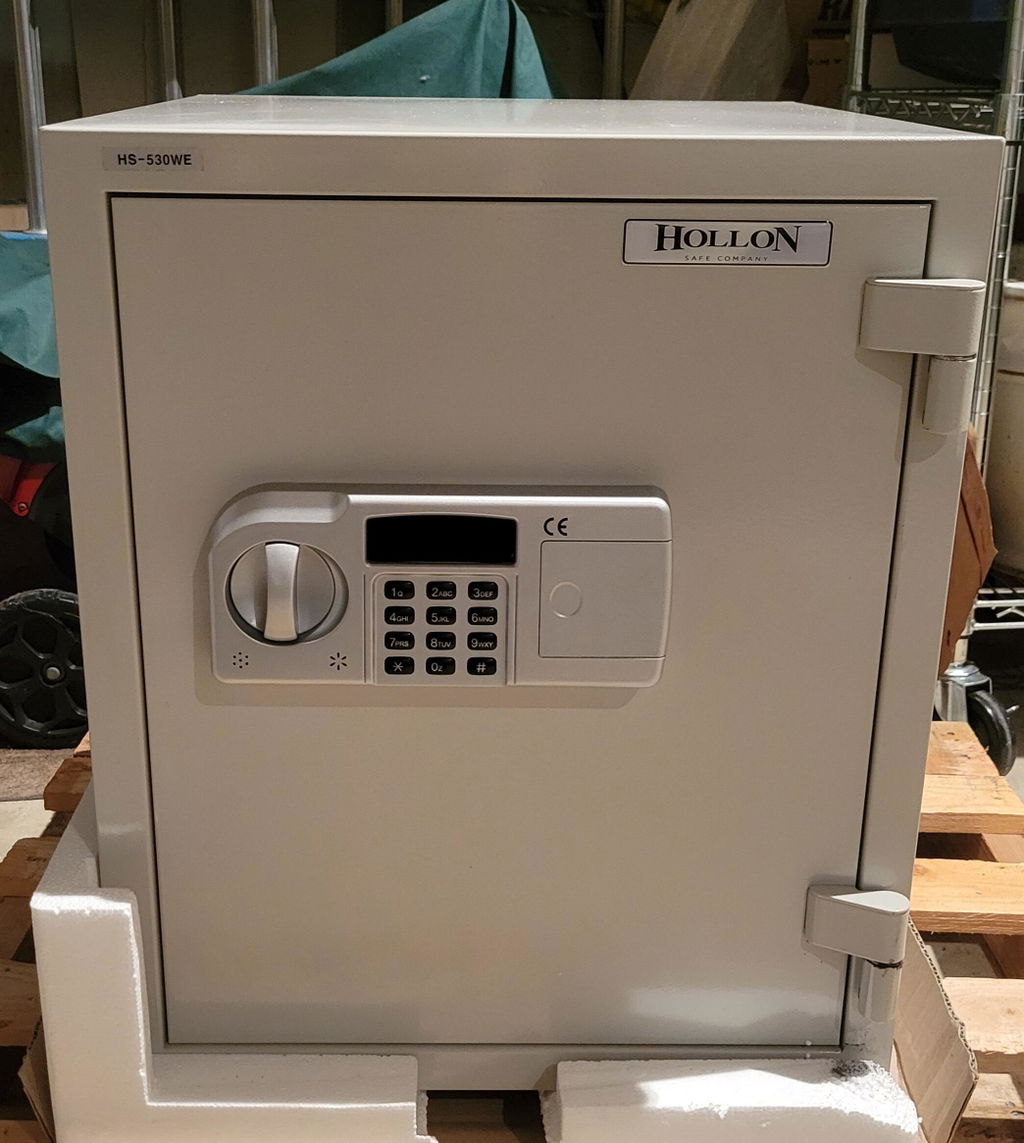
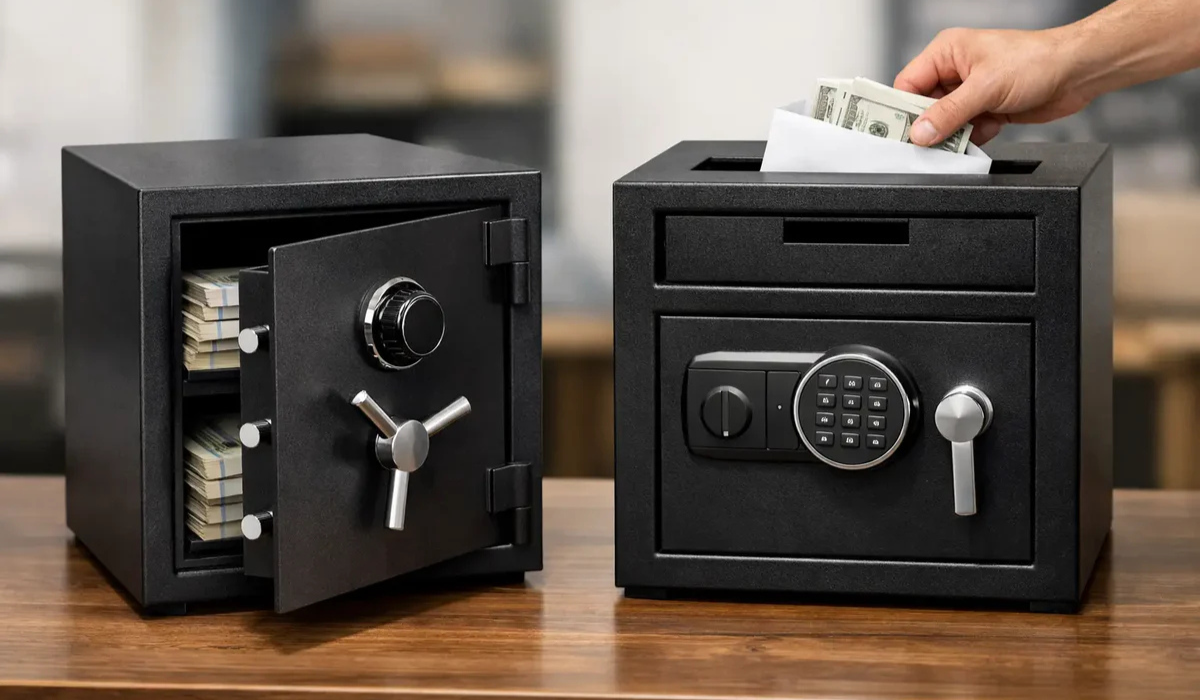
If your staff handles cash at a register, front desk, or back office, the deposit safe vs drop safe question is not academic. It affects shrink, internal access, cash pickup routines, and how much exposure you create every time money changes hands.
The confusion usually starts because the two terms are often used interchangeably. In casual buying conversations, that happens all the time. But in practice, there can be meaningful differences in how the safe is used, who can access it, and what level of control it gives a business trying to secure bills, checks, envelopes, or till drops during the day.
Deposit safe vs drop safe: the core difference
A drop safe is built for one-way deposits. A user inserts cash, checks, or an envelope through a slot, hopper, or rotary drop, and the contents fall into a secured compartment below. The person making the drop usually cannot retrieve what was deposited.
A deposit safe is a broader category. It may include a drop feature, but the term often refers to any safe designed to accept routine cash deposits while restricting who can open the main compartment. In other words, many drop safes are deposit safes, but not every deposit safe is defined only by a basic drop-slot design.
That distinction matters when you are choosing for a specific workflow. If your goal is simple and strict - let employees make deposits without giving them access to stored cash - a true drop safe is often the cleaner solution. If you need a more flexible cash-management setup with compartments, till storage, or scheduled access by managers, a deposit safe may be the better fit.
When a drop safe makes more sense
Drop safes are common in retail, restaurants, convenience stores, and hospitality settings where multiple employees handle cash during a shift. The main benefit is control. Staff can move excess cash out of the drawer quickly without being able to reopen the safe and remove it later.
That reduces temptation and limits opportunity. It also shortens the window where larger amounts of cash sit exposed at the point of sale. For many businesses, that is the whole point. A safe does not just protect after hours. It changes cash-handling behavior during business hours, when most losses actually occur.
A drop safe also helps when shift roles are divided. Cashiers and clerks make drops. Supervisors, owners, or armored pickup personnel handle opening the compartment. That separation is useful for audit trails and accountability, especially in locations with frequent till balancing or several employees sharing the same register area.
The trade-off is flexibility. A basic drop safe may not give you much room to organize deposits by day, drawer, or employee unless you use envelopes or bags and good internal procedures. If the operation is more complex than simple till drops, you may outgrow a basic model quickly.
When a deposit safe is the better choice
Deposit safes are often the stronger option when your business needs more than a one-way slot. Some models include front-loading deposit doors, lockers, inner compartments, or b-rated style construction intended for commercial cash handling. Others support larger deposit bags, stacked envelopes, or media drops in operations where paperwork matters as much as currency.
This is where the broader deposit safe category becomes useful. A manager may need to store till funds, daily bank bags, checks, and receipts in one unit while still limiting employee access. In pharmacies, offices, hotels, and service businesses, that layered use case is common. The safe is not just a trap door for bills. It is part of a routine for securing operational assets until reconciliation or pickup.
Another advantage is capacity. A small under-counter drop safe may be enough for a single busy register, but it may fall short for multi-shift businesses that need to hold repeated deposits before they are removed. Deposit safes with larger bodies, anti-fish mechanisms, and commercial-grade lock options can support a more demanding workflow.
Security features that matter more than the label
It is easy to get stuck on names, but the label on the product is not the whole story. In real buying decisions, the better question is what security problem the safe is solving.
If internal theft is the main concern, focus on one-way deposit design, anti-fish protection, controlled opening access, and clear separation between depositors and keyholders or code holders. A hopper or rotary drop can be better than an open slot in some settings because it makes fishing attacks harder.
If burglary resistance is the bigger concern, pay attention to steel thickness, door construction, lock quality, relockers, hardplate protection, and whether the unit is designed to be anchored properly. A drop slot alone does not make a safe secure. A poorly built body with a decent slot is still a weak point in the room.
Lock choice also matters. Electronic locks are popular in business settings because they are fast and easier to manage across authorized users. Dial locks remain a good fit for some buyers who want mechanical reliability and fewer electronic components. There is no universal winner. It depends on who needs access, how often the safe is opened, and how tightly you want to control code changes.
Installation changes the outcome
A strong safe that is not anchored correctly can still become a problem. That is especially true for smaller deposit and drop safes used under counters, in back offices, or near checkout areas. If a unit can be tipped, pried, or carried out, you are relying too much on the lock and not enough on the installation.
Placement should support the cash routine, not fight it. Employees need to be able to make quick drops without creating a spectacle for customers or telegraphing cash movement to anyone watching the floor. At the same time, the safe should not be so exposed that it becomes an obvious attack point.
This is where practical buying guidance matters. The right model is not just about exterior dimensions or price. It is about deposit opening style, body size, mounting options, and whether the location can support proper anchoring to concrete or another secure surface.
Choosing by business type
For a small retail store with one or two drawers, a compact drop safe is often enough. The priority is frequent cash drops, simple controls, and less cash in the register.
For restaurants, bars, or quick-service operations, a deposit safe with more capacity may be the better choice because bills, envelopes, and shift-specific drops can add up quickly. If several managers need controlled access while line staff only need deposit access, the design becomes more important than the product name.
For hotels, offices, medical practices, and service counters, checks and paperwork may be part of the daily deposit routine. In that case, opening size and internal storage become more important. A narrow slot built only for folded cash may create unnecessary friction.
For higher-risk environments, it may make sense to step up beyond an entry-level cash drop unit and look at heavier commercial safes with stronger burglary protection. The more cash held on site, the less sense it makes to shop by price alone.
How to make the right call
If you are comparing deposit safe vs drop safe options, start with your actual cash flow. Who makes deposits? How often? What gets deposited besides bills? Who opens the safe, and how often should that happen?
Then match the safe to that routine. If employees only need to put money in and never take it out, a drop safe is usually the most direct answer. If your operation requires larger deposits, more storage flexibility, or support for multiple asset types, a deposit safe will usually serve you better.
Also think about growth. Many businesses buy for current volume and ignore what happens during peak season, weekend traffic, or staffing changes. A safe that feels adequate in a slow month can become a bottleneck fast when deposits increase and access controls get sloppy under pressure.
At Secure Zoned, that is usually the turning point in the conversation. Buyers come in asking about a label, but the right answer comes from the use case, the risk level, and the way the safe will actually be used every day.
The best choice is the one that quietly tightens your routine, limits access where it should, and protects cash before a problem gives you a reason to fix it.