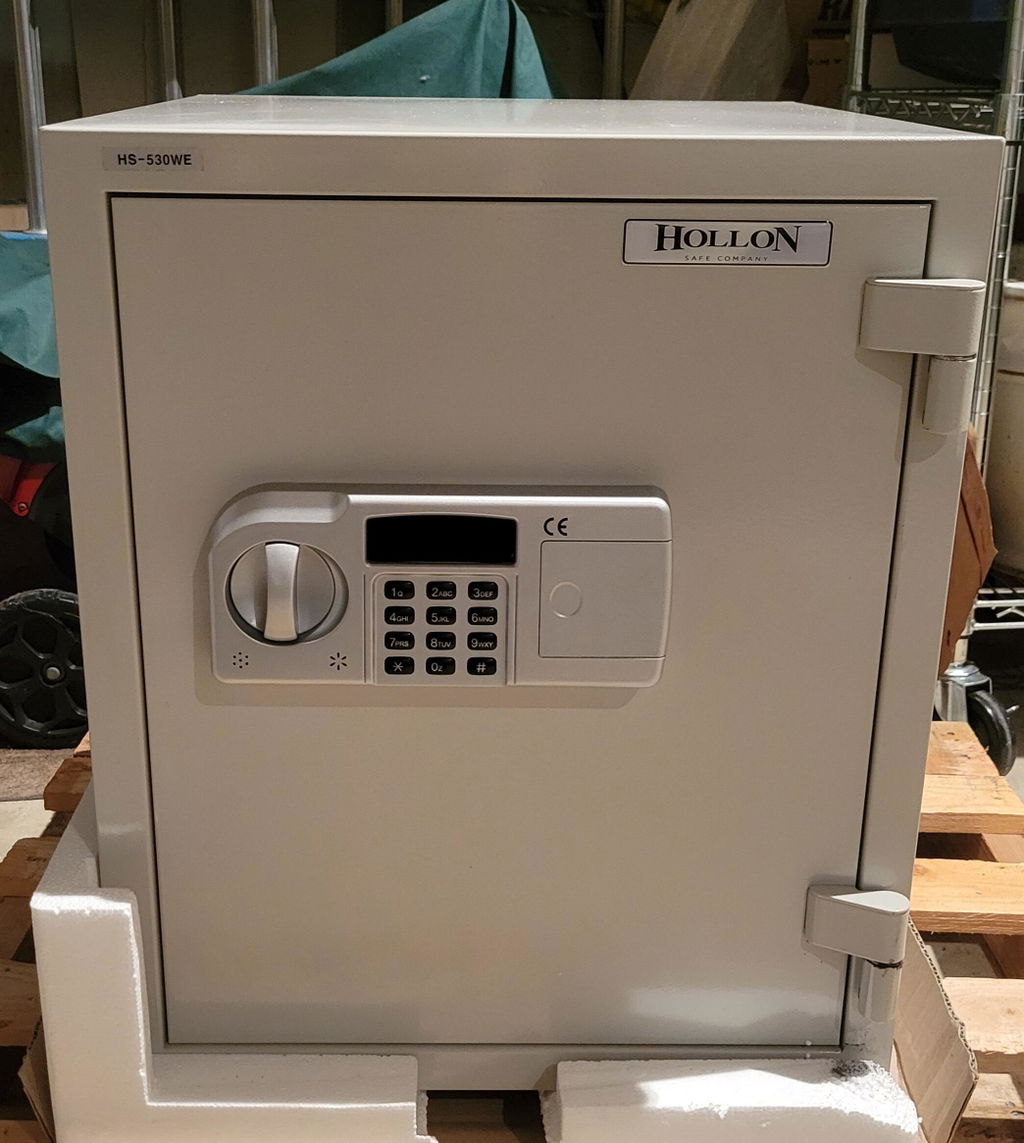
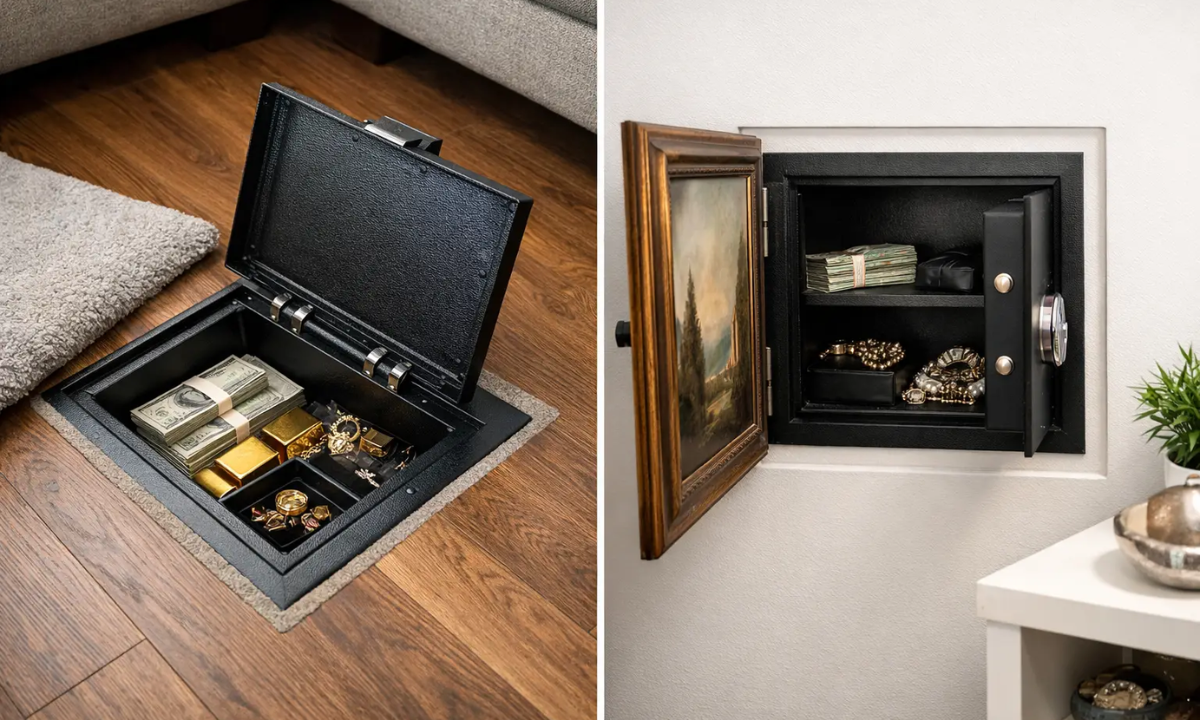
A floor safe versus wall safe decision usually comes down to one practical question: where can a thief find, remove, or attack it most easily? Both options can provide discreet protection for cash, jewelry, passports, handguns, and important documents. But they work very differently once installation, fire exposure, usable capacity, and daily access enter the picture.
A safe is only as effective as its construction and installation allow. A well-made wall safe hidden behind furniture may be a smart choice for documents and smaller valuables. A properly installed floor safe set in concrete can offer a stronger defense against removal. The right answer depends on what you are protecting, the structure of your home, and how often you need access.
Floor Safe Versus Wall Safe: The Core Difference
A floor safe is recessed into a concrete slab or secured within a floor opening. Its door sits flush or nearly flush with the finished floor, allowing it to be concealed beneath a rug, furniture, or flooring cover. Once installed correctly, the surrounding concrete adds significant resistance to prying and removal.
A wall safe is installed between wall studs, commonly behind a framed picture, mirror, cabinet, or closet shelving. It is easier to reach at standing height and can be an excellent concealment option. Its dimensions, however, are constrained by stud spacing and wall depth. Most residential walls simply cannot accommodate a large, deep safe without major construction.
Neither style is automatically better in every situation. A thin imported floor safe with a basic lock is not more secure than a heavy-gauge, well-mounted wall safe from a trusted manufacturer. Look beyond the location and compare steel thickness, door construction, lock quality, boltwork, anti-pry features, fire rating, and mounting method.
When a Floor Safe Makes More Sense
Floor safes are often chosen for their resistance to theft by removal. A freestanding safe can sometimes be tipped, carried out, or attacked in a more convenient location if it is not anchored. A floor safe that is properly embedded in concrete is far harder to move. The concrete enclosure also limits access to the sides and body of the safe, leaving the door as the primary attack point.
This makes a floor safe a strong option for high-value jewelry, cash reserves, collectibles, spare keys, and documents that do not need constant access. It can also work for a handgun if you select a model designed for that purpose and place it where responsible access is realistic. For a bedside defensive firearm, though, a recessed floor safe under a rug is usually less practical than a purpose-built quick-access handgun safe.
Floor safes do have meaningful trade-offs. Installation is more involved than mounting a unit between studs. Cutting a concrete slab requires planning, the right tools, and often a professional installer. You also need to account for plumbing, electrical lines, radiant heating, post-tension cables, and the structural implications of modifying a slab. Never assume an area is clear without verifying it first.
Moisture deserves special attention. Concrete and below-grade environments can introduce humidity, condensation, or water exposure. Use desiccant, a dehumidifier solution rated for safes, and sealed document containers where appropriate. If you are protecting paper records, confirm whether the safe has a tested fire rating and understand what that rating covers. Concrete around the body can help with burglary resistance, but it does not replace a manufacturer-tested fire rating.
Floor safes also tend to offer limited interior space. Their depth may be useful, but their footprint is usually compact. They are not the natural choice for long guns, large binders, bulky collections, or a substantial coin inventory. If you need more capacity and higher burglary protection, a heavy fire and burglary safe or a TL-rated safe may be the better category.
When a Wall Safe Is the Better Fit
A wall safe is appealing because it is accessible and easy to conceal. It can be installed at a comfortable height in a primary bedroom closet, home office, hallway, or private work area. For passports, legal documents, watches, small electronics, jewelry, and personal records, that convenience matters. A safe you can access without moving furniture or kneeling on the floor is more likely to be used consistently.
Wall safes also avoid slab-cutting work. In many homes, installation involves locating studs, opening drywall, framing the opening as needed, fastening the safe securely, and finishing the surrounding wall. That said, "easier" does not mean simple. The safe must be mounted according to the manufacturer’s instructions, and the wall location must not interfere with wiring, pipes, HVAC ducts, or structural components.
The biggest limitation is depth. Standard residential walls are commonly built with 2-by-4 studs, leaving only a few inches of usable depth after drywall and installation clearance. A wall safe can be wide enough for jewelry trays or documents, but it will not hold the same volume as a deep floor safe or a freestanding home safe.
Wall safes can also be more vulnerable to certain forms of attack if their location is discovered. The surrounding wall is not equivalent to concrete, and an intruder may be able to cut around the unit or apply leverage depending on the construction and installation. Concealment is therefore a major part of the security strategy. Placing a wall safe behind a picture is helpful, but choose a location that is not obvious and avoid leaving visible clues such as an unusually placed frame or a closet wall with unexplained hardware.
Compare Security, Fire Protection, and Daily Use
For burglary resistance, a quality floor safe installed in concrete usually has the advantage. It is difficult to remove, difficult to attack from the sides, and naturally concealed. The door and lock still matter greatly. Look for solid boltwork, a hardplate protecting the lock area, relocking devices where available, and a dependable electronic or mechanical lock.
For convenience, wall safes generally win. They provide quick standing-height access and can be placed close to where valuables are used or stored. This is valuable for homeowners who need frequent access to documents or jewelry, as well as small offices that need controlled access to records or keys. A wall safe is not a substitute for a commercial depository safe when employees regularly handle cash deposits.
Fire protection depends on the specific safe, not whether it is in a wall or floor. Many recessed safes offer little or no independently tested fire protection because their compact designs prioritize concealment. If protecting irreplaceable papers is a priority, verify the stated fire rating, temperature, duration, and test standard. For digital media, remember that hard drives, flash media, and backup devices may require more specialized protection than paper documents.
For water exposure, both styles require careful placement. Floor safes can be at risk in homes with basement flooding or slab moisture, while wall safes may be affected by plumbing leaks or fire-suppression water. Keep documents in water-resistant pouches or containers inside the safe, and do not place any safe directly below known plumbing routes.
How to Choose the Right Safe for Your Property
Start with what you need to secure and how quickly you need to reach it. A small collection of passports, heirloom jewelry, and emergency cash may fit well in a concealed wall safe. Higher-value items that do not require daily access may benefit from a floor safe installed in concrete. If the contents are firearms, consider the firearm type, responsible access needs, local requirements, and whether a quick-access handgun safe or full-size gun safe is more appropriate.
Next, inspect the installation environment. Homes on a slab may have a possible floor-safe location, but only after checking for utilities and structural concerns. Homes with suitable interior walls may support a wall safe, but exterior walls, shared walls, and walls containing plumbing or electrical equipment can complicate the project. A qualified installer can help assess the location before you buy.
Finally, match the safe’s construction to the value and risk level of its contents. A basic concealed safe may deter casual theft, while higher-value assets call for thicker steel, better locking components, stronger anchoring, and potentially a burglary-rated safe. For substantial cash, precious metals, or highly valuable collections, moving up to a heavier burglary-rated or TL-rated safe is often a more meaningful security upgrade than choosing between wall and floor installation alone.
The best safe is the one that fits your space, protects the contents at the level they deserve, and can be installed correctly. Choose the location with the same care you give the lock and steel, because a smart installation turns a good safe into a far more dependable layer of protection.