
A spotless rifle can still come out of storage with light surface rust if the air inside the safe stays damp long enough. That catches a lot of gun owners off guard. The safe feels sealed and protected, but trapped moisture is still moisture.
That is where a gun safe dehumidifier rod earns its place. It is not a flashy accessory, and it does not change your safe's burglary rating or fire rating. What it does is much more practical - it helps maintain a drier interior environment so firearms, optics, documents, and other stored valuables are less exposed to condensation and corrosion.
What a gun safe dehumidifier rod actually does
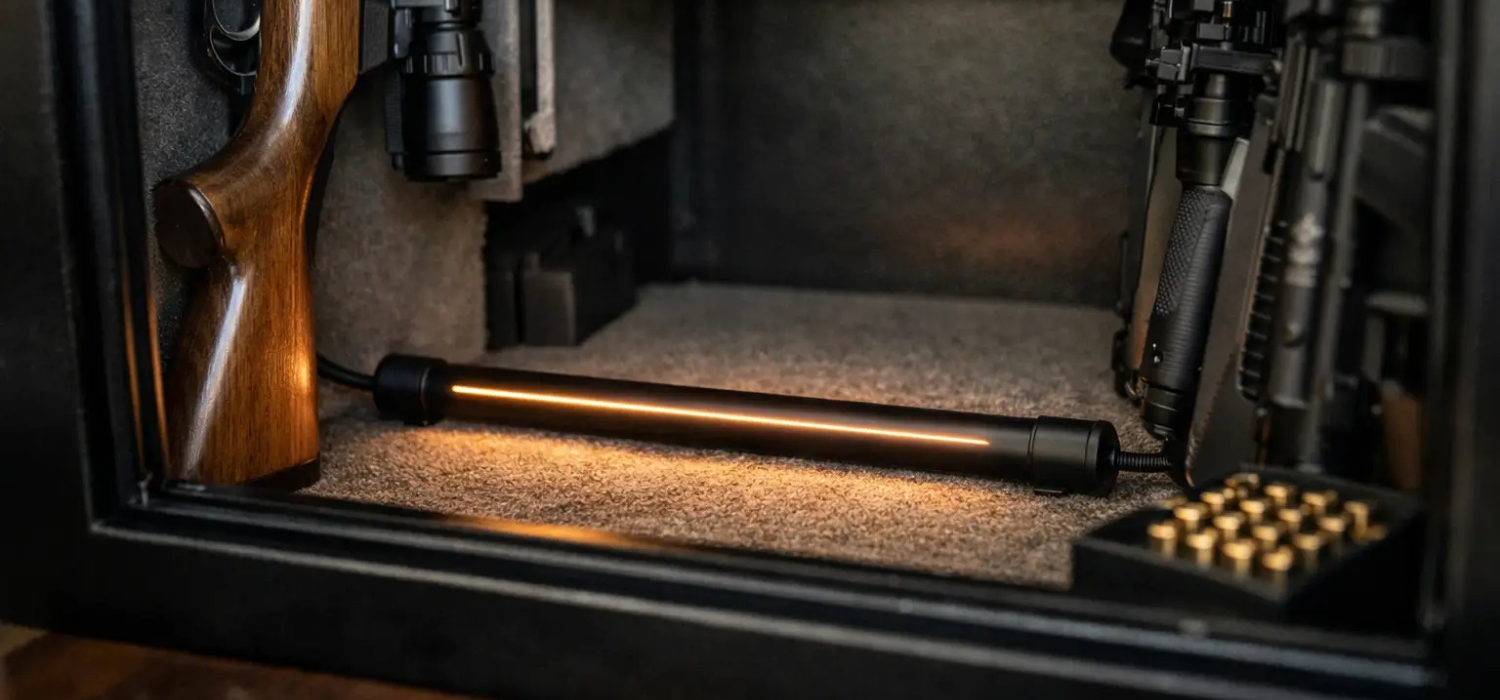
A gun safe dehumidifier rod is a low-heat electric device installed near the bottom of the safe. It gently warms the air inside the enclosure, which helps create circulation and reduces the conditions that allow moisture to settle on metal surfaces.
That point matters because a rod does not remove water the same way a compressor-based room dehumidifier does. It works by raising the interior temperature slightly above the surrounding air. When air moves and stays a bit warmer, condensation is less likely to form on guns, magazines, and metal components.
For many gun safes, that is enough. If your safe is in a garage, basement, utility room, or another area with seasonal humidity swings, a dehumidifier rod can be one of the simplest ways to improve storage conditions without adding ongoing maintenance.
Why moisture is a bigger threat than many buyers expect
Most shoppers focus first on steel thickness, lock type, pry resistance, fire protection, and anchoring. They should. Those are core security features. But once firearms are inside the safe, the daily threat often becomes environmental, not forced entry.
Humidity affects more than blued steel. It can impact optics, paperwork, wood stocks, ammunition packaging, and small metal accessories. Even stainless firearms are not immune if moisture exposure is repeated over time. In a tightly enclosed safe, stale humid air can linger longer than people expect, especially if the safe is opened infrequently.
This is why interior moisture control should be treated as part of the overall protection plan, not as an afterthought. A quality safe protects against theft and fire. A dehumidifier rod helps protect condition.
When a gun safe dehumidifier rod makes the most sense
A rod is usually the right fit when you want steady, low-maintenance protection. It is especially useful for larger gun safes, safes placed in damp parts of the home, and collections that stay stored for long periods.
If your safe sits in a climate-controlled room year-round, your moisture risk may be lower. Even then, short-term humidity spikes can still happen during summer months, storms, or HVAC changes. In those cases, a rod can still provide a worthwhile layer of protection, but the urgency is lower than it would be in a garage or basement setup.
For owners storing heirloom firearms, high-end optics, collectible revolvers, suppressor-ready platforms, or important paper records alongside firearms, the case gets stronger. Corrosion prevention is cheaper than refinishing, replacement, or repair.
Rods vs desiccant packs
Some buyers assume all safe dehumidifiers do the same job. They do not.
Desiccant products absorb moisture. They can work well in smaller spaces and are useful when you do not have convenient access to power. The trade-off is maintenance. They eventually saturate and need to be recharged or replaced. If you forget about them, their protection drops off.
A gun safe dehumidifier rod is different. It uses constant low heat and generally requires less attention once installed. That makes it appealing for long-term storage and for people who want a set-it-and-monitor-it solution.
There are situations where both make sense. In a very humid location, a rod can handle daily circulation while a desiccant unit helps absorb excess moisture during peak seasons. It depends on the safe's location, how often it is opened, and how sensitive the contents are.
Choosing the right size and setup
The most common mistake is treating all rods as interchangeable. Safe size matters. Interior volume matters. Placement matters too.
A small rod in a large rifle safe may not provide enough circulation to make a meaningful difference. On the other hand, oversizing is usually less of a problem than undersizing, provided the product is designed for safe use and fits the interior properly. Many gun safe owners do well by choosing a rod length based on the manufacturer guidance for cubic footage or safe dimensions.
You also need a path for the power cord. Many safes include a factory pass-through or power access port. If yours does, installation is straightforward. If not, you should not compromise the safe body by drilling without checking manufacturer guidance first. That can affect fire lining, warranty coverage, or structural integrity.
Placement is usually near the bottom interior because warm air rises. As the rod warms the lower portion of the safe, air circulation improves throughout the compartment. Keep it clear of soft items that could block airflow, and make sure long guns, shelves, or organizers do not press directly against it.
What a dehumidifier rod will not fix
This is where realistic expectations matter.
A rod helps control interior moisture conditions, but it will not rescue a bad storage environment by itself. If your safe sits on bare concrete in a damp garage with major temperature swings, or if the door seal is compromised, moisture problems may continue. The rod can help, but it is not a cure-all.
It also does not replace basic firearm care. Guns should still be clean, lightly protected with the appropriate oil or protectant, and stored dry. Putting a wet firearm in a safe and expecting a rod to solve the problem is asking too much from the accessory.
And if your area has extreme humidity, active water intrusion, or flood risk, the bigger conversation should include safe placement, room conditions, and broader environmental control. Accessories work best when the overall setup is sound.
Installation and day-to-day use
Once installed, a dehumidifier rod is one of the easier safe accessories to live with. There are no tanks to empty and usually no settings to adjust. You plug it in, confirm proper placement, and let it operate continuously.
That said, you should still check your safe interior periodically. Look for any signs of surface rust, musty odor, damp paperwork, or condensation on metal surfaces. Those clues tell you whether your current setup is working or whether you need more moisture control.
If your safe includes door organizers, pistol racks, or interior lighting, take a minute to make sure cords are routed cleanly and do not interfere with the door seal. Small details matter in a closed storage environment.
Is it worth adding one to a new safe?
For many buyers, yes.
Compared with the cost of the safe itself, a gun safe dehumidifier rod is usually a modest add-on. Yet it protects the condition of what is inside the safe every day. That makes it easier to justify than accessories that are purely convenience-based.
It is especially worth considering if you are already investing in a larger safe, storing multiple long guns, or placing valuables in a location where temperature and humidity are less predictable. Buyers who are already comparing lock types, fire ratings, and organizational upgrades should view moisture control the same way - as part of building a complete storage system.
At Secure Zoned, that is how we look at safe accessories in general. The safe is the foundation, but the right supporting equipment helps it perform better for the real conditions in your home or business.
The bottom line on a gun safe dehumidifier rod
If your goal is to protect firearms from more than theft, a dehumidifier rod is a practical upgrade. It helps stabilize the interior environment, reduces condensation risk, and adds low-maintenance protection that works quietly in the background.
Not every safe needs the exact same setup. A climate-controlled interior closet and a humid garage create very different storage demands. But if you want a more complete protection strategy, start thinking beyond the safe door and pay attention to the air inside it. That is often where long-term firearm condition is won or lost.